Outset vs Semantic Scholar
In the face-off between Outset vs Semantic Scholar, which AI Research tool takes the crown? We scrutinize features, alternatives, upvotes, reviews, pricing, and more.
In a face-off between Outset and Semantic Scholar, which one takes the crown?
If we were to analyze Outset and Semantic Scholar, both of which are AI-powered research tools, what would we find? In the race for upvotes, Semantic Scholar takes the trophy. The number of upvotes for Semantic Scholar stands at 18, and for Outset it's 6.
You don't agree with the result? Cast your vote to help us decide!
Outset

What is Outset?
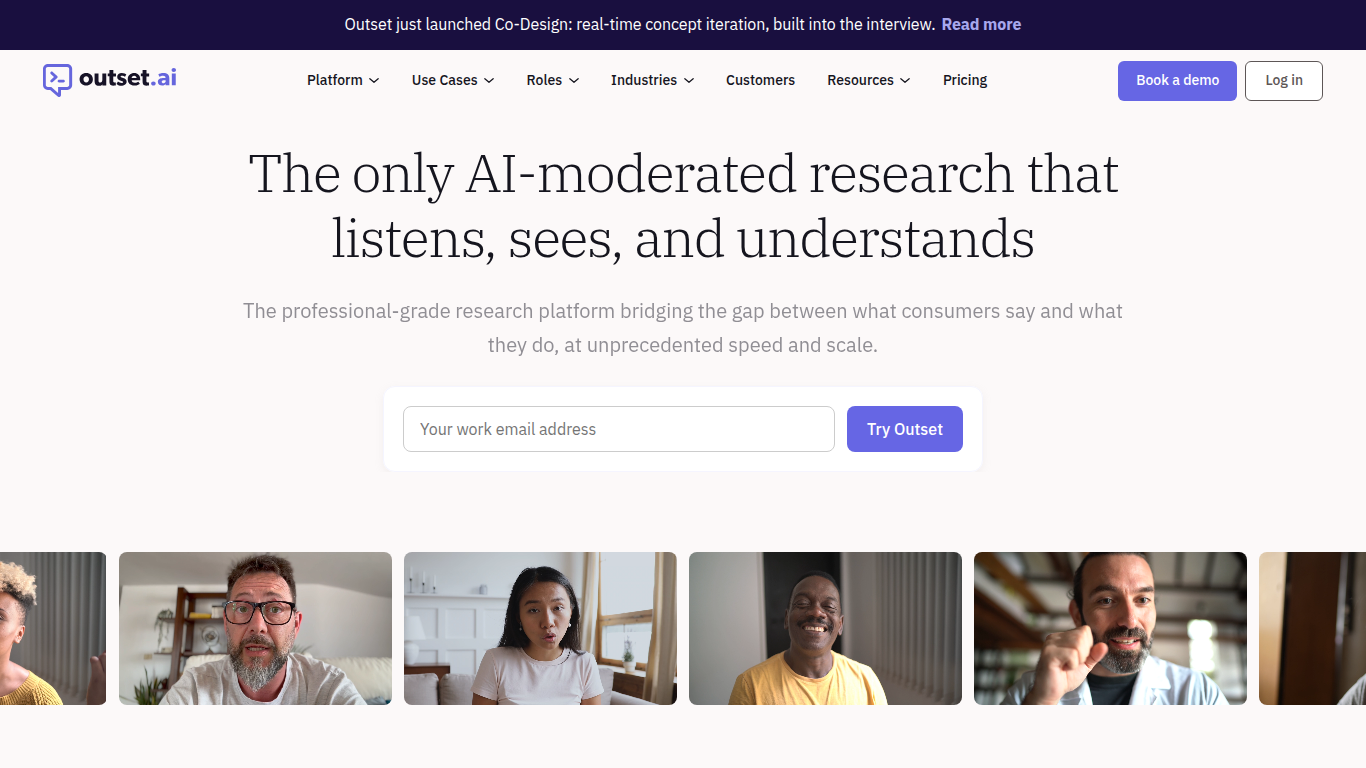
Outset runs qualitative interviews at survey scale with an AI moderator that listens, watches, and probes in real time. You build a guide, recruit participants or import your own list, and the platform fields hundreds of parallel video, voice, or text sessions. It then synthesizes themes, quotes, highlight reels, and exportable reports without manual tagging.
Survey tools capture what people remember. Traditional qual interviews go deep but cap out at a dozen sessions. Outset targets the gap: dynamic probing tied to audio and visual cues, plus instant synthesis so teams close the say-do gap faster. It also ships Co-Design for real-time concept iteration inside live interviews, which most async survey or transcript-only tools do not bundle in one workflow.
Market researchers, UX researchers, and consumer insights teams at companies like Microsoft, HubSpot, Glassdoor, and Nestle use Outset for concept testing, persona work, brand studies, and usability tests. The platform reports 500,000+ interview hours, 10,000+ studies, and access to 1.1 billion possible participants across 85+ countries with support for 40+ interview languages.
Semantic Scholar
What is Semantic Scholar?
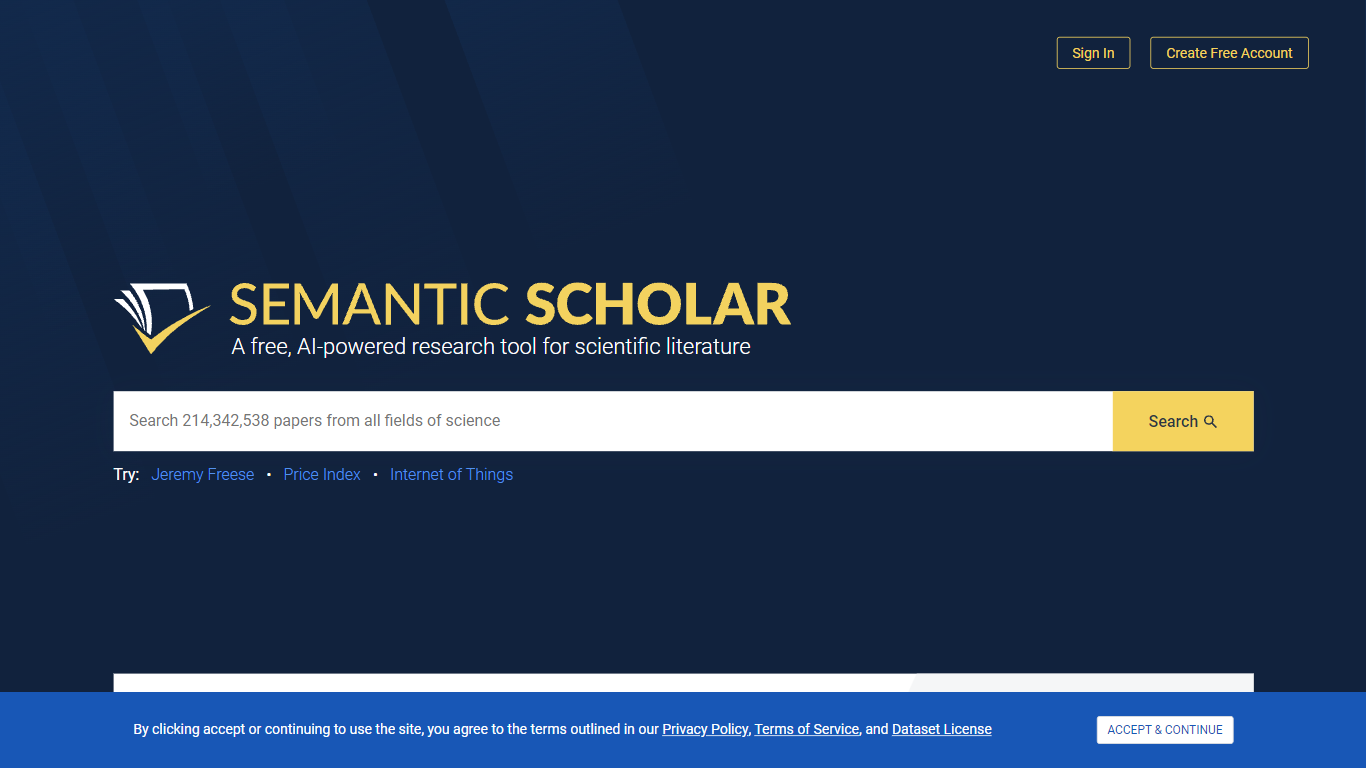
Semantic Scholar searches more than 236 million academic papers across every scientific field and surfaces citations, authors, and related work from one free interface. Built by the Allen Institute for AI (Ai2), it extracts meaning from papers so you can scan abstracts, follow citation chains, and open PDFs without jumping between databases.
Google Scholar indexes broadly but leaves connection-finding to you. Semantic Scholar adds AI-classified paper metadata, a Semantic Reader beta for in-browser annotation, and a public Academic Graph API with 214 million papers and 2.49 billion citations for developers. The S2AG and S2ORC datasets are also published as open JSON archives for NLP research.
Graduate students, faculty, librarians, and research engineers use it for literature reviews, citation tracking, and building scholarly apps. The API is free with optional keys for higher rate limits, and the platform partners with 50+ publishers to keep the index current.
Outset Upvotes
Semantic Scholar Upvotes
Outset Top Features
AI moderator runs video, voice, and text interviews with dynamic probing on audio and visual cues
Instant synthesis delivers themes, quotes, highlight reels, and CSV, PPT, PDF, or video exports
Recruitment covers 1.1 billion possible participants across 85+ countries on the homepage
Supports 40+ interview languages plus BYO participant lists and custom screeners
SOC 2 Type II, GDPR, and HIPAA compliance badges listed on the security page
Automatic fraud tagging advertised at 99%+ accuracy on incomplete or suspicious responses
Co-Design adds real-time concept iteration inside live AI-moderated interviews
Semantic Scholar Top Features
Search 236,851,843 papers indexed across all fields of science from one homepage
Semantic Reader beta adds in-browser annotations and contextual overlays on select papers
Academic Graph API covers 214 million papers, 2.49 billion citations, and 79 million authors
S2AG and S2ORC datasets ship as free JSON archives for NLP and text mining projects
Paper recommendations surface related studies based on citation and content similarity
Partners with 50+ publishers and scholarly societies to ingest new academic content
Outset Category
- Research
Semantic Scholar Category
- Research
Outset Pricing Type
- Paid
Semantic Scholar Pricing Type
- Free