Packmind vs Jungle
In the battle of Packmind vs Jungle, which AI Automation tool comes out on top? We compare reviews, pricing, alternatives, upvotes, features, and more.
Between Packmind and Jungle, which one is superior?
Upon comparing Packmind with Jungle, which are both AI-powered automation tools, There's no clear winner in terms of upvotes, as both tools have received the same number. Join the aitools.fyi users in deciding the winner by casting your vote.
Does the result make you go "hmm"? Cast your vote and turn that frown upside down!
Packmind

What is Packmind?
Packmind captures and governs your engineering playbook so AI coding agents across your repositories follow your team's standards instead of guessing from generic training data. It turns scattered decisions, patterns, and conventions into a versioned playbook, then distributes that context to assistants like Copilot, Cursor, Claude Code, and Gemini Code Assist.
Where generic assistants guess from training data, Packmind feeds them your team's rules. Its CLI can open pull requests that update copilot-instructions.md, AGENTS.md, and Cursor rules files, and its MCP server lets developers capture standards while coding. Violations show up in the IDE, CLI, or pre-commit with optional auto-fix before review.
Engineering leaders and platform teams use Packmind to scale agentic coding without losing consistency. The open source edition is free with unlimited developers and repositories; enterprise tiers add RBAC, SSO, SCIM, and audit trails. SOC 2 Type II certified since 2024, with public cloud or self-hosted Kubernetes deployment including air-gapped options.
Jungle
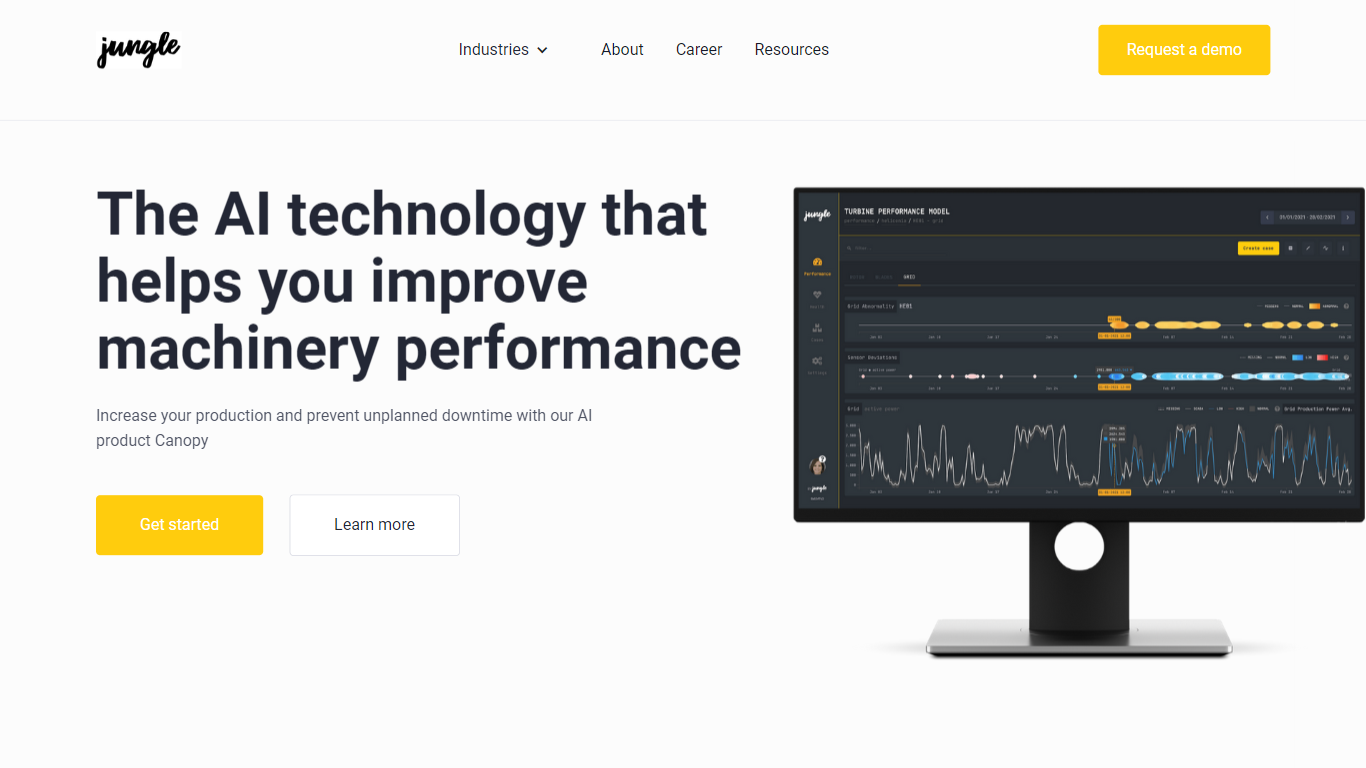
What is Jungle?
Jungle sells Canopy, predictive monitoring software for wind and solar fleets that ingests SCADA and sensor data you already collect. It learns normal asset behavior, flags weak patterns below standard alarm thresholds, and ties each anomaly to MWh and revenue impact so operators know which issues deserve attention first.
OEM portals and fixed SCADA limits catch obvious trips, but gradual degradation often stays hidden until production drops. Canopy adds a modeling layer that compares behavior under current ambient conditions, opens sensor-level evidence, and turns detections into structured cases with severity and discussion history.
Wind and solar asset managers use Canopy to prioritize maintenance before downtime hits. Technical asset teams at operators like Windunie and Ventolines cite earlier fault detection than traditional monitoring tools. Jungle positions the product as no-new-hardware deployment on existing SCADA feeds only.
Packmind Upvotes
Jungle Upvotes
Packmind Top Features
Open source core is free with unlimited developers and repositories on GitHub and GitLab
CLI syncs standards to copilot-instructions.md, AGENTS.md, and Cursor rules via pull request
Imports standards from ADRs or Git docs, or captures rules via MCP while you code
Flags violations in VS Code, JetBrains, Visual Studio, CLI, or pre-commit with auto-fix
Distributes playbook context to Copilot, Cursor, Claude Code, Gemini Code Assist, and Junie
SOC 2 Type II certified since 2024 with cloud or self-hosted Kubernetes deployment
Jungle Top Features
Uses existing SCADA and sensor data with no new hardware required
Detects abnormal behavior below fixed alarm thresholds
Connects each anomaly to MWh and revenue impact estimates
Investigation views include normality curves and sensor-level evidence
Structured cases bundle severity, impact, and team discussion history
Covers both wind and solar portfolios with dedicated industry pages
Fleet comparison tools surface underperformance patterns across assets
Packmind Category
- Automation
Jungle Category
- Automation
Packmind Pricing Type
- Freemium
Jungle Pricing Type
- Paid