PageBrain vs Talk to Books
In the contest of PageBrain vs Talk to Books, which AI Search Engine tool is the champion? We evaluate pricing, alternatives, upvotes, features, reviews, and more.
If you had to choose between PageBrain and Talk to Books, which one would you go for?
When we examine PageBrain and Talk to Books, both of which are AI-enabled search engine tools, what unique characteristics do we discover? Talk to Books stands out as the clear frontrunner in terms of upvotes. Talk to Books has attracted 23 upvotes from aitools.fyi users, and PageBrain has attracted 7 upvotes.
Don't agree with the result? Cast your vote and be a part of the decision-making process!
PageBrain

What is PageBrain?
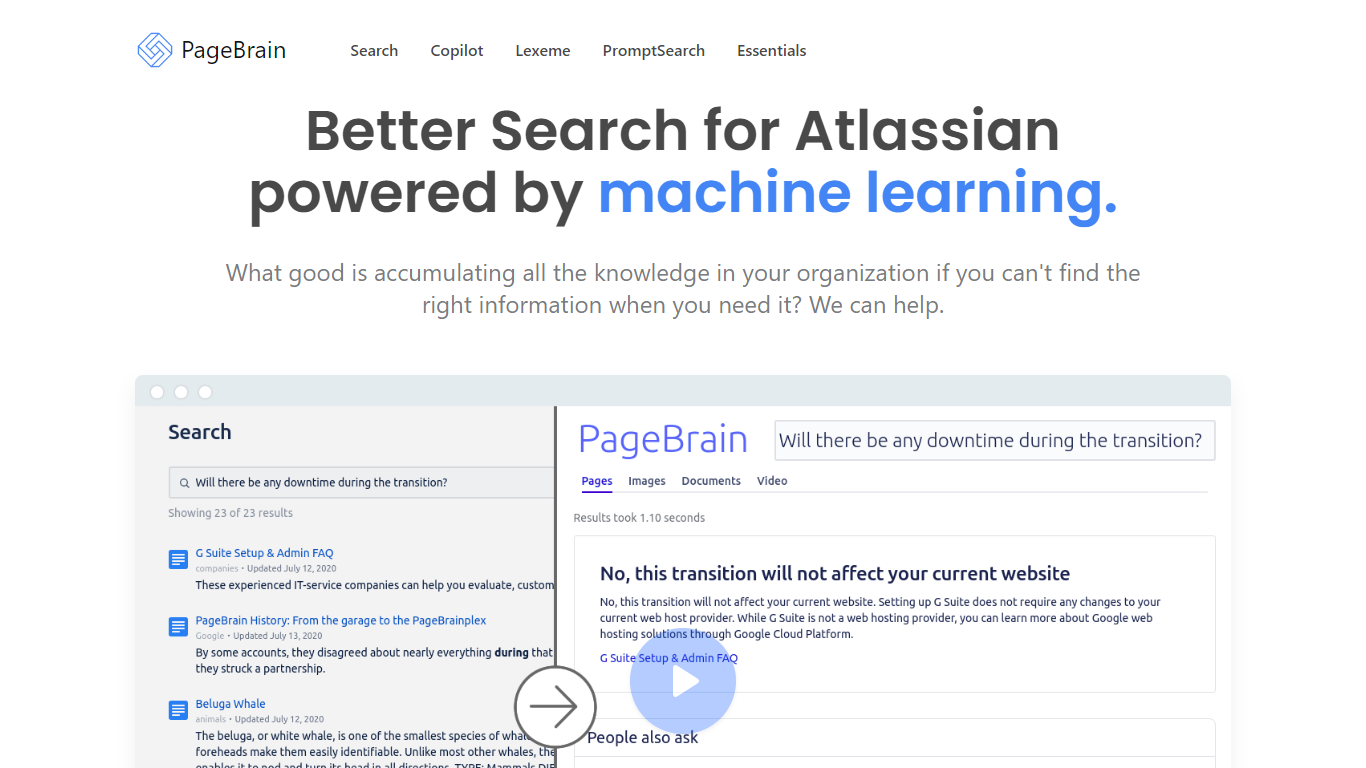
PageBrain ships Atlassian Marketplace add-ons that bring AI search and chat into Confluence and Jira Cloud. PageBrain Search crawls your wiki, answers natural-language questions, and even matches image contents instead of filenames. Copilot connects GPT-4 to your team's pages and tickets so summaries, drafts, and code snippets stay grounded in permissions-respecting sources.
Dedicated Atlassian AI vendors often sell one big suite, but PageBrain splits Copilot, Search, and Essentials into separate installs. Essentials alone covers ten embed integrations for Google Docs, Sheets, Slides, Forms, Looker Studio, and Microsoft Office files inside Confluence pages. Federated search lets one Confluence instance query another with a shared token.
Confluence admins, Jira teams drowning in tickets, and IT leads who need permission-aware answers without self-hosting use PageBrain because everything installs from the Marketplace with no servers to manage. Cached page copies power retrieval while honoring Confluence and Jira permission boundaries.
Talk to Books
What is Talk to Books?
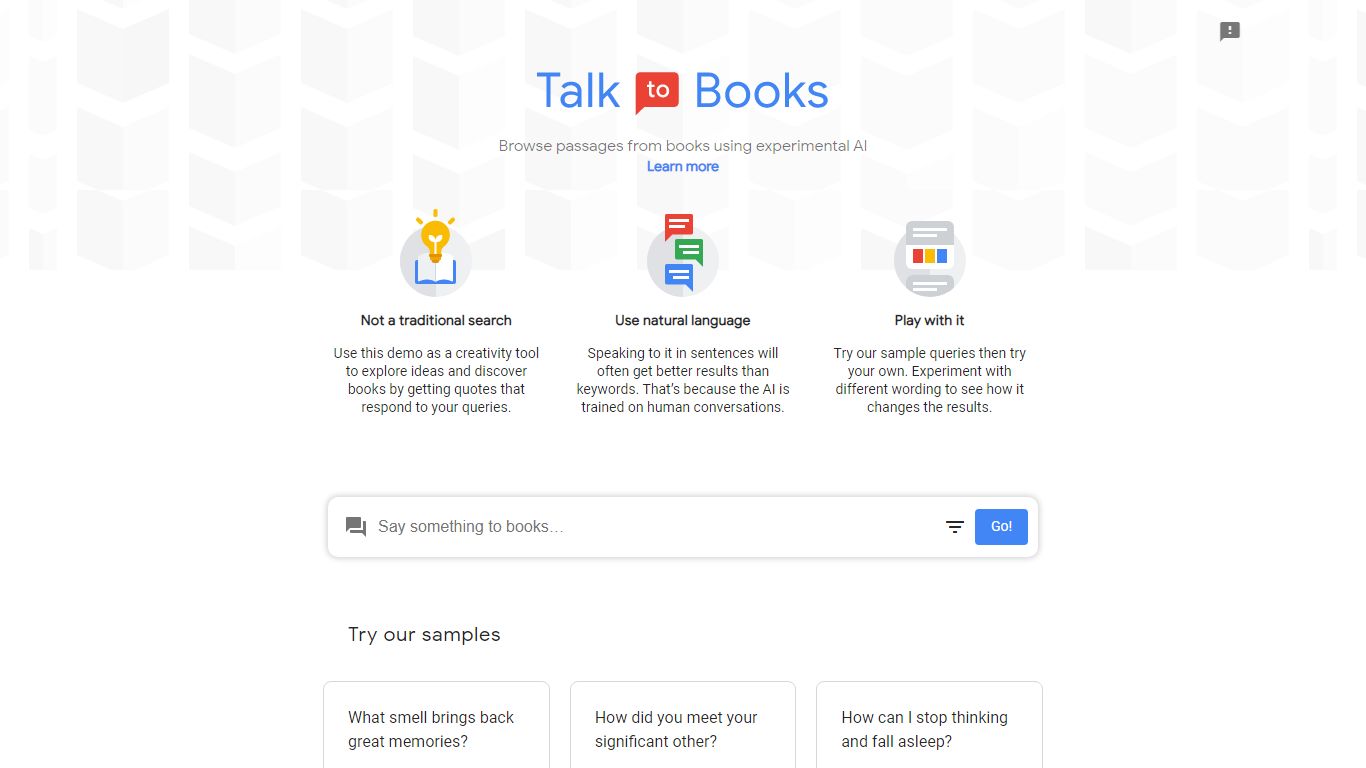
Talk to Books was a Google Research experiment that let you ask natural-language questions and get answers pulled from passages across a large collection of books. You typed a question or statement, and the system returned relevant book excerpts instead of standard web search results. Google has shut the service down, but the site still hosts an archive of sample queries.
The project launched in 2018 as part of Google's Semantic Experiences initiative. It used neural language models for semantic matching and retrieval, showing how conversational queries could surface ideas buried in published books rather than blog posts or forums.
Researchers, students, and curious readers used Talk to Books to explore topics through book-length context. The experiment informed later semantic search features inside Google products such as Shopping, Maps, Gmail, and Hangouts.
PageBrain Upvotes
Talk to Books Upvotes
PageBrain Top Features
PageBrain Search supports natural-language queries and image-content matching in Confluence
Copilot for Confluence and Jira connects GPT-4 to team wiki and ticket data
Essentials embeds ten Google and Microsoft file types directly inside Confluence pages
Federated search links two Confluence Cloud instances with a shared token
One-click install from the Atlassian Marketplace with no servers to run
Admins can add stopwords and synonyms to tune company-specific search results
Paid Marketplace apps include a minimum 30-day free trial per PageBrain docs
Talk to Books Top Features
Ask questions in plain English and get book passages back, not web links
Searches across a large corpus of published books using semantic matching
Archived sample queries still viewable on the shutdown notice page
Part of Google's 2018 Semantic Experiences research alongside Semantris
Demonstrated neural retrieval models that later shaped other Google products
PageBrain Category
- Search Engine
Talk to Books Category
- Search Engine
PageBrain Pricing Type
- Freemium
Talk to Books Pricing Type
- Free