phi-2 vs Stellaris AI
Dive into the comparison of phi-2 vs Stellaris AI and discover which AI Large Language Model (LLM) tool stands out. We examine alternatives, upvotes, features, reviews, pricing, and beyond.
In a comparison between phi-2 and Stellaris AI, which one comes out on top?
When we compare phi-2 and Stellaris AI, two exceptional large language model (llm) tools powered by artificial intelligence, and place them side by side, several key similarities and differences come to light. Interestingly, both tools have managed to secure the same number of upvotes. Join the aitools.fyi users in deciding the winner by casting your vote.
Feeling rebellious? Cast your vote and shake things up!
phi-2
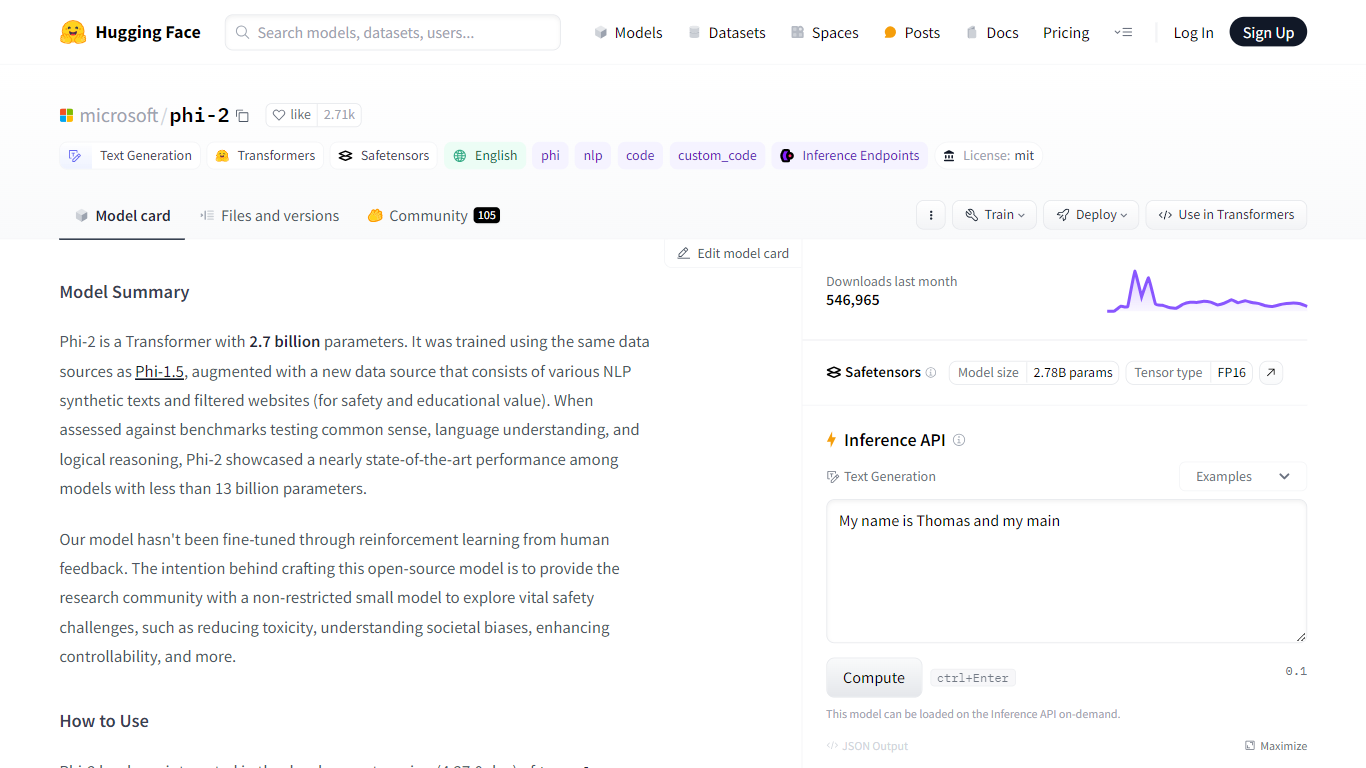

What is phi-2?
Phi-2 is a Transformer-based language model developed by Microsoft with 2.7 billion parameters, designed for English text generation tasks including natural language processing and coding. It was trained on a large dataset combining synthetic NLP texts and filtered web content to enhance safety and educational value. The model performs strongly on benchmarks for common sense reasoning, language understanding, and logical reasoning, ranking near state-of-the-art among models under 13 billion parameters.
Unlike some models, Phi-2 has not been fine-tuned with reinforcement learning from human feedback, making it a base model intended for research and experimentation rather than direct production use. It supports multiple prompt formats such as question-answering, chat dialogues, and code generation, offering flexibility for developers and researchers exploring AI safety, bias reduction, and controllability.
Phi-2 is integrated into the Hugging Face Transformers library (version 4.37.0 and above) and can be deployed locally or via various inference providers. It supports efficient loading and serving through tools like vLLM and SGLang, and is compatible with quantized versions for lightweight applications. The model uses the safetensors format for secure and fast tensor storage.
Users should be aware of limitations including occasional inaccurate code or factual outputs, limited scope in code generation mainly focused on Python and common libraries, verbosity in responses, and potential societal biases despite safety-focused training. It is recommended as a starting point for further fine-tuning and evaluation rather than a turnkey solution.
The model is licensed under the MIT license, promoting open science and community collaboration. It is suitable for AI researchers, developers, and organizations interested in exploring foundational language models with a focus on safety and transparency.
Stellaris AI
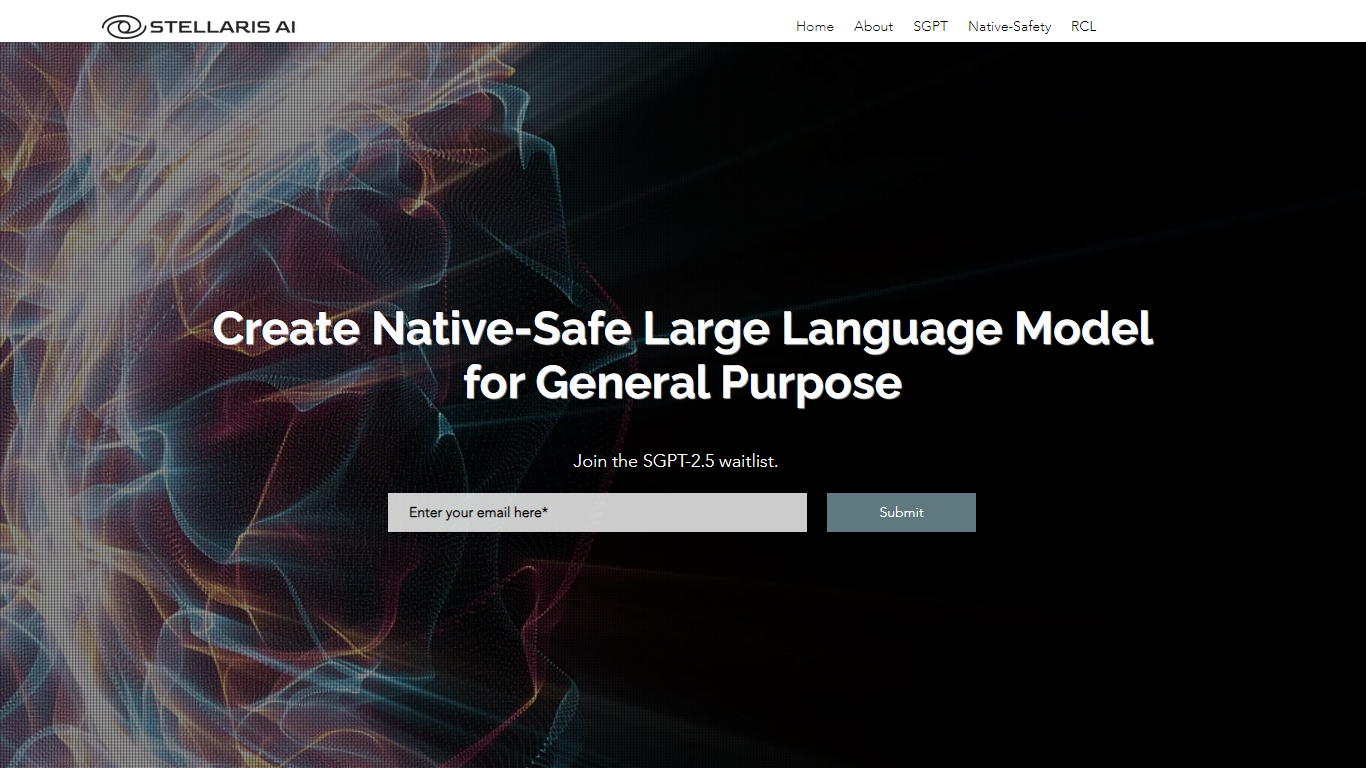
What is Stellaris AI?
Stellaris AI builds large language models marketed around native safety and human-like reasoning for real-world tasks. Its flagship SGPT line targets text and code generation, knowledge Q&A, logical reasoning, and analytics at a scale the company describes as hundreds of billions of parameters. The public site centers on a waitlist for SGPT-4.5 rather than a self-serve chat product you can open today.
Where many LLM labs bolt safety filters on after training, Stellaris AI frames safety as part of the model stack through strict source referencing and harm minimization in the architecture. It also highlights Real-time Context Learning (RCL) for adapting answers with live knowledge, a combination aimed at teams that want cited outputs instead of unchecked generation.
Researchers, enterprise AI teams, and early adopters join the SGPT-4.5 waitlist for first access. The company cites 10+ years of research and three core product pillars: Stellaris GPT, Native Safety, and RCL.
phi-2 Upvotes
Stellaris AI Upvotes
phi-2 Top Features
Flexible prompt formats for QA, chat, and code generation 🗣️
Integrated with Hugging Face Transformers for easy deployment 🤗
Supports efficient local serving with vLLM and SGLang 🖥️
Uses safetensors format for secure and fast tensor storage 🔒
Open-source MIT license encourages research and customization 📜
Stellaris AI Top Features
SGPT models described at 100B+ parameters for text, code, and reasoning tasks
Native Safety framework with strict source referencing and harm minimization
Real-time Context Learning (RCL) for live knowledge integration
Three product pillars: Stellaris GPT, Native Safety, and RCL
SGPT-4.5 waitlist open for early access signups on the homepage
phi-2 Category
- Large Language Model (LLM)
Stellaris AI Category
- Large Language Model (LLM)
phi-2 Pricing Type
- Freemium
Stellaris AI Pricing Type
- Freemium