phi-2 vs Terracotta
When comparing phi-2 vs Terracotta, which AI Large Language Model (LLM) tool shines brighter? We look at pricing, alternatives, upvotes, features, reviews, and more.
In a comparison between phi-2 and Terracotta, which one comes out on top?
When we put phi-2 and Terracotta side by side, both being AI-powered large language model (llm) tools, The upvote count reveals a draw, with both tools earning the same number of upvotes. Since other aitools.fyi users could decide the winner, the ball is in your court now to cast your vote and help us determine the winner.
Don't agree with the result? Cast your vote and be a part of the decision-making process!
phi-2

What is phi-2?
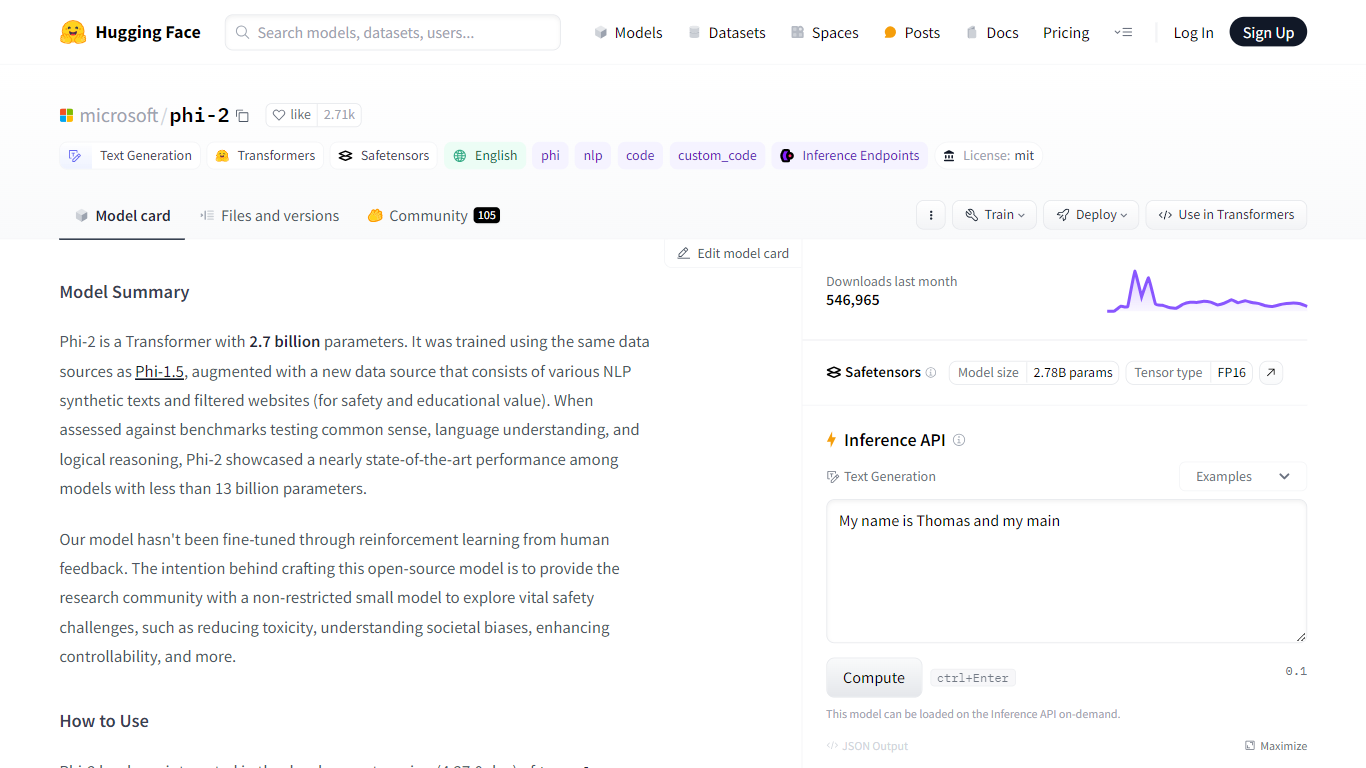
Phi-2 is a Transformer-based language model developed by Microsoft with 2.7 billion parameters, designed for English text generation tasks including natural language processing and coding. It was trained on a large dataset combining synthetic NLP texts and filtered web content to enhance safety and educational value. The model performs strongly on benchmarks for common sense reasoning, language understanding, and logical reasoning, ranking near state-of-the-art among models under 13 billion parameters.
Unlike some models, Phi-2 has not been fine-tuned with reinforcement learning from human feedback, making it a base model intended for research and experimentation rather than direct production use. It supports multiple prompt formats such as question-answering, chat dialogues, and code generation, offering flexibility for developers and researchers exploring AI safety, bias reduction, and controllability.
Phi-2 is integrated into the Hugging Face Transformers library (version 4.37.0 and above) and can be deployed locally or via various inference providers. It supports efficient loading and serving through tools like vLLM and SGLang, and is compatible with quantized versions for lightweight applications. The model uses the safetensors format for secure and fast tensor storage.
Users should be aware of limitations including occasional inaccurate code or factual outputs, limited scope in code generation mainly focused on Python and common libraries, verbosity in responses, and potential societal biases despite safety-focused training. It is recommended as a starting point for further fine-tuning and evaluation rather than a turnkey solution.
The model is licensed under the MIT license, promoting open science and community collaboration. It is suitable for AI researchers, developers, and organizations interested in exploring foundational language models with a focus on safety and transparency.
Terracotta
What is Terracotta?
Terracotta is an Infrastructure as Code governance tool that audits every pull request before merge, checking Terraform and OpenTofu changes against live cloud resources, remote state, and your team's governance policies. It installs as a GitHub or GitLab app, posts findings in the PR thread, and builds a tamper-evident audit trail regulators can export. The product targets platform engineering teams that need security, drift, cost, and compliance checks without rewriting CI pipelines.
Static scanners like Checkov or tfsec lint HCL syntax and known misconfigurations, but they never compare a plan to what is actually running in AWS. Terracotta closes that gap by correlating code, Terraform state, and live resources so drift, cross-PR conflicts, and hidden blast radius show up before anyone clicks merge. Its guardrails are written in plain English rather than Rego or Sentinel, which lowers the bar for teams that lack a dedicated policy-as-code engineer.
DevOps leads and platform engineers at regulated shops use Terracotta to block public S3 buckets, open SSH rules, and unapproved cost spikes at review time instead of in production. Security and compliance teams get a fleet-wide dashboard with drift posture, policy compliance rates, and exportable records for SOC 2 or HIPAA audits. Developers keep working inside GitHub or GitLab because findings arrive as PR comments, not another portal to check.
Beacon, Terracotta's in-PR chat assistant, answers questions about specific findings using context from the repo, plan output, and drift reports. The Platform tier adds unlimited drift repos, IAM and blast-radius analysis, Slack notifications, and a command center dashboard for $49 per engineer per month. Enterprise customers can run Terracotta self-hosted with SSO, SAML, and custom integrations for HCP Terraform or CircleCI.
phi-2 Upvotes
Terracotta Upvotes
phi-2 Top Features
Flexible prompt formats for QA, chat, and code generation 🗣️
Integrated with Hugging Face Transformers for easy deployment 🤗
Supports efficient local serving with vLLM and SGLang 🖥️
Uses safetensors format for secure and fast tensor storage 🔒
Open-source MIT license encourages research and customization 📜
Terracotta Top Features
Posts automated PR reviews on GitHub and GitLab when a Terraform or OpenTofu pull request opens, before CI runs
Compares IaC code against live cloud resources and remote Terraform state to flag drift across 119 AWS resource types
Platform plan at $49 per engineer per month includes cost analysis, IAM review, blast-radius mapping, and guardrail enforcement
Free Community tier covers 50 public repo PRs, 1 private repo at 20 PRs per month, and up to 5 seats with no credit card
Plain-English guardrails block risky changes without Rego, Sentinel, or OPA policy files
Beacon chat assistant answers in-thread questions about findings using repo, plan, and drift context
phi-2 Category
- Large Language Model (LLM)
Terracotta Category
- Large Language Model (LLM)
phi-2 Pricing Type
- Freemium
Terracotta Pricing Type
- Freemium