Pixelgen vs TryOnDiffusion
Explore the showdown between Pixelgen vs TryOnDiffusion and find out which AI Design tool wins. We analyze upvotes, features, reviews, pricing, alternatives, and more.
When comparing Pixelgen and TryOnDiffusion, which one rises above the other?
When we contrast Pixelgen with TryOnDiffusion, both of which are exceptional AI-operated design tools, and place them side by side, we can spot several crucial similarities and divergences. Interestingly, both tools have managed to secure the same number of upvotes. Your vote matters! Help us decide the winner among aitools.fyi users by casting your vote.
Want to flip the script? Upvote your favorite tool and change the game!
Pixelgen


What is Pixelgen?
Pixelgen is a forward-thinking platform that enables users to craft and manipulate pixel-based images with ease. With a focus on simplicity and user experience, Pixelgen presents a set of intuitive tools designed for both novices and professionals seeking to create, edit, or enhance their digital graphics.
The software features a user-friendly interface that simplifies the process of generating pixel art, providing an array of functionalities from basic editing to more advanced features for detailed and intricate designs.
Whether you're a game developer needing sprites for your game, a digital artist exploring the pixel art style, or a hobbyist looking to express creativity, Pixelgen offers the perfect blend of accessibility and power to bring your pixel creations to life.
TryOnDiffusion
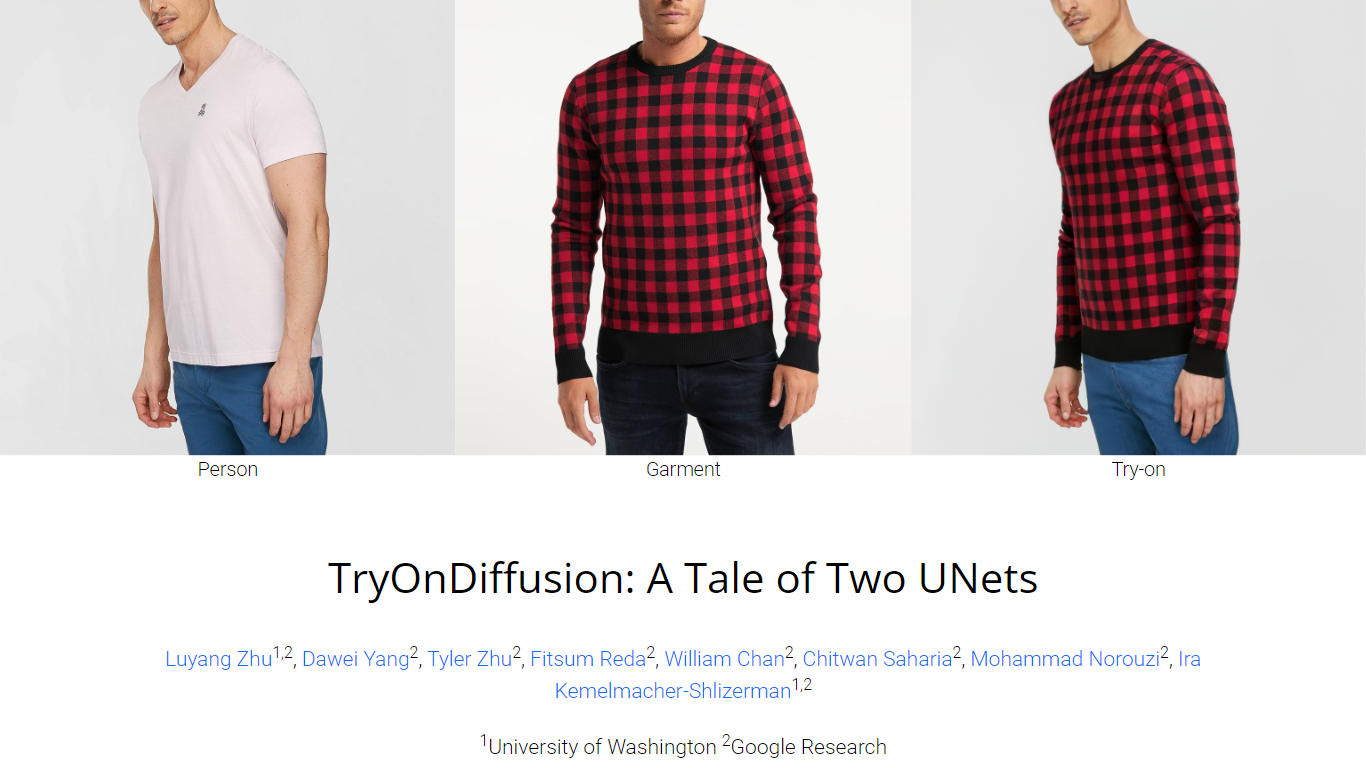
What is TryOnDiffusion?
TryOnDiffusion generates a photorealistic image of how a garment would look on a target person from two inputs: a photo of the person and a photo of someone wearing the garment. The CVPR 2023 research project from University of Washington and Google Research uses a diffusion model with two parallel UNets to preserve fabric detail while warping the clothing across different body poses and shapes. Output runs through 128x128 and 256x256 stages before super-resolution to 1024x1024.
Earlier virtual try-on systems split garment warping and blending into separate steps, which often traded detail for pose flexibility. TryOnDiffusion warps garments implicitly through cross-attention in a Parallel-UNet and fuses warp and blend in one pass. On its test set it reports FID 13.447 and KID 6.964, beating TryOnGAN, SDAFN, and HR-VITON, with 92.72% user preference on random inputs and 95.80% on challenging pose cases.
Fashion researchers, computer vision teams, and e-commerce developers use the project page demo to preview upper-body try-ons interactively. The authors note limitations: upper-body clothing only, reliance on segmentation and pose preprocessing, mostly clean backgrounds in training data, and visualization without fit guarantees.
Pixelgen Upvotes
TryOnDiffusion Upvotes
Pixelgen Top Features
Intuitive Design: A user-friendly interface that caters to both beginners and professionals.
Pixel Art Creation: Allows for the crafting of pixel-based imagery, perfect for game developers and artists.
Advanced Editing Tools: Offers a variety of editing options for creating detailed and intricate designs.
Accessibility: Designed to be accessible to users with different skill levels.
Versatility: Suitable for various creative projects, including game design and digital art.
TryOnDiffusion Top Features
Parallel-UNet fuses garment warping and person blending in one diffusion network
Pipeline outputs 128x128, 256x256, then super-resolves to 1024x1024 images
Reports FID 13.447 and KID 6.964 on the project test set, below HR-VITON at 18.705 FID
Cross-attention warps segmented garment features onto the clothing-agnostic person image
Interactive demo on the project page for person-garment try-on previews
User study shows 92.72% preference on random inputs versus three prior methods
Pose embeddings modulate both UNets via FiLM across all scales
Pixelgen Category
- Design
TryOnDiffusion Category
- Design
Pixelgen Pricing Type
- Freemium
TryOnDiffusion Pricing Type
- Free