Pomo.rhythm vs AssemblyAI
Compare Pomo.rhythm vs AssemblyAI and see which AI Audio Generation tool is better when we compare features, reviews, pricing, alternatives, upvotes, etc.
Which one is better? Pomo.rhythm or AssemblyAI?
When we compare Pomo.rhythm with AssemblyAI, which are both AI-powered audio generation tools, Both tools are equally favored, as indicated by the identical upvote count. Be a part of the decision-making process. Your vote could determine the winner.
Think we got it wrong? Cast your vote and show us who's boss!
Pomo.rhythm


What is Pomo.rhythm?
Elevate your productivity with Pomo.rhythm, where the power of the Pomodoro Technique meets the energizing influence of music. Crafted for those who seek a harmonious blend of focus and motivation, Pomo.rhythm introduces a seamless, rhythmic backdrop to your work sessions. By dividing your tasks into efficient, timed intervals accompanied by music specifically chosen to keep you in the zone, Pomo.rhythm offers a unique solution to managing time and enhancing concentration. Experience the synchronous dance of time management and auditory stimulation with Pomo.rhythm – your ally in achieving a balanced and effective work rhythm.
AssemblyAI
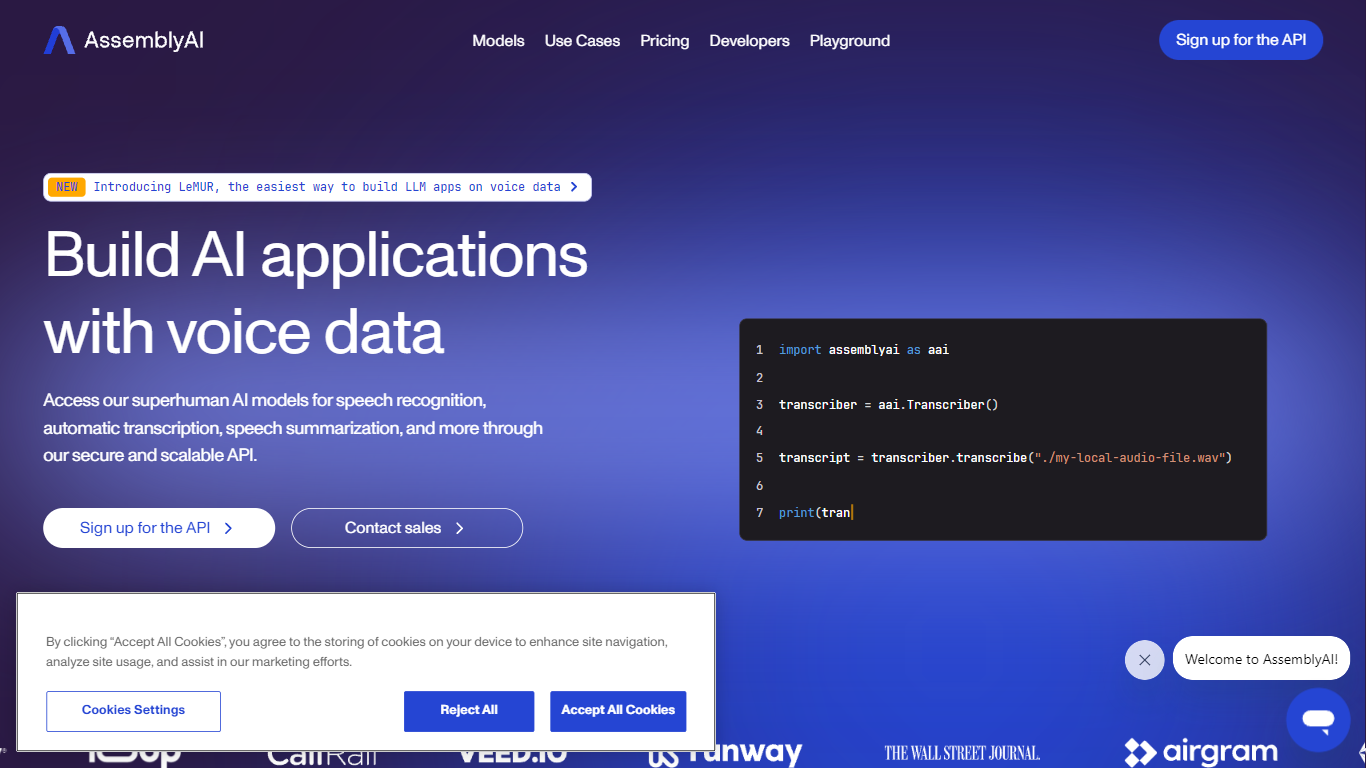
What is AssemblyAI?
AssemblyAI gives developers APIs to transcribe, understand, and act on speech in production apps. The platform covers pre-recorded speech-to-text, real-time streaming transcription, a Voice Agent API over WebSocket, Speech Understanding add-ons, Guardrails, and an LLM Gateway for voice workflows. Teams wire it into call centers, voice agents, meeting tools, and media pipelines without hosting their own models.
General-purpose cloud speech APIs spread features across separate services. AssemblyAI stacks diarization, sentiment, entity detection, PII redaction, and topic tagging on the same transcription request with per-hour add-on pricing. That matters when you want speaker labels and moderation in one pass instead of chaining three vendors after the transcript lands.
Engineering teams building voice agents, compliance-heavy transcription, or multilingual products fit AssemblyAI best. Pricing is usage-based with $50 in free credits and no credit card required, but streaming bills per open WebSocket session rather than audio minutes alone. If you only need a simple one-off file transcript, a lighter consumer tool may be cheaper.
Pomo.rhythm Upvotes
AssemblyAI Upvotes
Pomo.rhythm Top Features
Enhanced Focus: Utilizes the Pomodoro Technique to maximize concentration.
Musical Motivation: Incorporates music to stimulate productivity during work sessions.
Time Management: Helps to efficiently divide and manage work intervals.
Concentration Boost: Uses rhythmic sounds to maintain attention and reduce distractions.
Balanced Work Sessions: Provides a rhythmic backdrop for a more enjoyable and effective task management experience.
AssemblyAI Top Features
Universal-3.5 Pro async transcription is priced at $0.21 per hour of submitted audio
Real-time Universal-3.5 Pro streaming runs at $0.45 per hour of open WebSocket session time
Voice Agent API bills $4.50 per hour ($0.075 per minute) for speech-to-speech agents
Speech Understanding add-ons include diarization, sentiment, entity detection, and translation on one request
Platform reports 800M+ API calls processed monthly with coverage across 99 languages
Pomo.rhythm Category
- Audio Generation
AssemblyAI Category
- Audio Generation
Pomo.rhythm Pricing Type
- Freemium
AssemblyAI Pricing Type
- Freemium