Pomo.rhythm vs Audyo
In the clash of Pomo.rhythm vs Audyo, which AI Audio Generation tool emerges victorious? We assess reviews, pricing, alternatives, features, upvotes, and more.
When we put Pomo.rhythm and Audyo head to head, which one emerges as the victor?
Let's take a closer look at Pomo.rhythm and Audyo, both of which are AI-driven audio generation tools, and see what sets them apart. Both tools are equally favored, as indicated by the identical upvote count. Be a part of the decision-making process. Your vote could determine the winner.
Think we got it wrong? Cast your vote and show us who's boss!
Pomo.rhythm


What is Pomo.rhythm?
Elevate your productivity with Pomo.rhythm, where the power of the Pomodoro Technique meets the energizing influence of music. Crafted for those who seek a harmonious blend of focus and motivation, Pomo.rhythm introduces a seamless, rhythmic backdrop to your work sessions. By dividing your tasks into efficient, timed intervals accompanied by music specifically chosen to keep you in the zone, Pomo.rhythm offers a unique solution to managing time and enhancing concentration. Experience the synchronous dance of time management and auditory stimulation with Pomo.rhythm – your ally in achieving a balanced and effective work rhythm.
Audyo
What is Audyo?
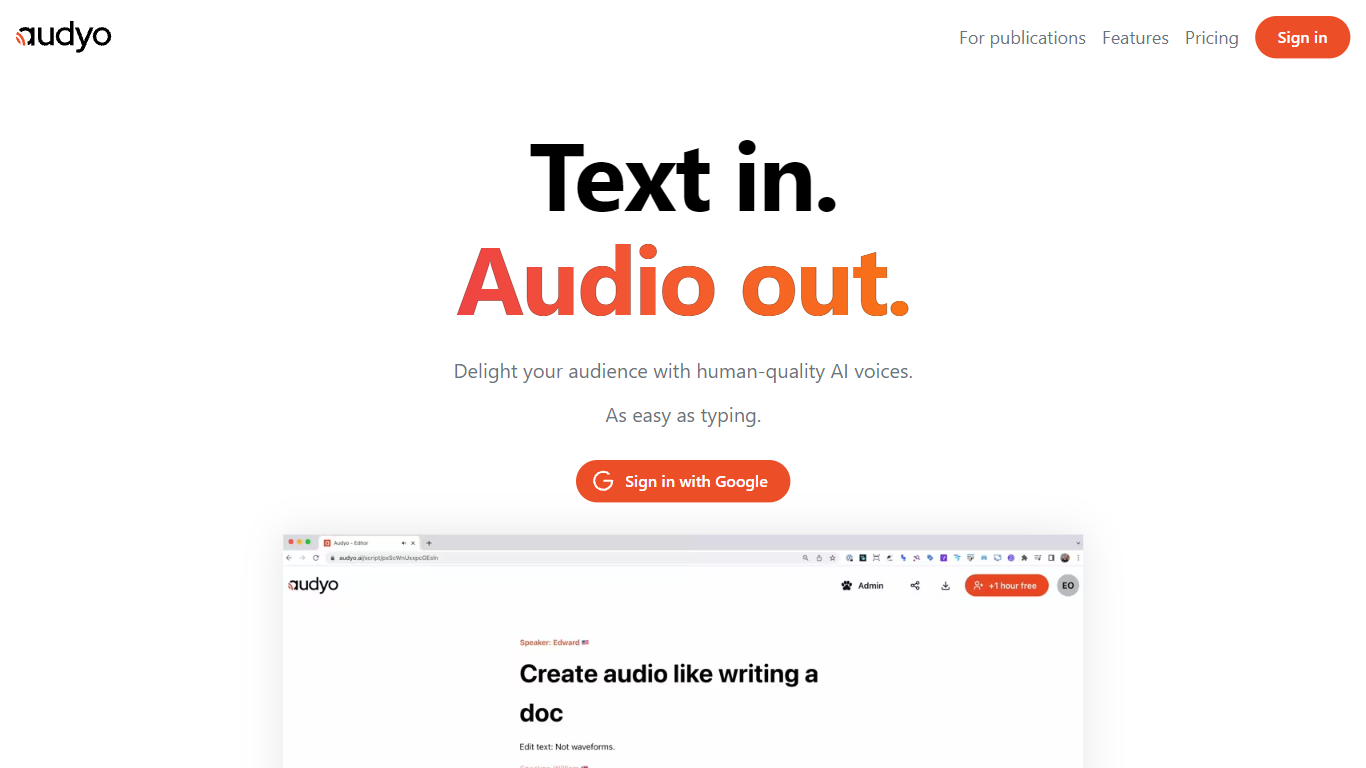
Audyo is a text-to-speech editor that turns written scripts into spoken audio as easily as typing a document. You edit words instead of waveforms, swap between 100+ voices across accents and languages, and export files for videos, podcasts, or presentations. Markdown headings, lists, and horizontal dividers add pauses between paragraphs without opening a separate audio timeline.
Traditional voice-over tools force you to cut waveforms and manage tracks manually. Audyo treats audio like a doc: Quick Select lets you build multi-speaker dialogs by switching voices inline, phonetic overrides fix tricky pronunciations word by word, and an AI Audio Assistant helps rewrite scripts inside the editor. That workflow suits creators who think in text first and only need clean audio output second.
Podcasters and video editors use Audyo for voice-overs without recording booths. Audiobook authors mix English, Spanish, Hindi, and 10+ other supported languages in one project. The site reports nearly 70,000 creators on the platform, with use cases spanning videos, podcasts, audiobooks, and general voice-over work.
Pomo.rhythm Upvotes
Audyo Upvotes
Pomo.rhythm Top Features
Enhanced Focus: Utilizes the Pomodoro Technique to maximize concentration.
Musical Motivation: Incorporates music to stimulate productivity during work sessions.
Time Management: Helps to efficiently divide and manage work intervals.
Concentration Boost: Uses rhythmic sounds to maintain attention and reduce distractions.
Balanced Work Sessions: Provides a rhythmic backdrop for a more enjoyable and effective task management experience.
Audyo Top Features
Choose from 100+ AI voices spanning American, British, Irish, French, Spanish, Mandarin, Hindi, and more accents
Edit scripts like a document with Markdown headings, lists, and divider pauses instead of waveform cutting
Quick Select swaps speakers inline to build multi-voice dialogs and conversations quickly
Custom phonetic spelling per word fixes pronunciation without re-recording entire lines
Supports 13+ languages including English, French, Spanish, German, Italian, Portuguese, Japanese, Korean, Chinese, Hindi, Arabic, Turkish, and Russian
Instant audio export for dropping into videos, podcasts, or presentation decks
Pomo.rhythm Category
- Audio Generation
Audyo Category
- Audio Generation
Pomo.rhythm Pricing Type
- Freemium
Audyo Pricing Type
- Freemium