PSEUDO.AI vs CensysGPT Beta
Dive into the comparison of PSEUDO.AI vs CensysGPT Beta and discover which AI Developer tool stands out. We examine alternatives, upvotes, features, reviews, pricing, and beyond.
When comparing PSEUDO.AI and CensysGPT Beta, which one rises above the other?
When we compare PSEUDO.AI and CensysGPT Beta, two exceptional developer tools powered by artificial intelligence, and place them side by side, several key similarities and differences come to light. The users have made their preference clear, PSEUDO.AI leads in upvotes. PSEUDO.AI has 7 upvotes, and CensysGPT Beta has 6 upvotes.
Feeling rebellious? Cast your vote and shake things up!
PSEUDO.AI


What is PSEUDO.AI?
PSEUDO.AI turns source code into human-readable pseudocode in your browser. You enter a prompt or code snippet, pick a language, and the app returns plain-language steps that read like structured pseudocode rather than raw syntax. It runs on the web at pseudoai.vercel.app with no install, and targets teams who need to explain implementation details to people who do not read code daily.
Most code explainers summarize what a snippet does in prose. PSEUDO.AI keeps the output closer to pseudocode structure, which makes handoffs to designers, product owners, or junior developers easier to scan. The trade-off is focus: it is built for pseudocode conversion, not debugging, testing, or repo-wide documentation. That narrow scope is the point when the goal is shared comprehension, not a full IDE workflow.
Software developers use it to translate tricky logic before code reviews or stakeholder meetings. Computer science students and instructors lean on it when a textbook example needs a readable walkthrough. Product managers and mentors who sit in technical discussions but do not write production code get a format they can follow without parsing braces and semicolons.
CensysGPT Beta
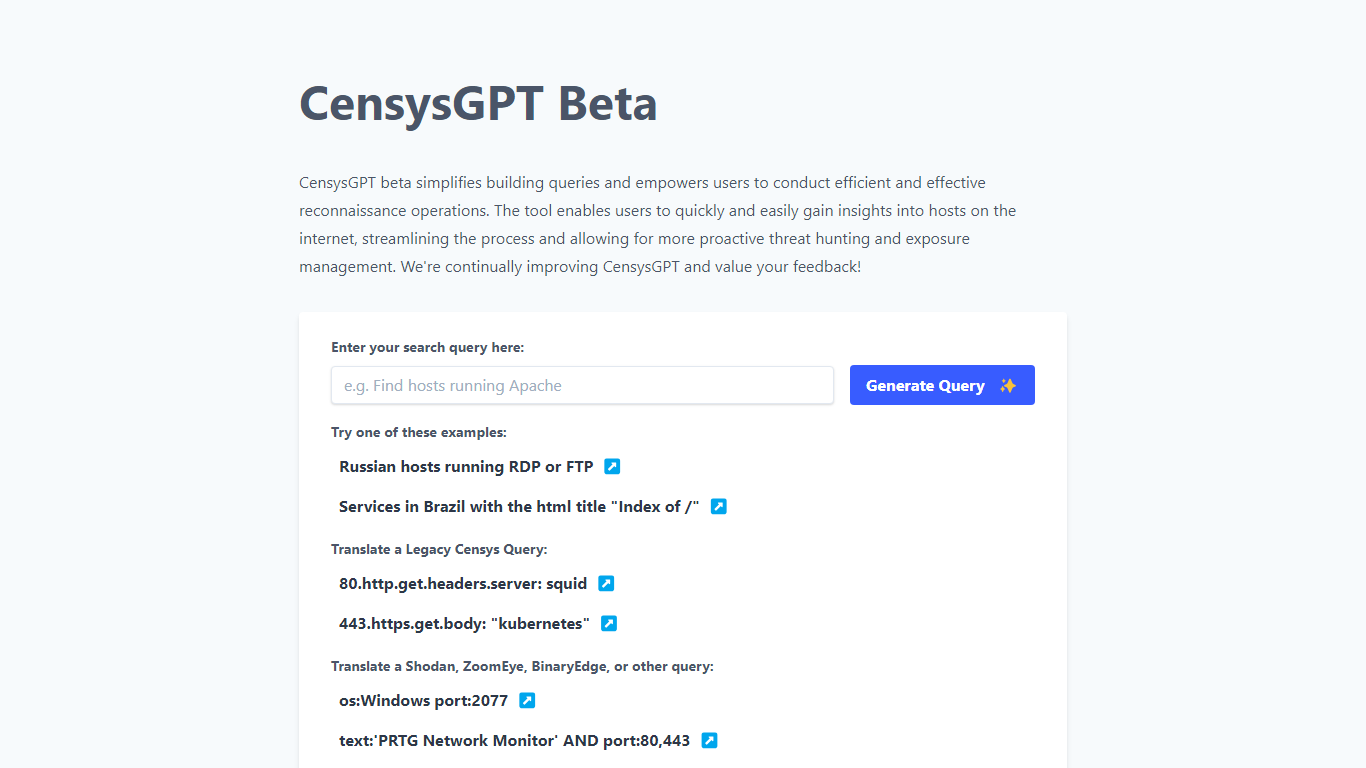
What is CensysGPT Beta?
CensysGPT Beta turns plain-language recon questions into Censys Search queries you can run against internet hosts. Security analysts describe targets like country, ports, or HTML titles, and the tool returns a formatted Censys query plus a link to open it in Censys Search for host intelligence work.
Manual query writing in Censys syntax slows threat hunts. CensysGPT Beta also translates legacy Censys strings, Shodan, ZoomEye, and BinaryEdge queries into Censys format, with an optional creative mode when you want broader query ideas. That focus keeps it a translator for Censys recon rather than a general chat assistant.
Censys positions the beta for proactive threat hunting and attack surface management. The page notes OpenAI GPT processes submitted text, shares queries with OpenAI, and opts out of model training on that data. Feedback goes to [email protected].
PSEUDO.AI Upvotes
CensysGPT Beta Upvotes
PSEUDO.AI Top Features
Choose from 12 languages on the converter page, including C, C++, C#, Java, Python 3, JavaScript, Node.js, PHP, Kotlin, Swift, and SQL.
Runs entirely in the browser at pseudoai.vercel.app with no downloads required, per the homepage FAQ.
Uses an OpenAI-trained GPT model to generate pseudocode from your code input, according to the site FAQ.
Three-step workflow on the converter: enter a prompt or topic, pick a language, then click GO and copy the output.
Homepage FAQ lists Java, Python, C++, and JavaScript among supported languages, with a broader list on the live converter.
CensysGPT Beta Top Features
Natural language input generates validated Censys Search queries
Translates Shodan, ZoomEye, BinaryEdge, and legacy Censys syntax
Creative query mode broadens recon suggestions when enabled
One-click jump to Censys Search with the generated query
Model update noted on page as January 10, 2024
Feedback channel at [email protected] for query quality reports
PSEUDO.AI Category
- Developer
CensysGPT Beta Category
- Developer
PSEUDO.AI Pricing Type
- Free
CensysGPT Beta Pricing Type
- Free