PSEUDO.AI vs Micro1
Compare PSEUDO.AI vs Micro1 and see which AI Developer tool is better when we compare features, reviews, pricing, alternatives, upvotes, etc.
Which one is better? PSEUDO.AI or Micro1?
When we compare PSEUDO.AI with Micro1, which are both AI-powered developer tools, The community has spoken, PSEUDO.AI leads with more upvotes. PSEUDO.AI has 7 upvotes, and Micro1 has 6 upvotes.
Disagree with the result? Upvote your favorite tool and help it win!
PSEUDO.AI

What is PSEUDO.AI?
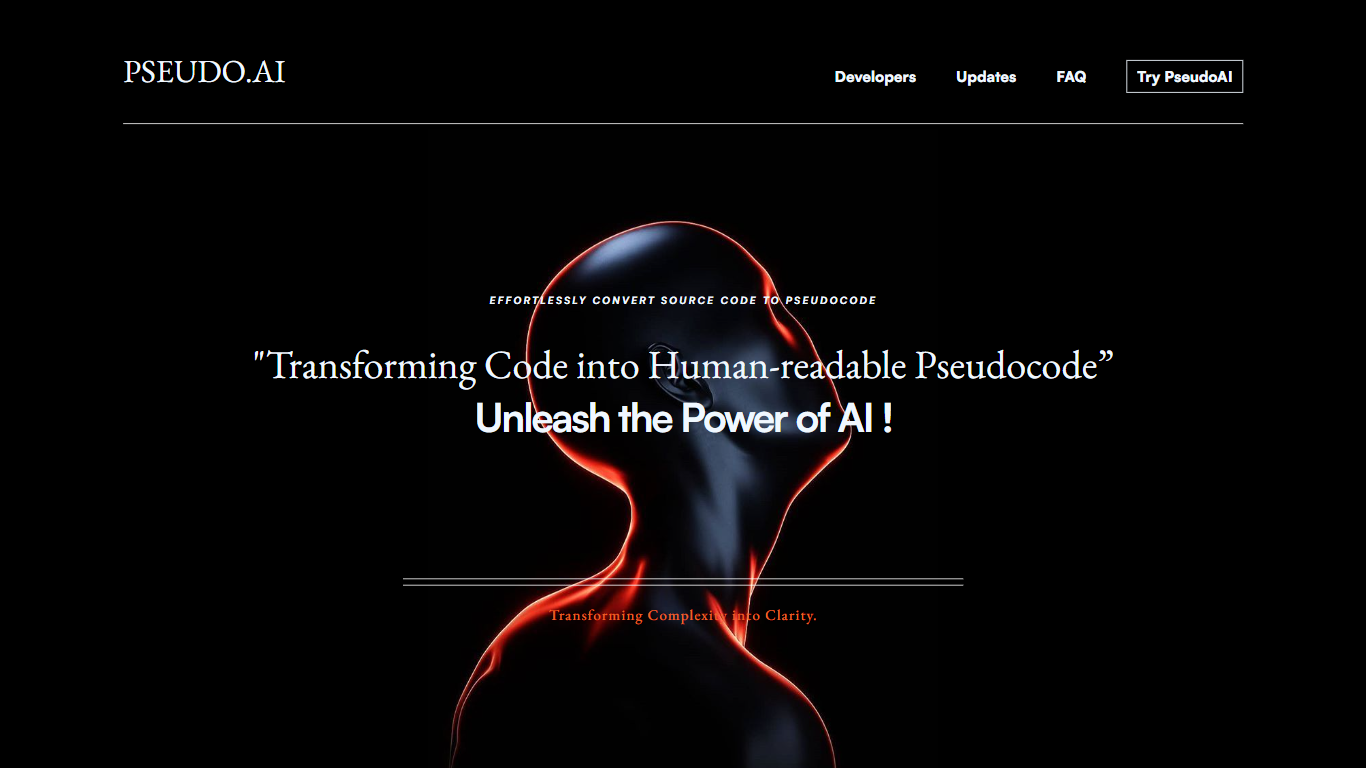
PSEUDO.AI turns source code into human-readable pseudocode in your browser. You enter a prompt or code snippet, pick a language, and the app returns plain-language steps that read like structured pseudocode rather than raw syntax. It runs on the web at pseudoai.vercel.app with no install, and targets teams who need to explain implementation details to people who do not read code daily.
Most code explainers summarize what a snippet does in prose. PSEUDO.AI keeps the output closer to pseudocode structure, which makes handoffs to designers, product owners, or junior developers easier to scan. The trade-off is focus: it is built for pseudocode conversion, not debugging, testing, or repo-wide documentation. That narrow scope is the point when the goal is shared comprehension, not a full IDE workflow.
Software developers use it to translate tricky logic before code reviews or stakeholder meetings. Computer science students and instructors lean on it when a textbook example needs a readable walkthrough. Product managers and mentors who sit in technical discussions but do not write production code get a format they can follow without parsing braces and semicolons.
Micro1
What is Micro1?
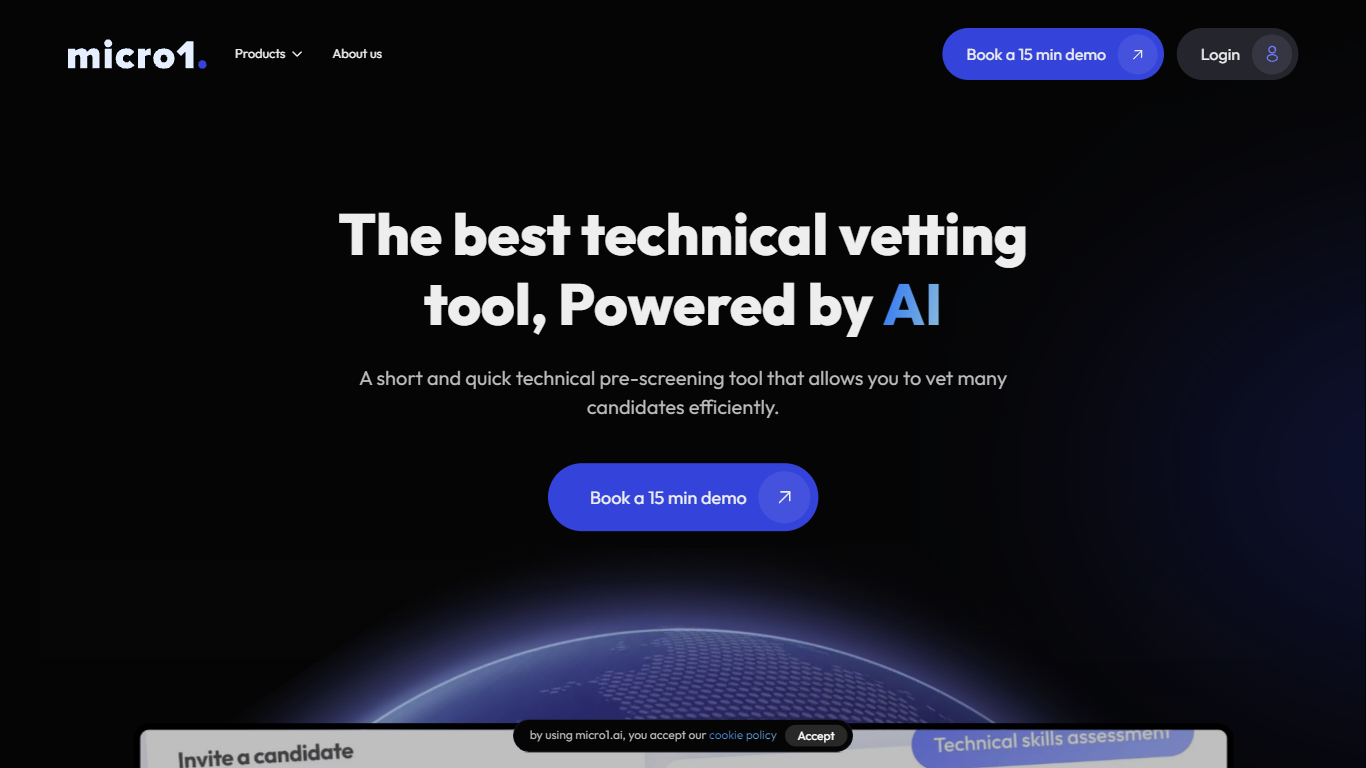
Micro1 runs a data lab that supplies expert human demonstrations, RL training environments, and contextual evaluations for frontier AI models and production agents. Its Realm product builds real-world scenarios for legal, pathology, and financial reasoning benchmarks, while Cortex monitors and improves agent performance after deployment. Robotics teams tap Micro1 for high-fidelity embodied data, and the expert network feeds labeled tasks back into model training pipelines.
Hiring-focused vetting platforms test candidates once, but Micro1 sells ongoing evaluation infrastructure for labs shipping agentic products. Realm publishes public leaderboards comparing Claude, Kimi, and other frontier models on domain-specific tasks, which generic benchmark suites rarely cover. The trade-off is access: pricing is quote-based through sales forms rather than self-serve dashboards, so it targets AI labs and enterprises, not individual developers running a single coding screen.
AI research teams use Micro1 Realm benchmarks to stress-test legal and clinical reasoning. Production engineering groups adopt Cortex to watch how agents behave on live workflows. Robotics and government partners source expert-labeled data when synthetic datasets fail to capture real-world edge cases.
PSEUDO.AI Upvotes
Micro1 Upvotes
PSEUDO.AI Top Features
Choose from 12 languages on the converter page, including C, C++, C#, Java, Python 3, JavaScript, Node.js, PHP, Kotlin, Swift, and SQL.
Runs entirely in the browser at pseudoai.vercel.app with no downloads required, per the homepage FAQ.
Uses an OpenAI-trained GPT model to generate pseudocode from your code input, according to the site FAQ.
Three-step workflow on the converter: enter a prompt or topic, pick a language, then click GO and copy the output.
Homepage FAQ lists Java, Python, C++, and JavaScript among supported languages, with a broader list on the live converter.
Micro1 Top Features
Realm builds RL environments and publishes legal, pathology, and financial reasoning benchmarks for frontier models
Cortex provides contextual evaluation to improve AI agent performance in production workflows
Robotics division delivers expert-demonstrated real-world data for embodied AI training
Public Realm leaderboards compare models such as Claude Opus and Kimi K3 on domain tasks
Expert network lets specialists contribute human data through micro1.ai/experts opportunities
Data partnership and government programs support large-scale custom dataset collection
PSEUDO.AI Category
- Developer
Micro1 Category
- Developer
PSEUDO.AI Pricing Type
- Free
Micro1 Pricing Type
- Paid