PSEUDO.AI vs Teleport Assist
In the clash of PSEUDO.AI vs Teleport Assist, which AI Developer tool emerges victorious? We assess reviews, pricing, alternatives, features, upvotes, and more.
When we put PSEUDO.AI and Teleport Assist head to head, which one emerges as the victor?
Let's take a closer look at PSEUDO.AI and Teleport Assist, both of which are AI-driven developer tools, and see what sets them apart. In the race for upvotes, PSEUDO.AI takes the trophy. PSEUDO.AI has garnered 7 upvotes, and Teleport Assist has garnered 6 upvotes.
Think we got it wrong? Cast your vote and show us who's boss!
PSEUDO.AI
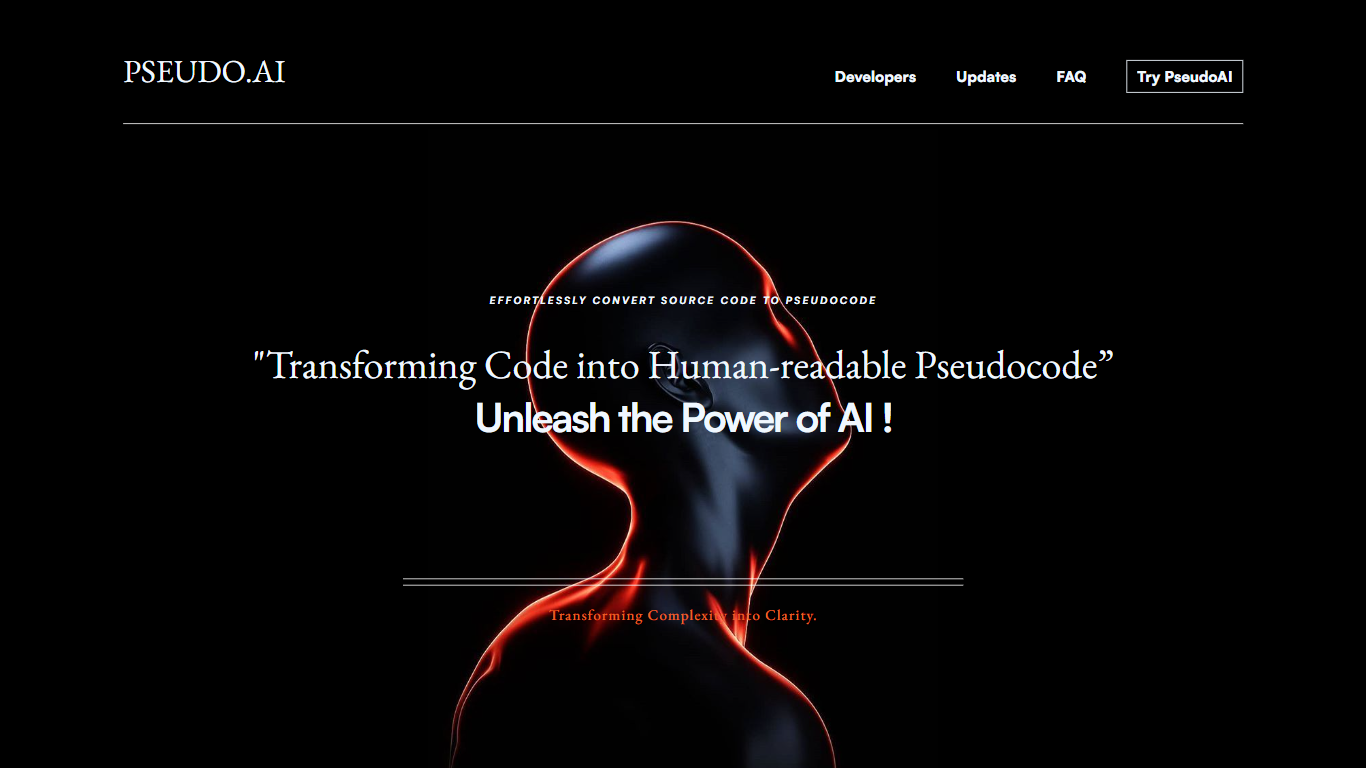

What is PSEUDO.AI?
PSEUDO.AI turns source code into human-readable pseudocode in your browser. You enter a prompt or code snippet, pick a language, and the app returns plain-language steps that read like structured pseudocode rather than raw syntax. It runs on the web at pseudoai.vercel.app with no install, and targets teams who need to explain implementation details to people who do not read code daily.
Most code explainers summarize what a snippet does in prose. PSEUDO.AI keeps the output closer to pseudocode structure, which makes handoffs to designers, product owners, or junior developers easier to scan. The trade-off is focus: it is built for pseudocode conversion, not debugging, testing, or repo-wide documentation. That narrow scope is the point when the goal is shared comprehension, not a full IDE workflow.
Software developers use it to translate tricky logic before code reviews or stakeholder meetings. Computer science students and instructors lean on it when a textbook example needs a readable walkthrough. Product managers and mentors who sit in technical discussions but do not write production code get a format they can follow without parsing braces and semicolons.
Teleport Assist
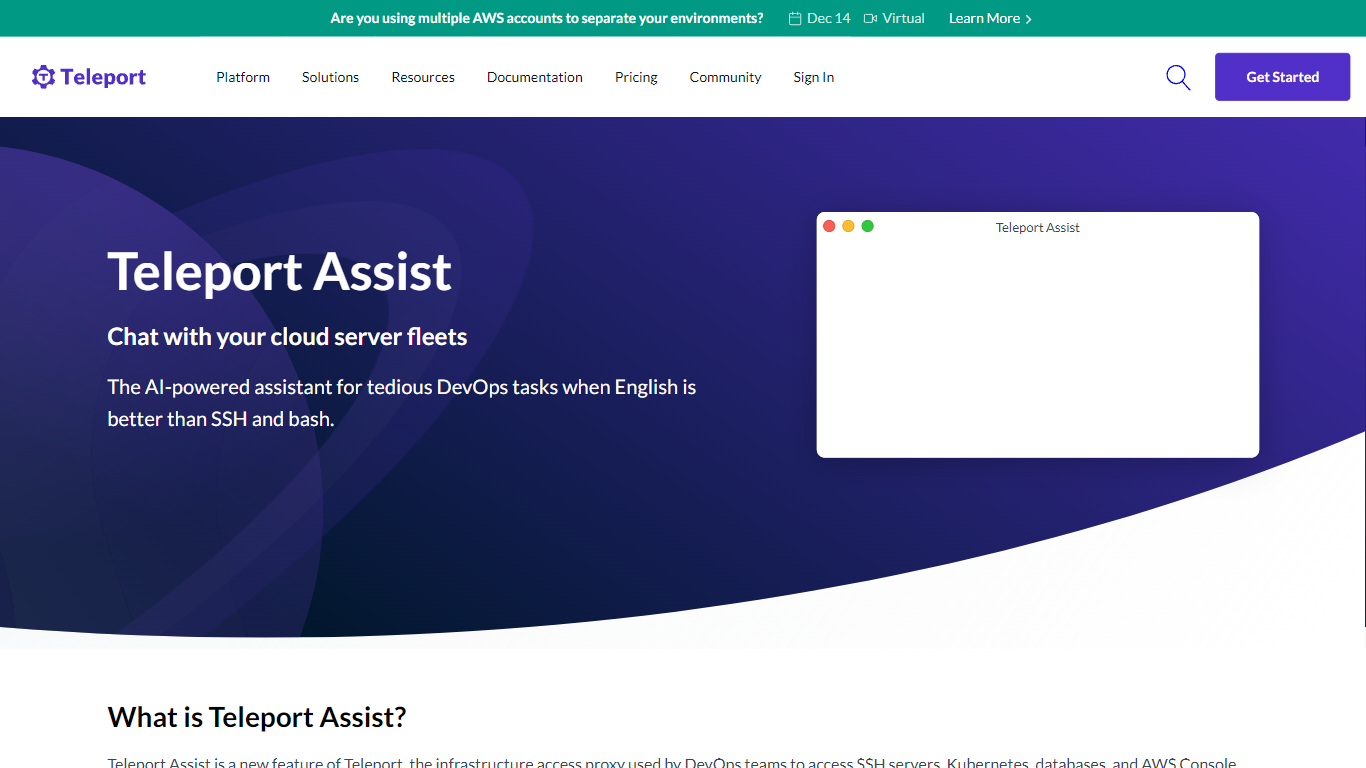
What is Teleport Assist?
Teleport Assist is a generative chat interface built into the Teleport Infrastructure Identity Platform. DevOps teams use it to ask questions about their cloud environments in plain English instead of writing SSH and bash commands by hand.
The assistant converts natural language prompts into executable commands for server fleets. Generated commands run only after a human reviews and approves them, which keeps automated suggestions from executing unchecked in production.
It fits teams already using Teleport for zero trust access who want faster troubleshooting, infrastructure discovery, and day-to-day operational tasks without leaving the platform.
PSEUDO.AI Upvotes
Teleport Assist Upvotes
PSEUDO.AI Top Features
Choose from 12 languages on the converter page, including C, C++, C#, Java, Python 3, JavaScript, Node.js, PHP, Kotlin, Swift, and SQL.
Runs entirely in the browser at pseudoai.vercel.app with no downloads required, per the homepage FAQ.
Uses an OpenAI-trained GPT model to generate pseudocode from your code input, according to the site FAQ.
Three-step workflow on the converter: enter a prompt or topic, pick a language, then click GO and copy the output.
Homepage FAQ lists Java, Python, C++, and JavaScript among supported languages, with a broader list on the live converter.
Teleport Assist Top Features
Ask infrastructure questions in natural language instead of writing bash by hand
Turns prompts into SSH and bash commands scoped to your connected server fleets
Requires human review before any generated command actually runs
Helps debug common issues and collect infrastructure details faster
Built into Teleport alongside identity governance, access control, and session audit
PSEUDO.AI Category
- Developer
Teleport Assist Category
- Developer
PSEUDO.AI Pricing Type
- Free
Teleport Assist Pricing Type
- Freemium