Qdrant vs Cosine
In the face-off between Qdrant vs Cosine, which AI Developer tool takes the crown? We scrutinize features, alternatives, upvotes, reviews, pricing, and more.
When we put Qdrant and Cosine head to head, which one emerges as the victor?
If we were to analyze Qdrant and Cosine, both of which are AI-powered developer tools, what would we find? The upvote count shows a clear preference for Cosine. Cosine has received 7 upvotes from aitools.fyi users, while Qdrant has received 6 upvotes.
Don't agree with the result? Cast your vote and be a part of the decision-making process!
Qdrant
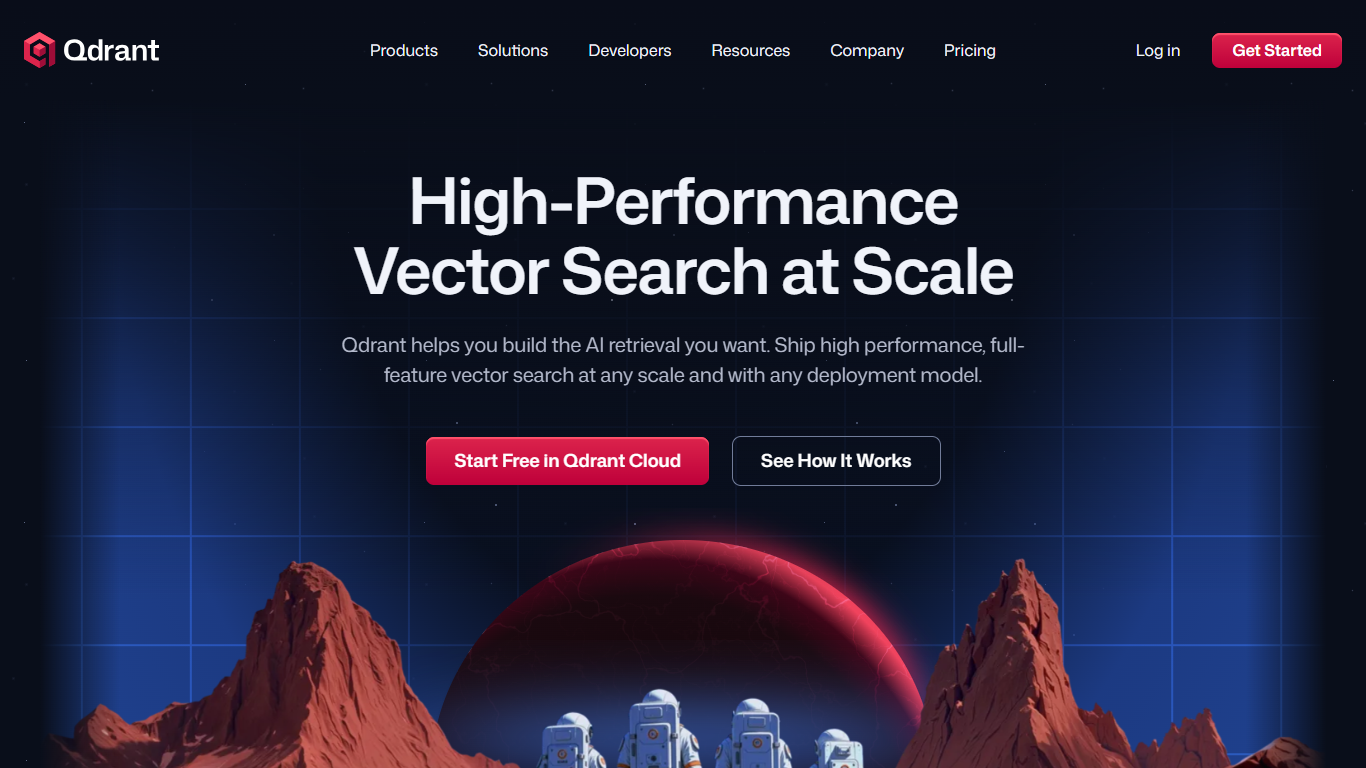

What is Qdrant?
Qdrant stores embeddings and runs fast similarity search with metadata filtering for production AI workloads like RAG chatbots, semantic search, recommendations, and agent memory. You can start on the free cloud tier, self-host the database, or scale on managed clusters across AWS, GCP, and Azure.
The engine is written in Rust and uses a customized HNSW algorithm for approximate nearest neighbor search. Qdrant stands out with native hybrid search that blends dense and sparse vectors in one query, one-stage filtering during graph traversal, and multivector support when a single object needs several embeddings. Compression options like scalar, product, and binary quantization help cut memory use on large collections.
Developers connect through REST, gRPC, or official client libraries, with a built-in Web UI for inspecting collections and running test queries. Qdrant Cloud adds managed backups, zero-downtime scaling, and optional cloud inference. The project launched on GitHub in 2021 and now backs enterprise deployments from companies like Tripadvisor, HubSpot, and Deutsche Telekom.
Cosine
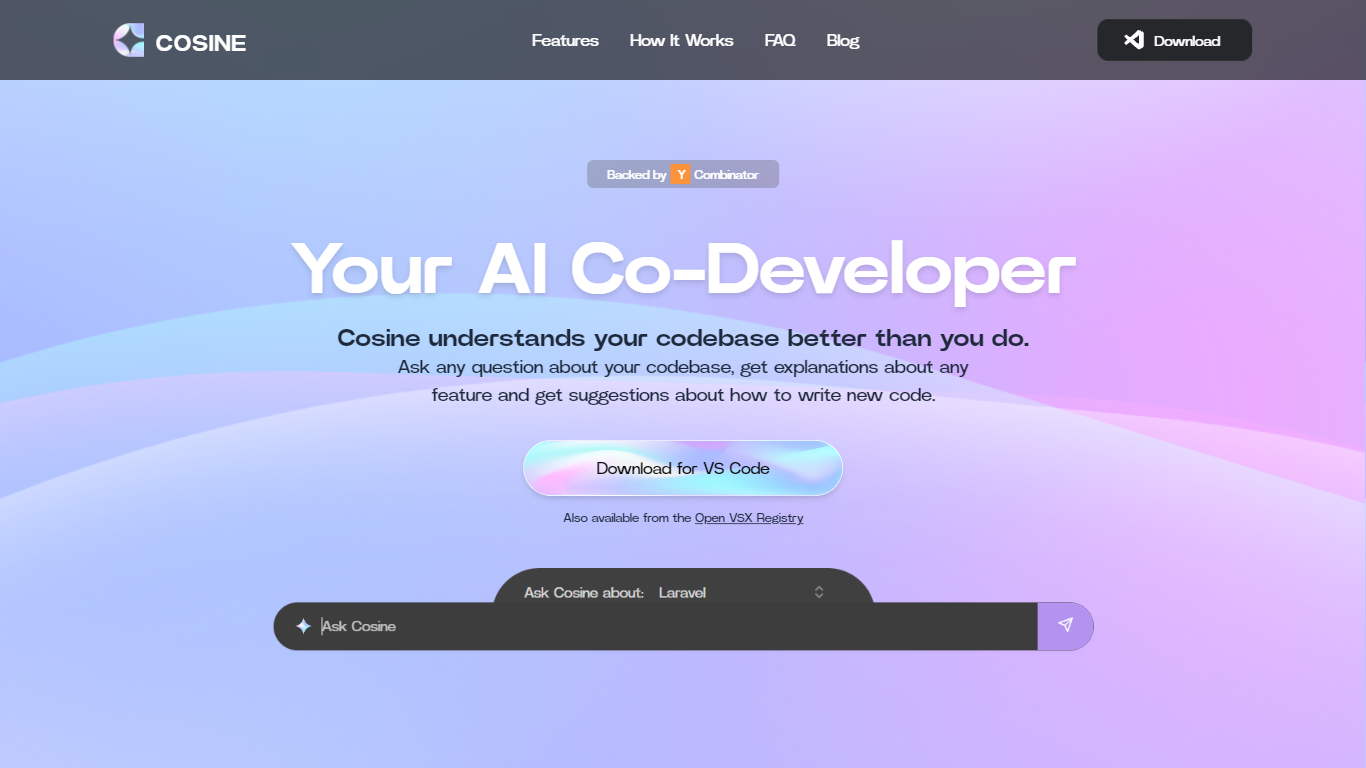
What is Cosine?
Cosine ships the Lumen family of coding models and a developer workspace for teams that want AI close to their repos. You can start in a terminal-native flow with MCP tool access and multi-agent orchestration, or run parallel cloud tasks when PMs and engineers need a shared project view.
General chat models spread training across poetry and trivia; Cosine bets the opposite with Lumen models post-trained on production code from real engineering teams. Lumen Outpost scored 59.3% on Niche-Bench in Cosine's published comparisons, ahead of GPT-5.4 at 42.4%, and the lineup adds Scout for cheap codebase mapping plus a forthcoming Sovereign tier for controlled environments.
Developer teams, platform engineers, and regulated orgs use Cosine when they need deployment choice from public cloud to managed single-tenant or fully air-gapped installs. Pricing starts at $19 per month for 4M credits on the Starter plan, with Team and Enterprise tiers scaling credits and lowering per-million add-on rates.
Qdrant Upvotes
Cosine Upvotes
Qdrant Top Features
Hybrid dense and sparse search in one query, with BM25, SPLADE++, and miniCOIL support
Metadata filters run during HNSW traversal, not as a slow pre- or post-filter step
Written in Rust and benchmarked at up to 4x RPS versus alternatives
Free cloud tier includes 0.5 vCPU, 1GB RAM, and 4GB disk on a single node
REST, gRPC, and official clients for Python, JavaScript, Go, and more
Built-in Web UI to browse collections, test queries, and inspect results visually
Run managed on Qdrant Cloud, self-host OSS, or deploy Hybrid and Private Cloud options
Cosine Top Features
Lumen Outpost scored 59.3% on Niche-Bench in Cosine's published benchmark table
Starter plan includes 4M credits per month starting at $19 with $6.50 per 1M add-on credits
Lumen Scout post-trained from Devstral 123B for low-cost codebase mapping tasks
Terminal-native workflow supports MCP tool access and multi-agent orchestration
Deployment options span public cloud, managed single-tenant, and fully air-gapped installs
Post-training targets enterprise languages including COBOL, Fortran, Verilog, Rust, and complex SQL
Qdrant Category
- Developer
Cosine Category
- Developer
Qdrant Pricing Type
- Freemium
Cosine Pricing Type
- Freemium