Qdrant vs TimeComplexity.ai
When comparing Qdrant vs TimeComplexity.ai, which AI Developer tool shines brighter? We look at pricing, alternatives, upvotes, features, reviews, and more.
In a comparison between Qdrant and TimeComplexity.ai, which one comes out on top?
When we put Qdrant and TimeComplexity.ai side by side, both being AI-powered developer tools, Both tools are equally favored, as indicated by the identical upvote count. Every vote counts! Cast yours and contribute to the decision of the winner.
You don't agree with the result? Cast your vote to help us decide!
Qdrant

What is Qdrant?
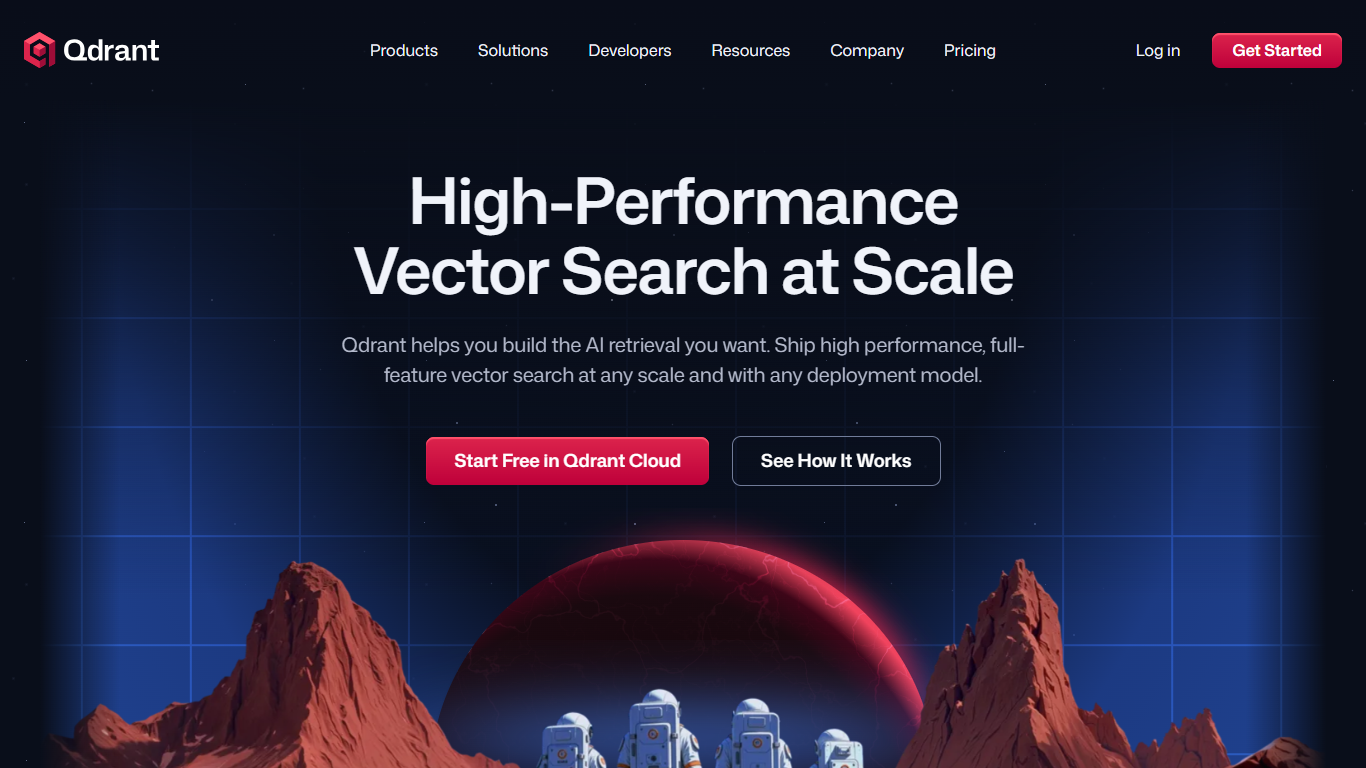
Qdrant stores embeddings and runs fast similarity search with metadata filtering for production AI workloads like RAG chatbots, semantic search, recommendations, and agent memory. You can start on the free cloud tier, self-host the database, or scale on managed clusters across AWS, GCP, and Azure.
The engine is written in Rust and uses a customized HNSW algorithm for approximate nearest neighbor search. Qdrant stands out with native hybrid search that blends dense and sparse vectors in one query, one-stage filtering during graph traversal, and multivector support when a single object needs several embeddings. Compression options like scalar, product, and binary quantization help cut memory use on large collections.
Developers connect through REST, gRPC, or official client libraries, with a built-in Web UI for inspecting collections and running test queries. Qdrant Cloud adds managed backups, zero-downtime scaling, and optional cloud inference. The project launched on GitHub in 2021 and now backs enterprise deployments from companies like Tripadvisor, HubSpot, and Deutsche Telekom.
TimeComplexity.ai
What is TimeComplexity.ai?
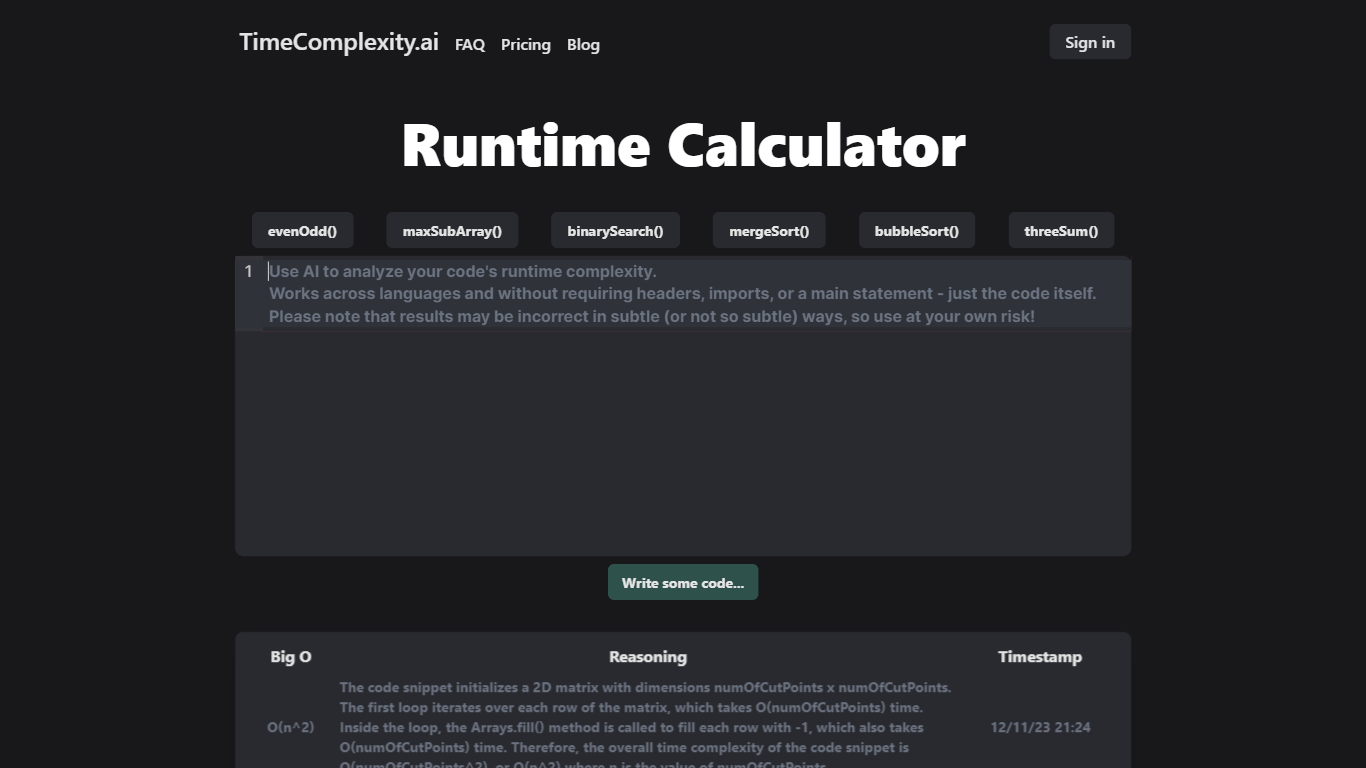
Paste a function into TimeComplexity.ai and it returns Big O runtime complexity with plain-language reasoning. You drop in an algorithm snippet, and the site responds with notation like O(n log n) plus an explanation of why that bound fits the loops and recursion it sees.
Static analyzers usually need a full file with imports and a main block. TimeComplexity.ai accepts partial snippets in Python, JavaScript, Java, C++, Go, and other languages without headers or setup code. That makes it useful for interview prep and quick checks on isolated functions pulled from a larger codebase.
Developers, CS students, and interview candidates use TimeComplexity.ai to sanity-check algorithm bounds before submitting homework or reviewing pull requests. Anonymous users get 20 queries per day, signed-in users get 50, and the $5 per month Pro plan removes the daily cap.
Qdrant Upvotes
TimeComplexity.ai Upvotes
Qdrant Top Features
Hybrid dense and sparse search in one query, with BM25, SPLADE++, and miniCOIL support
Metadata filters run during HNSW traversal, not as a slow pre- or post-filter step
Written in Rust and benchmarked at up to 4x RPS versus alternatives
Free cloud tier includes 0.5 vCPU, 1GB RAM, and 4GB disk on a single node
REST, gRPC, and official clients for Python, JavaScript, Go, and more
Built-in Web UI to browse collections, test queries, and inspect results visually
Run managed on Qdrant Cloud, self-host OSS, or deploy Hybrid and Private Cloud options
TimeComplexity.ai Top Features
Returns Big O notation plus written reasoning for each pasted code snippet
Accepts partial code without headers, imports, or a main function across common languages
Uses GPT-3.5 Turbo with a formatted prompt, per the site FAQ
Anonymous users receive 20 queries per day; signed-in users receive 50 free queries daily
Pro plan at $5 per month unlocks unlimited queries with query history and deletion
Each analysis gets a shareable ID so you can link results with teammates
Qdrant Category
- Developer
TimeComplexity.ai Category
- Developer
Qdrant Pricing Type
- Freemium
TimeComplexity.ai Pricing Type
- Freemium