QuickRedact vs InstructPix2Pix
In the battle of QuickRedact vs InstructPix2Pix, which AI Photo Editing tool comes out on top? We compare reviews, pricing, alternatives, upvotes, features, and more.
Between QuickRedact and InstructPix2Pix, which one is superior?
Upon comparing QuickRedact with InstructPix2Pix, which are both AI-powered photo editing tools, In the race for upvotes, InstructPix2Pix takes the trophy. InstructPix2Pix has been upvoted 98 times by aitools.fyi users, and QuickRedact has been upvoted 7 times.
Don't agree with the result? Cast your vote and be a part of the decision-making process!
QuickRedact
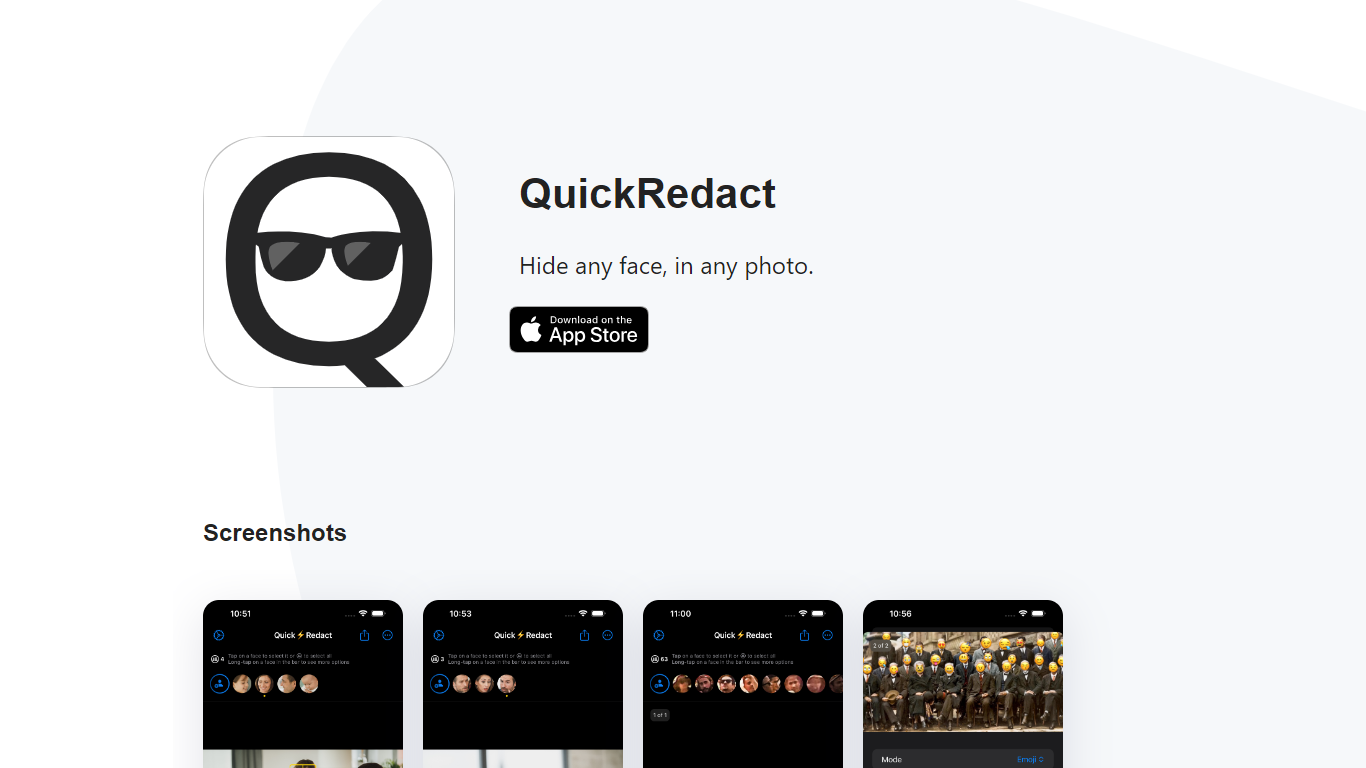

What is QuickRedact?
QuickRedact is an iOS photo privacy app that automatically detects and hides faces in your images. Import one photo or a whole batch, and the app finds every face on-device using local face detection, then lets you redact each one with blur, pixelation, emoji overlays, or shape masks.
All processing happens offline on your iPhone or iPad. Photos never leave your device, metadata is stripped from exports, and the developer does not use analytics or tracking services. Real-time previews use the device's GPU, Neural Engine, and Metal framework so edits render instantly.
QuickRedact is built by a solo developer and sold as a one-time App Store purchase with no subscriptions or in-app purchases. A share extension lets you send photos into the app from other iOS apps.
InstructPix2Pix
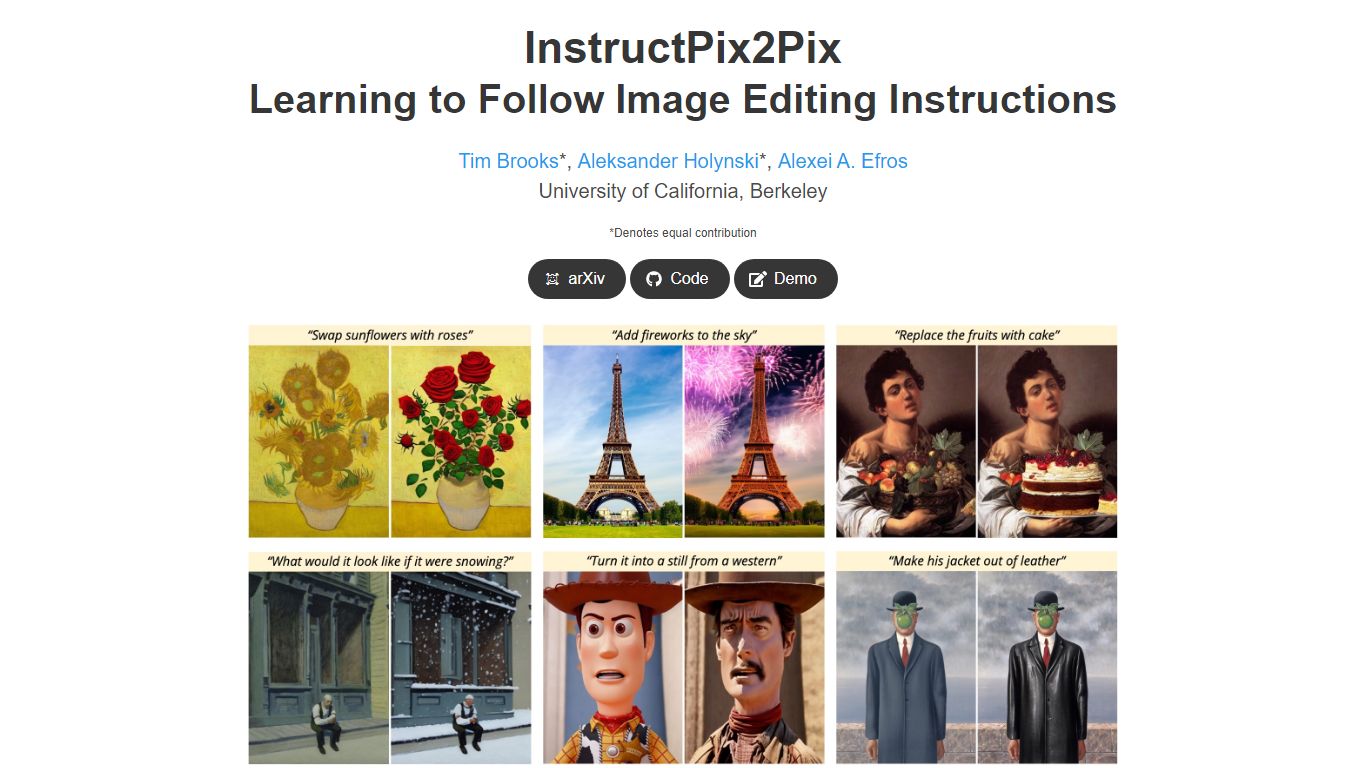
What is InstructPix2Pix?
InstructPix2Pix edits a photo from a plain-language instruction such as "make the sky sunset orange" or "turn this into a watercolor." You provide an input image and a short text command, and the model returns an edited version in seconds without training on that specific photo first. It was published as a CVPR 2023 Highlight by researchers at UC Berkeley.
Mask-based editors make you paint regions before changing anything. InstructPix2Pix runs a single forward pass from text alone, skipping per-image fine-tuning or inversion steps that slow other diffusion edit workflows. The trade-off shows up in the paper's failure cases: viewpoint changes, object swaps, and tight local edits remain weak spots.
The project ships open source code on GitHub and a Hugging Face demo space for trying edits in a browser. Training combined GPT-3 and Stable Diffusion to synthesize instruction pairs, and the released model generalizes to real photos up to about 768 pixels wide despite 256x256 training resolution.
QuickRedact Upvotes
InstructPix2Pix Upvotes
QuickRedact Top Features
Detects any number of faces in a photo automatically, including large group shots
Batch import and process multiple photos in one session
Per-face redaction with blur, pixelation, emoji, or shape effects
On-device processing with GPU and Neural Engine for real-time previews
Strips all photo metadata and runs with no analytics or tracking
InstructPix2Pix Top Features
Edit an uploaded image from a written instruction without manual masking or per-image fine-tuning
Runs edits in a forward pass and returns results in seconds rather than minutes-long inversion workflows
Generalizes to real photos up to about 768 pixels wide despite 256x256 training resolution
Open source code on github.com/timothybrooks/instruct-pix2pix with a Hugging Face demo space
Allows chained instructions where multiple sequential edits compound on the same photo
QuickRedact Category
- Photo Editing
InstructPix2Pix Category
- Photo Editing
QuickRedact Pricing Type
- Paid
InstructPix2Pix Pricing Type
- Free