Raplyrics vs Gladia
In the clash of Raplyrics vs Gladia, which AI Text Generation tool emerges victorious? We assess reviews, pricing, alternatives, features, upvotes, and more.
When we put Raplyrics and Gladia head to head, which one emerges as the victor?
Let's take a closer look at Raplyrics and Gladia, both of which are AI-driven text generation tools, and see what sets them apart. The upvote count is neck and neck for both Raplyrics and Gladia. Join the aitools.fyi users in deciding the winner by casting your vote.
Not your cup of tea? Upvote your preferred tool and stir things up!
Raplyrics

What is Raplyrics?
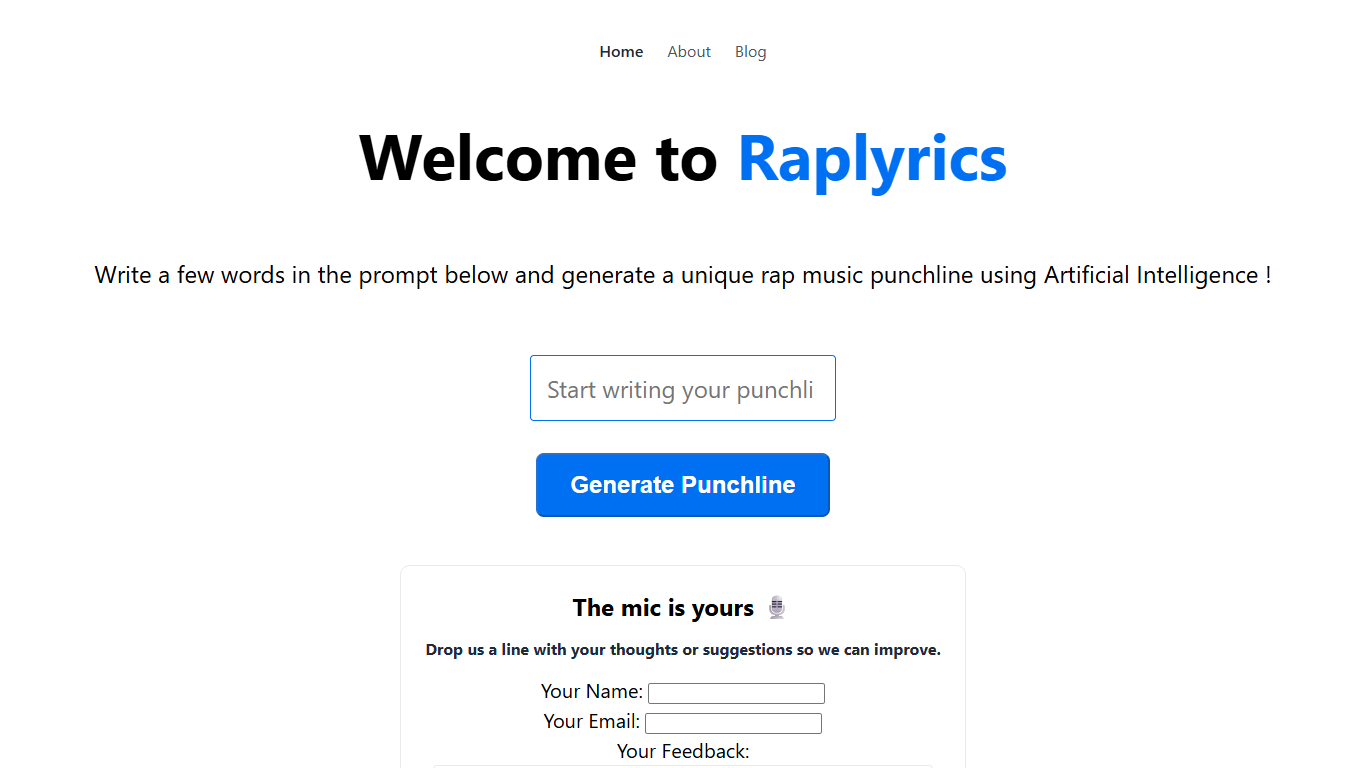
Raplyrics turns a handful of words into one original rap punchline. You type a short prompt on the homepage, hit generate, and the model returns a single bar trained on millions of rap tracks from various artists. No account, no paywall, and no extra steps.
Most lyric tools aim for full verses, choruses, or beat-backed songs. Raplyrics narrows text generation to one punchline at a time, which keeps brainstorming fast when you only need a hook or a clever bar. The interface is a single input field plus a blog on rap culture, and the frontend code is open on GitHub. That focus trades away structured songwriting workflows and commercial licensing.
Songwriters, aspiring rappers, and hip-hop fans who want a quick creative spark without a blank page. The policy page limits use to non-commercial projects, so treat output as inspiration rather than publish-ready lyrics unless you rewrite it yourself.
Gladia
What is Gladia?
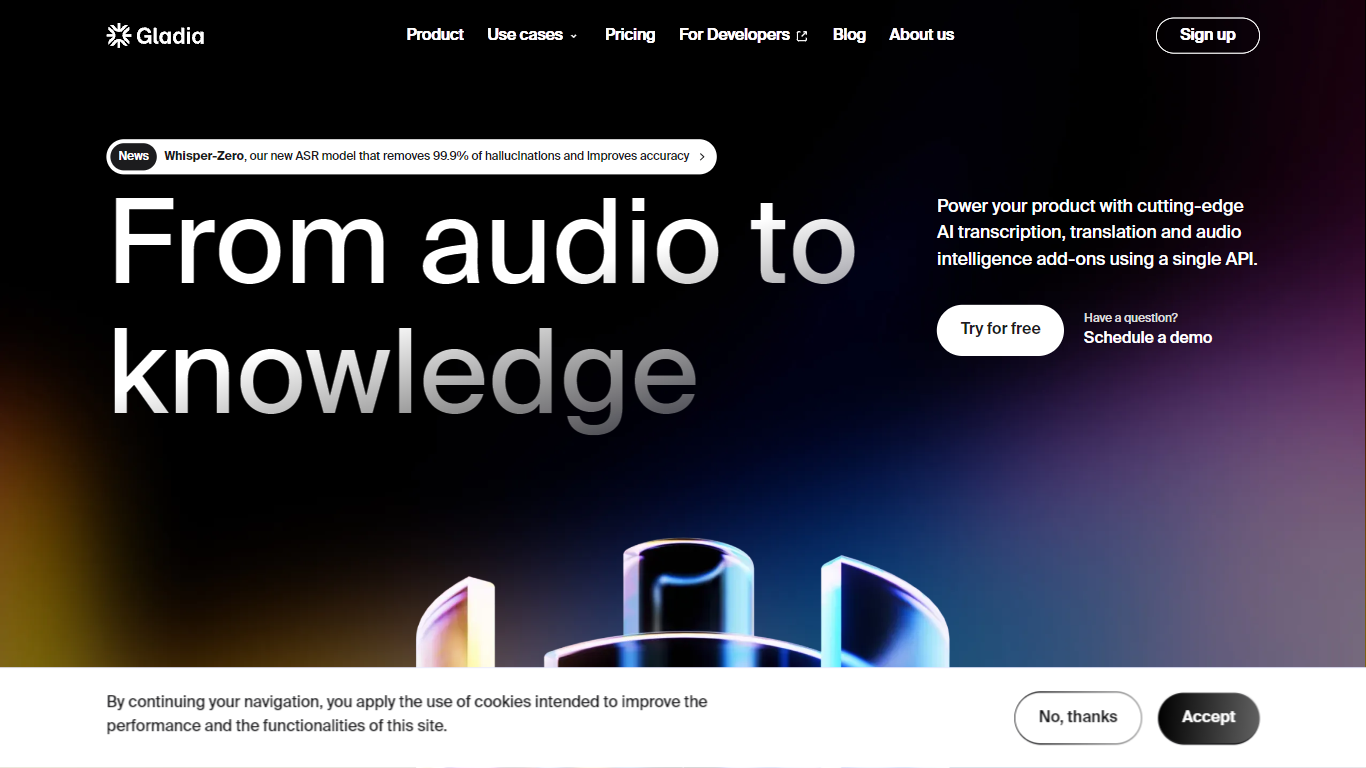
Gladia is a speech-to-text API for developers building voice products. Its single API handles async and real-time transcription, speaker diarization, sentiment analysis, and Audio-to-LLM enrichment. Solaria-3 and Solaria-1 models cover 100+ languages with native code-switching when speakers mix languages mid-sentence. Over 300,000 developers and 2,000+ enterprise teams use Gladia for meeting assistants, contact centers, voice agents, and media workflows.
Most STT APIs charge extra for diarization, sentiment, or multilingual support. Gladia bundles speaker labels, named entity recognition, and translation into the core transcription call at no add-on cost. Its EU headquarters and default model-training opt-out on paid plans give procurement teams a compliance story Deepgram and AssemblyAI often sell as upgrades. Self-hosted Whisper comparisons on Gladia's site cite roughly 20% less DevOps overhead for teams that switch.
Product teams plug Gladia into Pipecat, LiveKit, Twilio, or Retell with Python and Node.js SDKs. Contact centers transcribe call recordings for QA and compliance. Meeting assistant builders get sub-300ms real-time latency and a 99.95% uptime SLA on production traffic. Media teams generate time-stamped subtitles from pre-recorded audio through the async endpoint.
Raplyrics Upvotes
Gladia Upvotes
Raplyrics Top Features
Generates one punchline from a short homepage prompt in seconds
Model trained on millions of rap songs from various artists
Free to use with no signup required per the policy page
Blog lists 8 articles on rap music culture and society
Open-source frontend on GitHub at fpaupier/RapLyrics-Front
Homepage links to a Medium article on its ML engine and API
Gladia Top Features
Solaria-3 hits 9.6% WER on real English audio and leads on European business benchmarks
Real-time STT streams with sub-300ms latency for live voice agents and dictation apps
100+ languages with automatic detection and native mid-sentence code-switching
Speaker diarization included on every plan, with 3x fewer errors than competing vendors on Gladia benchmarks
Async transcription from $0.61/hour on Starter and down to $0.20/hour on Growth plans
Audio-to-LLM pipeline returns summaries, action items, and entity extraction in one API call
SOC 2 Type II, HIPAA, GDPR, and ISO 27001 certifications with EU data residency options
Raplyrics Category
- Text Generation
Gladia Category
- Text Generation
Raplyrics Pricing Type
- Free
Gladia Pricing Type
- Freemium