RLAMA vs Stellaris AI
In the clash of RLAMA vs Stellaris AI, which AI Large Language Model (LLM) tool emerges victorious? We assess reviews, pricing, alternatives, features, upvotes, and more.
When we put RLAMA and Stellaris AI head to head, which one emerges as the victor?
Let's take a closer look at RLAMA and Stellaris AI, both of which are AI-driven large language model (llm) tools, and see what sets them apart. There's no clear winner in terms of upvotes, as both tools have received the same number. Every vote counts! Cast yours and contribute to the decision of the winner.
Want to flip the script? Upvote your favorite tool and change the game!
RLAMA
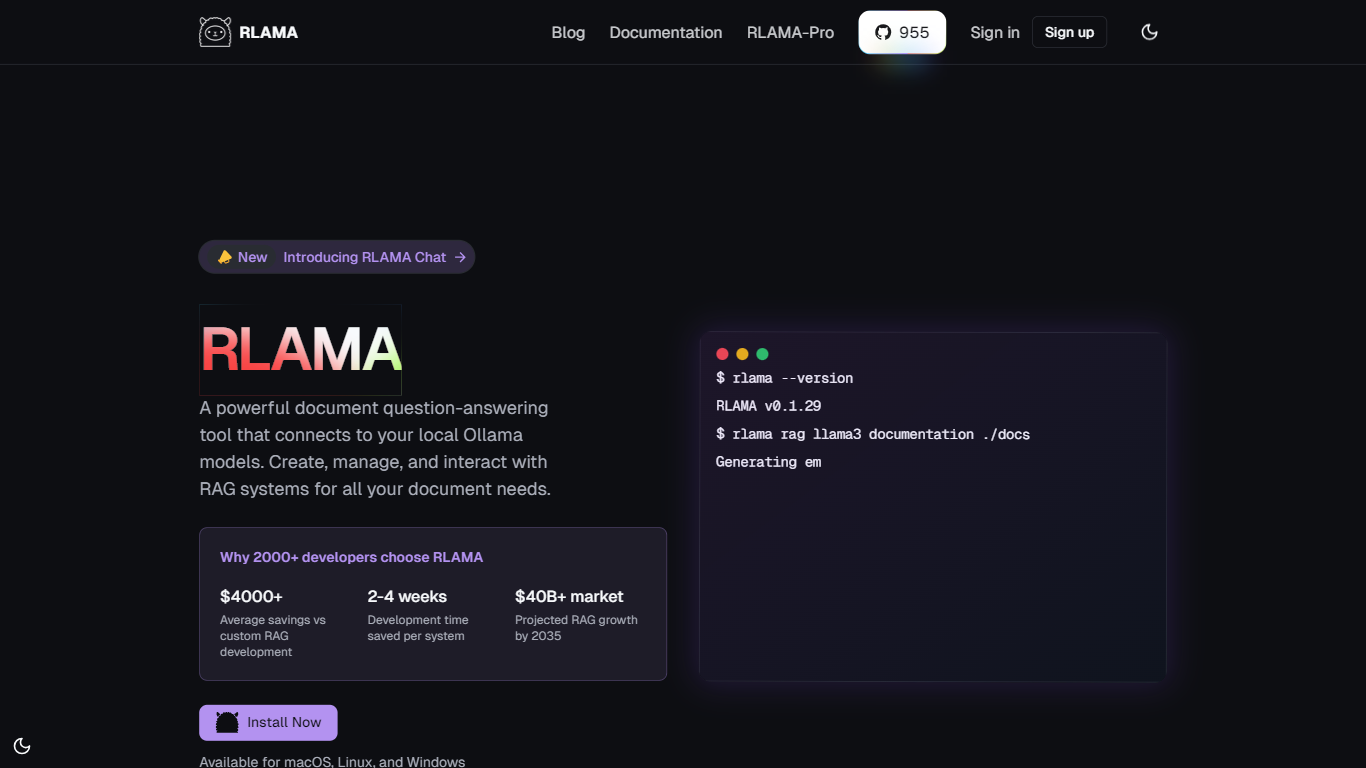

What is RLAMA?
RLAMA builds local RAG systems and multi-agent crews from your terminal on macOS, Linux, or Windows. You index folders of PDFs, Markdown, and code files, then query them through Ollama, OpenAI, or Hugging Face models without sending data to external servers. The open-source project also includes a visual RAG builder on rlama.dev.
Most RAG tools stop at document Q&A. RLAMA adds agent roles, tool wiring, and crew workflows so one terminal session can chain researchers, writers, and coders through sequential or parallel steps. Directory watching keeps RAG indexes fresh when files change, and an HTTP API exposes the same systems to other apps.
Developers building private knowledge bases, research teams indexing papers, and engineers who want offline document search use RLAMA for local embeddings and chunking. The project maintainers note active development is paused, but the open-source CLI and docs remain available for install.
Stellaris AI
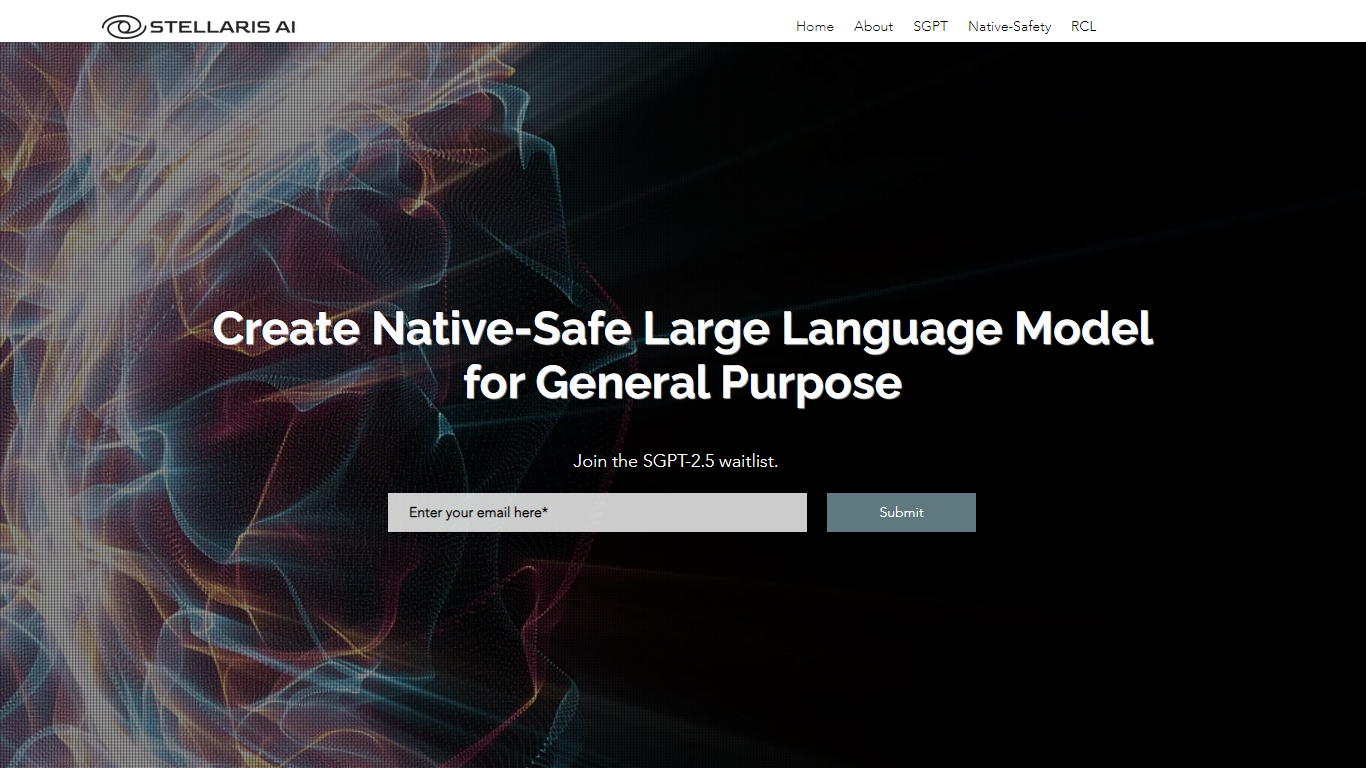
What is Stellaris AI?
Stellaris AI builds large language models marketed around native safety and human-like reasoning for real-world tasks. Its flagship SGPT line targets text and code generation, knowledge Q&A, logical reasoning, and analytics at a scale the company describes as hundreds of billions of parameters. The public site centers on a waitlist for SGPT-4.5 rather than a self-serve chat product you can open today.
Where many LLM labs bolt safety filters on after training, Stellaris AI frames safety as part of the model stack through strict source referencing and harm minimization in the architecture. It also highlights Real-time Context Learning (RCL) for adapting answers with live knowledge, a combination aimed at teams that want cited outputs instead of unchecked generation.
Researchers, enterprise AI teams, and early adopters join the SGPT-4.5 waitlist for first access. The company cites 10+ years of research and three core product pillars: Stellaris GPT, Native Safety, and RCL.
RLAMA Upvotes
Stellaris AI Upvotes
RLAMA Top Features
CLI creates RAG indexes from folders with hybrid chunking defaults of 1000 tokens and 200 overlap
Supports 30+ file types including PDF, DOCX, Markdown, and common code extensions
Agent and crew commands assign roles like researcher, writer, and coder with RAG or web search tools
100% local processing option with Ollama so documents never leave your machine
Visual RAG builder on rlama.dev configures models, sources, and chunking without typing commands
Directory watch commands auto-index new files added to a watched folder
HTTP API server exposes RAG systems to other applications on a custom port
Stellaris AI Top Features
SGPT models described at 100B+ parameters for text, code, and reasoning tasks
Native Safety framework with strict source referencing and harm minimization
Real-time Context Learning (RCL) for live knowledge integration
Three product pillars: Stellaris GPT, Native Safety, and RCL
SGPT-4.5 waitlist open for early access signups on the homepage
RLAMA Category
- Large Language Model (LLM)
Stellaris AI Category
- Large Language Model (LLM)
RLAMA Pricing Type
- Freemium
Stellaris AI Pricing Type
- Freemium