SciSummary vs Scholarcy
In the face-off between SciSummary vs Scholarcy, which AI Summarizer tool takes the crown? We scrutinize features, alternatives, upvotes, reviews, pricing, and more.
When we put SciSummary and Scholarcy head to head, which one emerges as the victor?
If we were to analyze SciSummary and Scholarcy, both of which are AI-powered summarizer tools, what would we find? The users have made their preference clear, Scholarcy leads in upvotes. The upvote count for Scholarcy is 7, and for SciSummary it's 6.
Don't agree with the result? Cast your vote and be a part of the decision-making process!
SciSummary
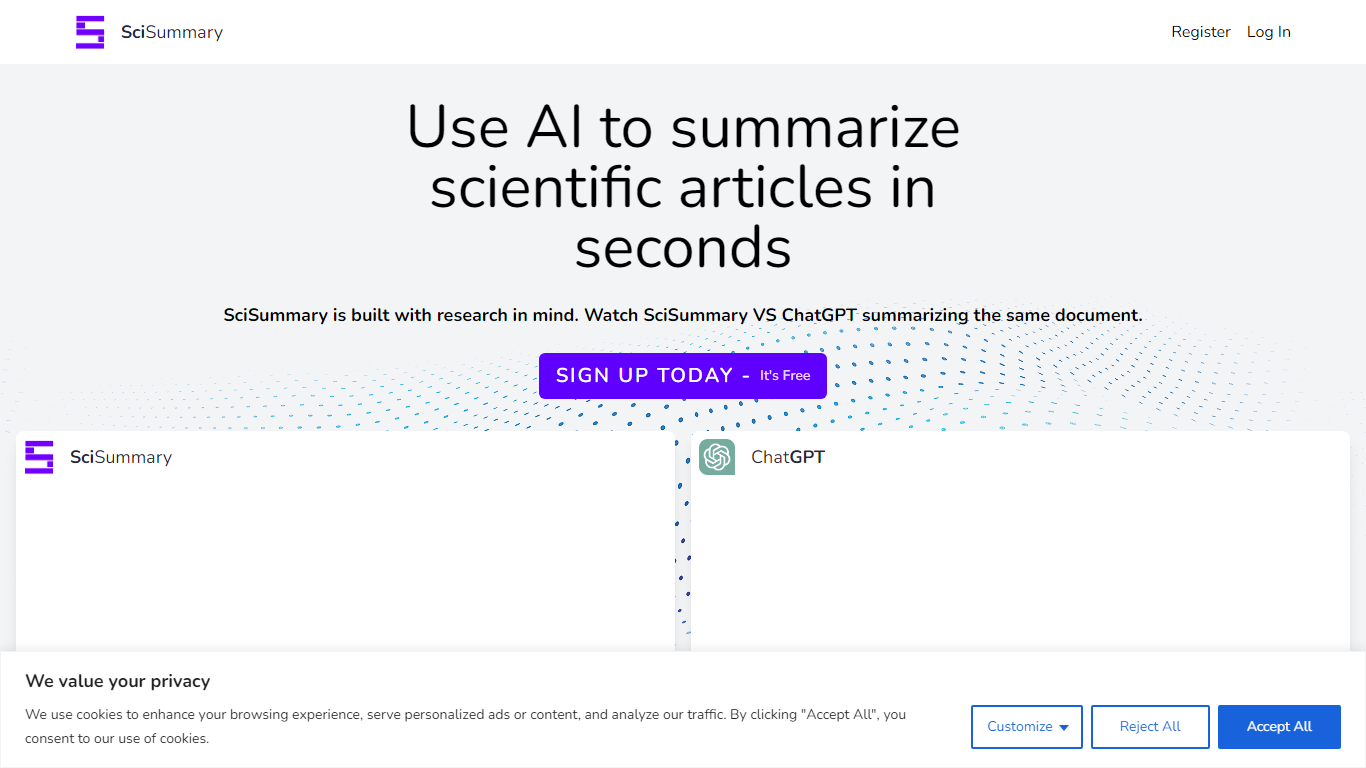

What is SciSummary?
SciSummary summarizes scientific articles and research papers into structured sections like abstract, methods, results, and conclusion. Upload PDFs or import papers in bulk, chat with figures for statistical interpretation, and organize everything in tagged folders. It is built for academic reading rather than general-purpose chat.
General LLMs can paraphrase a paper but often drop citations, misread figures, or blur section structure. SciSummary trains around domain-specific academic workflows: bulk multi-paper synthesis, semantic search across 1,000 indexed documents on Pro, and an MCP server for research-paper integrations. It is the official AI provider for the ACM Digital Library.
Graduate students, lab researchers, and faculty who read dozens of papers weekly are the core users. Over 900,000 accounts have summarized more than 2.2 million papers since March 2023. Pro costs $4 per month billed annually; a 7-day free trial and student promo cover lighter loads.
Scholarcy
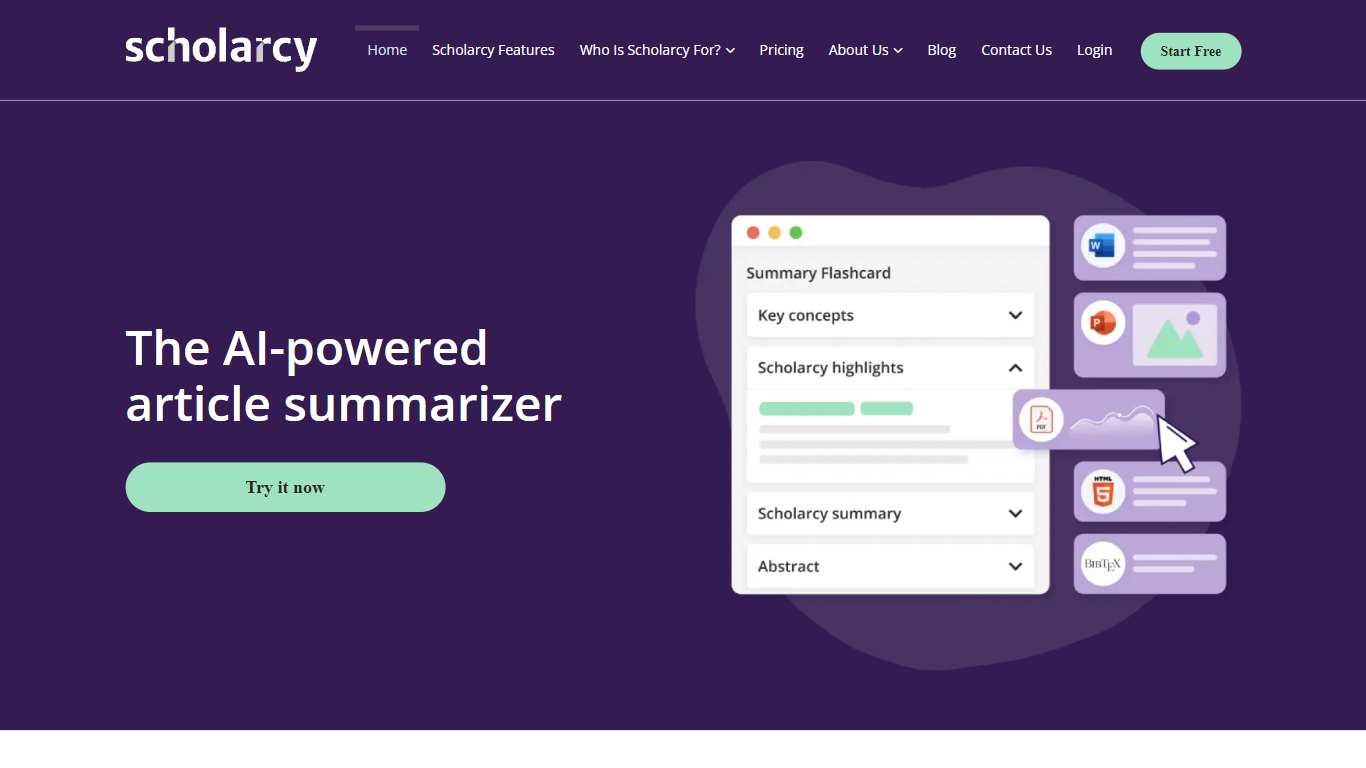
What is Scholarcy?
Scholarcy turns academic papers, book chapters, and articles into interactive summary flashcards that highlight key findings, methods, and limitations. Upload a PDF, import from Zotero or Google Drive, or paste a YouTube link, and Scholarcy extracts structured takeaways you can read in minutes instead of skimming for an hour.
General summarizers compress text into paragraphs. Scholarcy builds flashcards designed for research screening, with Spotlight jumps to important sections, research quality indicators, study comparisons, and a Dig Deeper prompt feature for asking questions about the paper. That structure suits literature reviews more than a generic TL;DR.
Students, PhD researchers, and international learners use Scholarcy to screen papers, organize flashcards into collections, and export bibliographies to Word or reference managers. Browser extensions for Chrome, Edge, Firefox, and Safari let you summarize articles while browsing, and paid plans add unlimited summaries, literature matrix exports, and batch export of up to 100 flashcards.
SciSummary Upvotes
Scholarcy Upvotes
SciSummary Top Features
Structured summaries break papers into abstract, methods, results, and conclusion sections
Bulk summarization compares and synthesizes multiple papers in one pass
Chat with figures interprets p-values, confidence intervals, and effect sizes
Pro plan at $48 per year includes unlimited summaries, figures, and chat messages
Semantic search indexes up to 1,000 documents on the Pro plan
Official AI provider for the ACM Digital Library with Nature magazine recognition
Over 900,000 users summarized more than 2.2 million papers since March 2023
Scholarcy Top Features
Converts PDFs, articles, book chapters, and YouTube videos into interactive flashcard summaries
Free plan includes up to 10 summaries with single flashcard export
Scholarcy Plus at $9.99 per month includes unlimited summaries and a 7-day free trial
Yearly plan at $90 saves 25% compared to monthly billing
Import directly from Zotero and export to Excel, Markdown, Word, and reference managers
Literature Matrix export compares up to 100 flashcards across key findings and methods
Browser extensions for Chrome, Edge, Firefox, and Safari summarize papers while browsing
SciSummary Category
- Summarizer
Scholarcy Category
- Summarizer
SciSummary Pricing Type
- Freemium
Scholarcy Pricing Type
- Freemium