Serwell vs Tiledesk
In the battle of Serwell vs Tiledesk, which AI Customer Support tool comes out on top? We compare reviews, pricing, alternatives, upvotes, features, and more.
Between Serwell and Tiledesk, which one is superior?
Upon comparing Serwell with Tiledesk, which are both AI-powered customer support tools, Both tools are equally favored, as indicated by the identical upvote count. Since other aitools.fyi users could decide the winner, the ball is in your court now to cast your vote and help us determine the winner.
Disagree with the result? Upvote your favorite tool and help it win!
Serwell
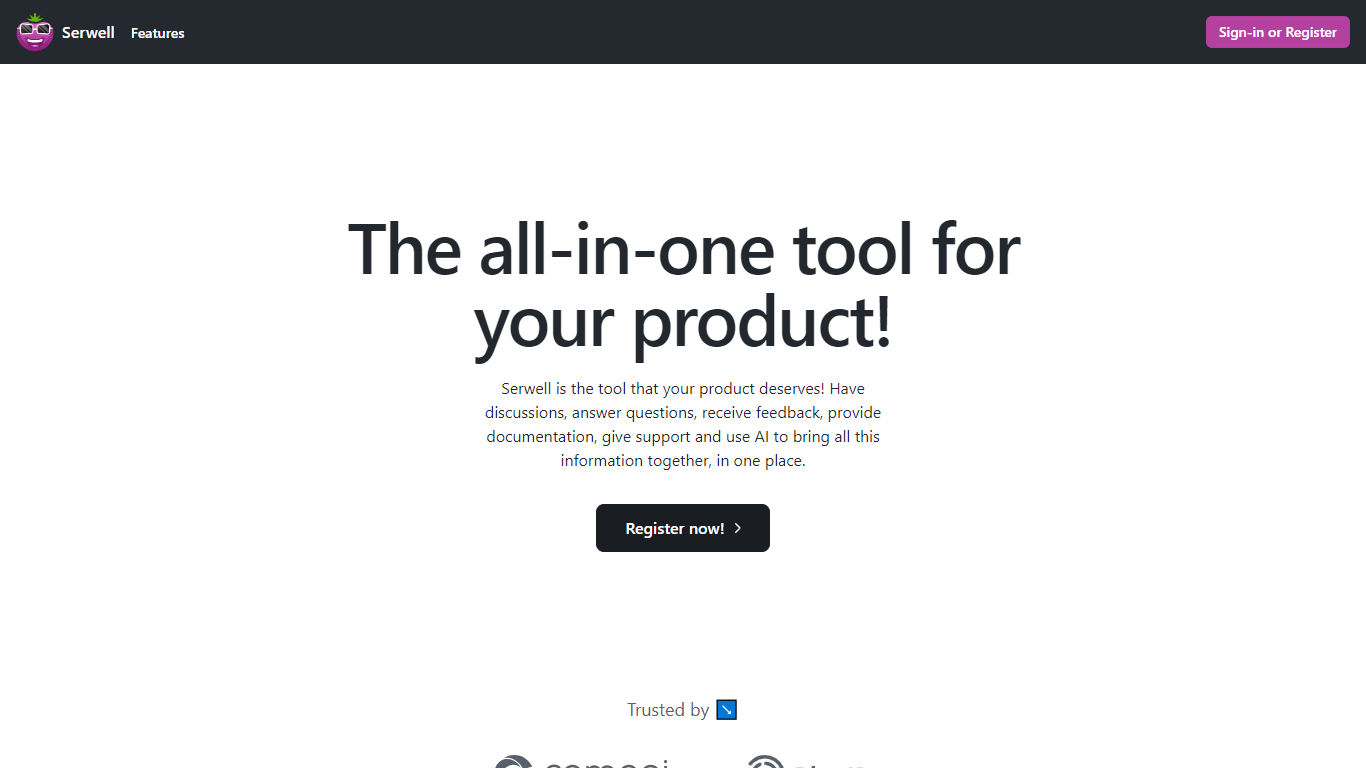

What is Serwell?
Serwell combines community forums, feedback boards, support tickets, product docs, and an embeddable AI assistant in one customer support workspace. SaaS teams run discussions, mark answers, post updates, collect feedback with an auto-generated roadmap, and handle private support tickets from the same branded hub. Documentation pages are search-engine indexed so customers can find help outside the app.
Unlike stacking Intercom, Canny, and a separate docs site, Serwell keeps community, roadmap, support, and knowledge base data in one workspace that trains its AI layer. The widget learns from workspace content and suggests replies based on docs and past tickets. Custom domains, BlueID authentication, and SSO let you host the portal on your own URL with your login flow.
Product managers, SaaS founders, and customer success teams who want one portal instead of four tools fit Serwell best. It trades deep specialization in any single category for a unified stack with shared context across support channels.
Tiledesk
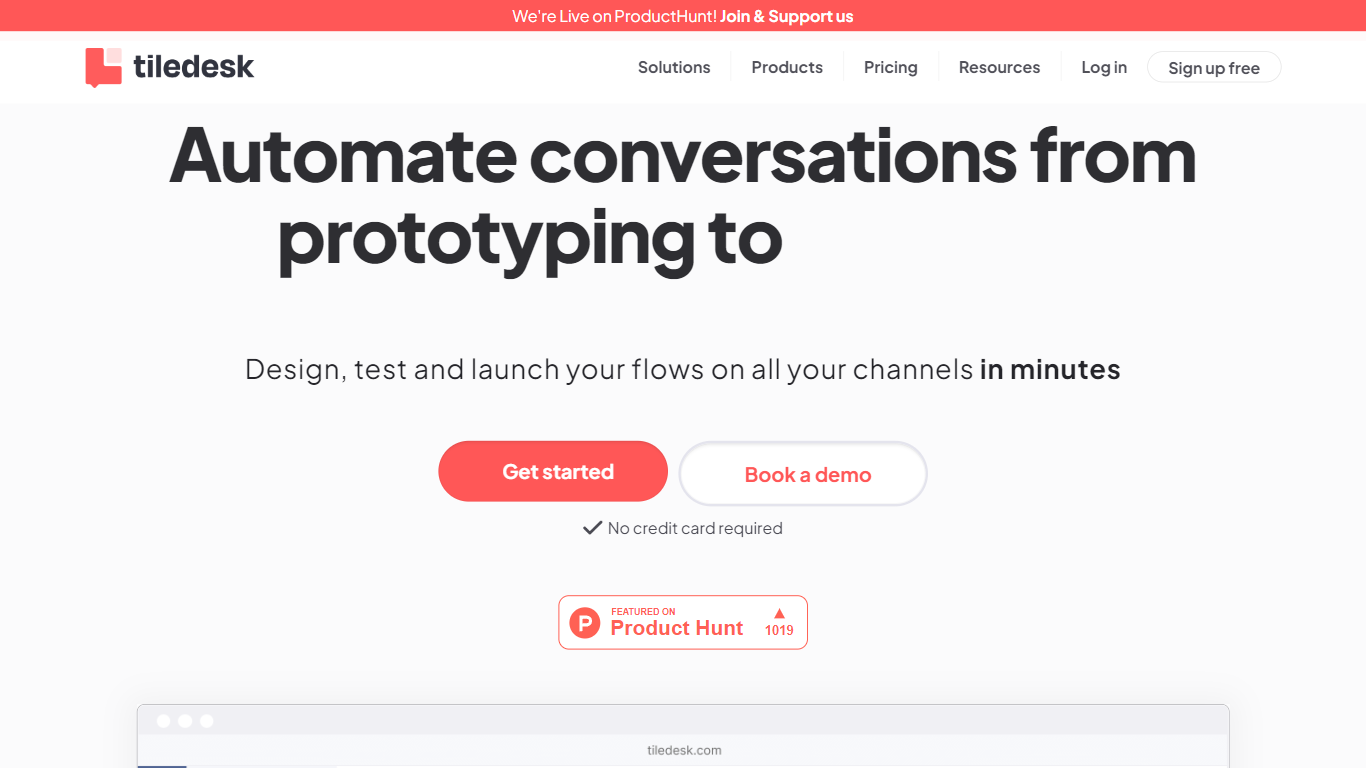
What is Tiledesk?
Tiledesk helps teams build agentic AI support workflows without code. Its Design Studio lets teams drag conversation flows, connect knowledge bases, chain multiple AI agents, and publish the same automations to web chat, WhatsApp, email, SMS, and voice. Live chat, human handoff, and an AI copilot for agents sit on the same stack, so support can start automated and escalate with full context.
Compared with lightweight chat widgets, Tiledesk pushes into orchestration: prompt chains, MCP tool connections, hybrid RAG search, API endpoints for batch automation, and on-prem open-core deployment. That breadth is the trade-off. You get an operating system for multi-channel support and internal retrieval, but setup spans agents, knowledge bases, and channel connectors rather than a single embed script.
Tiledesk targets customer support, RevOps, and operations teams in ecommerce, education, healthcare, telecom, and public sector use cases highlighted on the site. A 14-day trial with no credit card is advertised on the homepage, and paid Pro plans start at €149 per month with defined AI agent, token, and conversation limits.
Serwell Upvotes
Tiledesk Upvotes
Serwell Top Features
Auto-generated product roadmap from feedback tickets without manual board setup
Private support tickets visible only to the agent and the requesting customer
Documentation editor with automatic search engine indexing for public help pages
Embeddable AI widget that learns from workspace docs and prior support requests
Custom domain hosting with BlueID authentication and SSO for branded portals
Community Q&A with mark-as-answer posts and product update announcements
Tiledesk Top Features
Design Studio provides a drag-and-drop flow builder for AI agents, prompt chains, and MCP-connected actions
Pro plan includes 20 AI Agents, 5M AI tokens, and 3,000 conversations per month for 3 users
Multichannel publishing covers web, WhatsApp, Facebook Messenger, SMS, email, and voice
Agentic RAG supports multiple knowledge bases with hybrid full-text and semantic search
14-day free trial requires no credit card according to the homepage
Open-source core on GitHub with on-prem deployment and local LLM integration options
Serwell Category
- Customer Support
Tiledesk Category
- Customer Support
Serwell Pricing Type
- Paid
Tiledesk Pricing Type
- Freemium