slAItor vs Shook
When comparing slAItor vs Shook, which AI Translation tool shines brighter? We look at pricing, alternatives, upvotes, features, reviews, and more.
In a comparison between slAItor and Shook, which one comes out on top?
When we put slAItor and Shook side by side, both being AI-powered translation tools, Both tools are equally favored, as indicated by the identical upvote count. Your vote matters! Help us decide the winner among aitools.fyi users by casting your vote.
Not your cup of tea? Upvote your preferred tool and stir things up!
slAItor

What is slAItor?
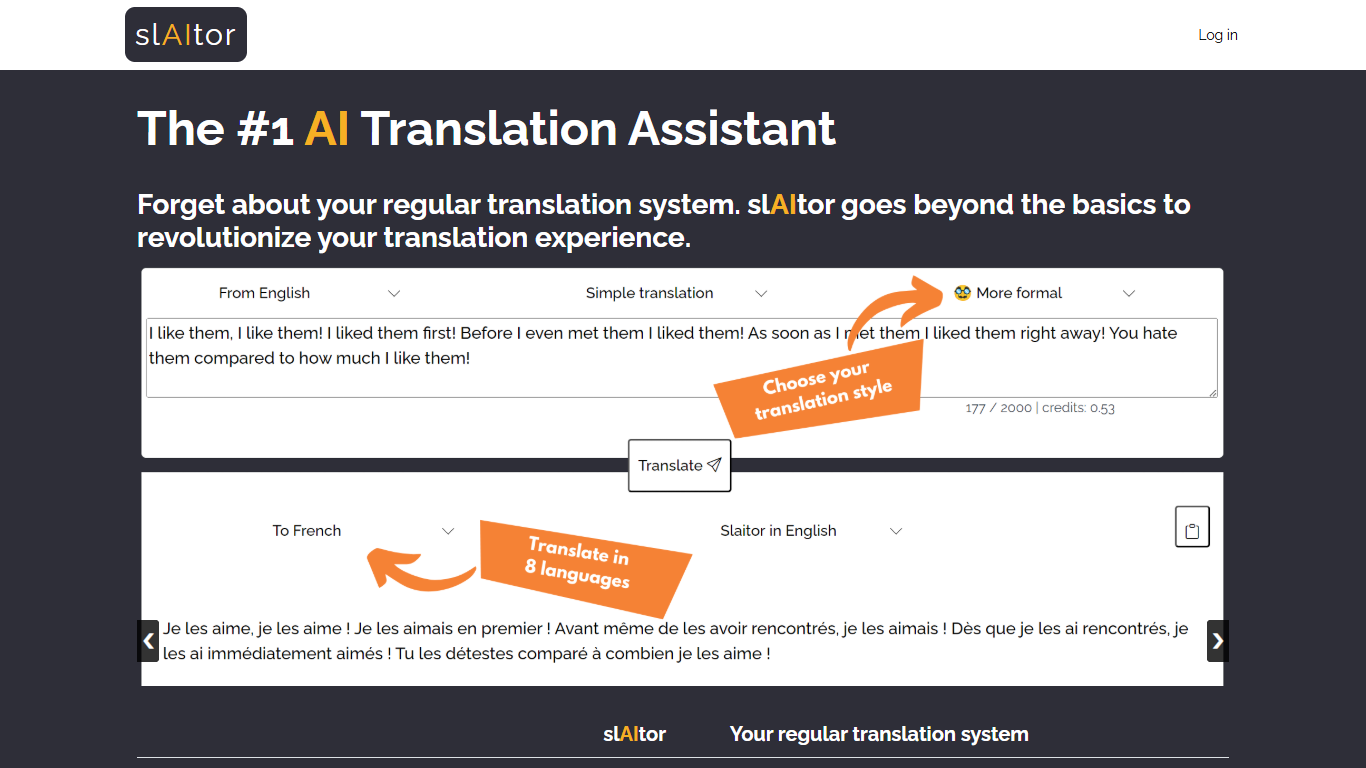
slAItor is an online translation assistant built around large language models from the GPT family, combined with standard machine translation pipelines. Instead of returning a single translated string, it is designed for people who want more context around a translation: explanations, alternatives, style adjustments, and error checking.
The product targets language learners, translators, and professionals who need more than a quick paste-and-go result. Benjamin Marie, who holds a Ph.D. in machine translation and has spent more than a decade in MT research, built slAItor to explore what becomes possible when GPT-style models sit at the center of a translation workflow.
slAItor supports 28 language pairs across Chinese, English, French, German, Italian, Japanese, Portuguese, and Spanish. The site is upfront that raw translation quality can trail established systems in some cases, but positions itself on price and on features like step-by-step explanations, paraphrasing, and a checker mode that reviews your own drafts.
Shook
What is Shook?
Shook clones your voice on iOS and plays back typed messages in other languages. You record a short voice sample, write or pick a message, choose a target language, and hear the result spoken in a version of your own voice. The marketing site describes the core pitch as hearing yourself speak in different languages, then sends you to the App Store download.
Most translation apps output a generic synthetic voice. Shook focuses on voice cloning so the translated audio still sounds like you, which makes shared voice messages feel more personal than standard text-to-speech. The privacy policy confirms the app stores voice samples and language preferences to power cloning and translation, but the public website itself stays minimal with almost no feature breakdown beyond the download flow.
It suits iPhone users who want to experiment with multilingual voice messages for friends, language practice, or curiosity about how they sound in another tongue. Android users are out of luck since the site only links to iOS. Without a public pricing page on getshook.app, plan details live inside the App Store listing rather than on the web.
slAItor Upvotes
Shook Upvotes
slAItor Top Features
Translates across 28 language pairs spanning eight major languages
Step-by-step and checker modes cost 3 credits per 1,000 characters
Monthly plan lists at $25 for 800 credits with commercial-use rights
Paraphraser and style calibrator offer up to five alternative phrasings
Minimum query cost is 0.1 credit per translation request
Shook Top Features
Clones your voice from a short audio sample for translated playback
Translates typed English messages into your selected target language
Outputs speech that mimics your own voice instead of a generic narrator
Available as an iOS download through the App Store
Privacy policy documents voice-sample storage for cloning and translation
slAItor Category
- Translation
Shook Category
- Translation
slAItor Pricing Type
- Paid
Shook Pricing Type
- Freemium