Starlens vs Taylor
In the battle of Starlens vs Taylor, which AI Developer tool comes out on top? We compare reviews, pricing, alternatives, upvotes, features, and more.
Between Starlens and Taylor, which one is superior?
Upon comparing Starlens with Taylor, which are both AI-powered developer tools, Interestingly, both tools have managed to secure the same number of upvotes. You can help us determine the winner by casting your vote and tipping the scales in favor of one of the tools.
Feeling rebellious? Cast your vote and shake things up!
Starlens
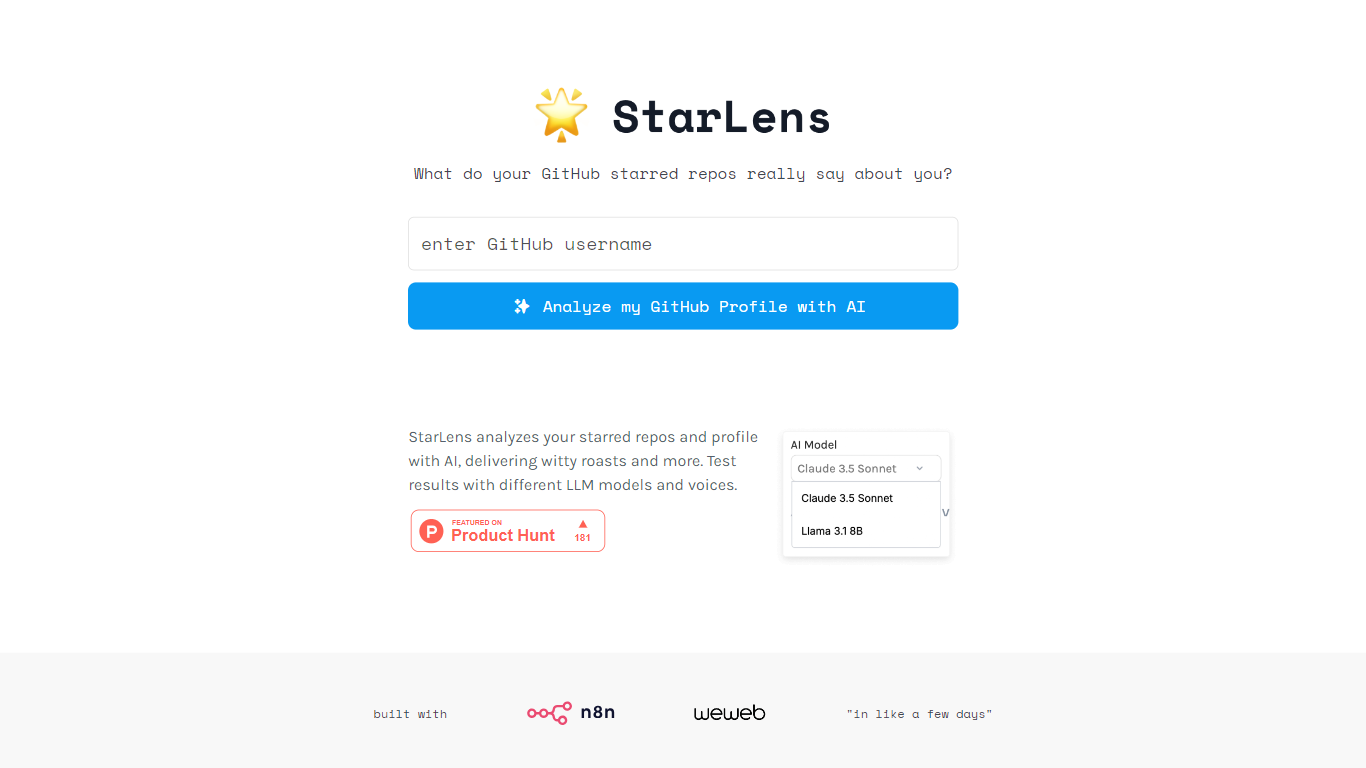

What is Starlens?
The website offers a comprehensive platform designed to enhance productivity and streamline workflows for professionals across various industries. Its core functionality revolves around task management, collaboration tools, and performance tracking, making it an essential tool for teams looking to optimize their operations. The target audience includes project managers, team leaders, and organizations seeking to improve efficiency and communication within their teams. The unique value proposition lies in its user-friendly interface combined with powerful features that cater to both small businesses and large enterprises. Key differentiators include real-time collaboration capabilities, customizable dashboards, and integration with popular third-party applications, setting it apart from competitors in the productivity software market.
Taylor
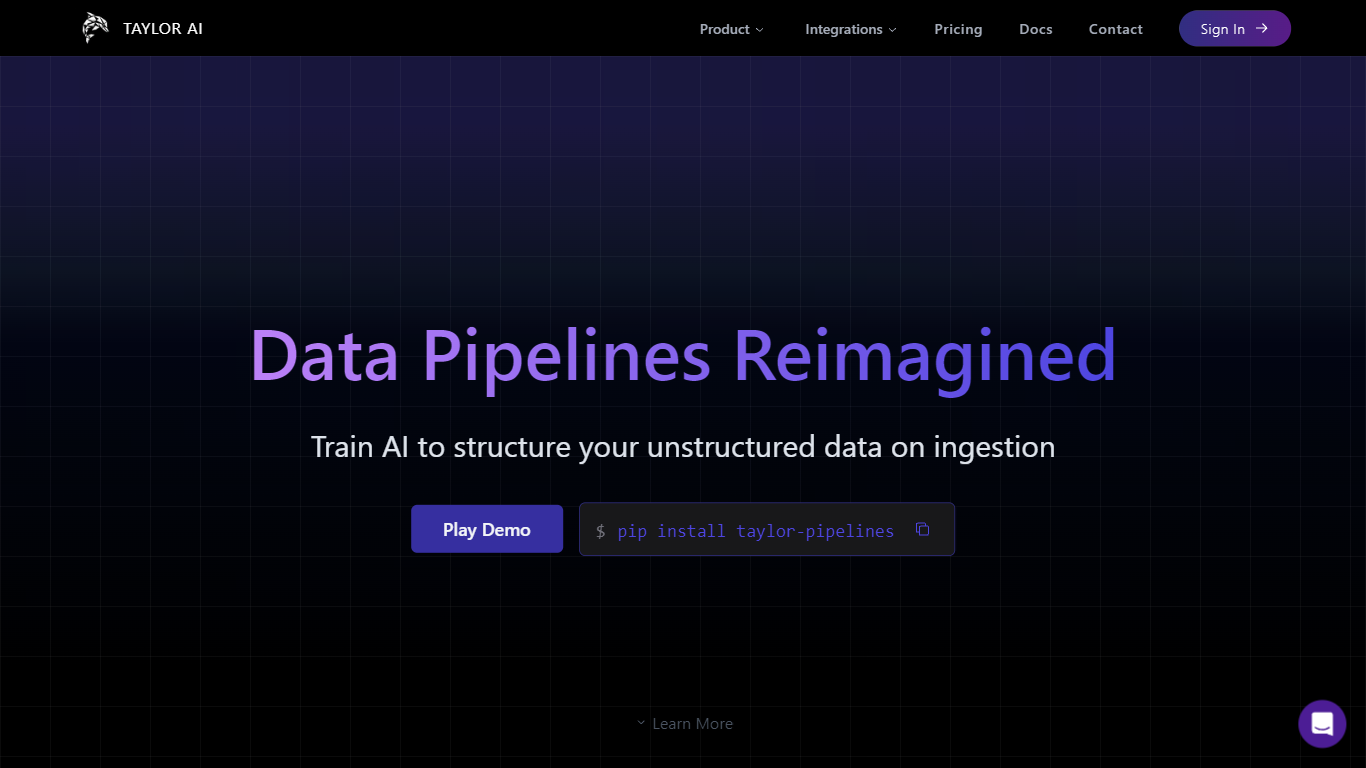
What is Taylor?
Taylor gives developers a production API for classifying and enriching unstructured text without running their own model stack. You send free-text records and Taylor returns labels from a taxonomy you define, using a classification ensemble tuned for deterministic results rather than open-ended LLM replies.
General-purpose LLMs work for one-off tagging but get expensive and inconsistent at volume. Taylor focuses on high-throughput text classification: batch parallel processing, drift monitoring, and private classifiers trained on taxonomies like IAB ad categories, O*NET occupation codes, NAICS industry classes, and legal clause types. The company also ships taylor-pipelines for building S3 data pipelines with a hosted UI.
Taylor was founded in 2023 in San Francisco and is backed by Y Combinator, General Catalyst, FoundersX, and Gaingels. The product targets government agencies, law firms, and private teams that need SOC2-compliant text enrichment through an API or spreadsheet workflow. Sign-in uses Google or GitHub, and support contact is [email protected].
Starlens Upvotes
Taylor Upvotes
Starlens Top Features
Real-Time Collaboration: Enables team members to work together simultaneously on projects, enhancing communication and reducing delays.
Customizable Dashboards: Users can tailor their dashboards to display relevant metrics and tasks, improving focus and efficiency.
Integration with Third-Party Applications: Seamlessly connects with tools like Slack, Google Drive, and Trello, allowing for a unified workflow.
Performance Tracking: Provides analytics and reporting features to monitor team performance and project progress, facilitating data-driven decision-making.
User-Friendly Interface: Designed with simplicity in mind, ensuring that users can navigate the platform easily without extensive training.
Taylor Top Features
Text classification API that accepts custom taxonomies such as IAB tags, O*NET codes, and NAICS classes
Batch processing mode for high-volume parallel classification jobs
Monitoring alerts for accuracy drift, failures, and performance issues
taylor-pipelines library for streaming unstructured data from Amazon S3 into hosted workflows
Configurable score thresholds and max label counts per classification request
SOC2-compliant security with API and spreadsheet implementation options
Starlens Category
- Developer
Taylor Category
- Developer
Starlens Pricing Type
- Freemium
Taylor Pricing Type
- Freemium