Stellaris AI vs GPT-4
In the battle of Stellaris AI vs GPT-4, which AI Large Language Model (LLM) tool comes out on top? We compare reviews, pricing, alternatives, upvotes, features, and more.
Between Stellaris AI and GPT-4, which one is superior?
Upon comparing Stellaris AI with GPT-4, which are both AI-powered large language model (llm) tools, With more upvotes, GPT-4 is the preferred choice. GPT-4 has received 7 upvotes from aitools.fyi users, while Stellaris AI has received 6 upvotes.
Disagree with the result? Upvote your favorite tool and help it win!
Stellaris AI
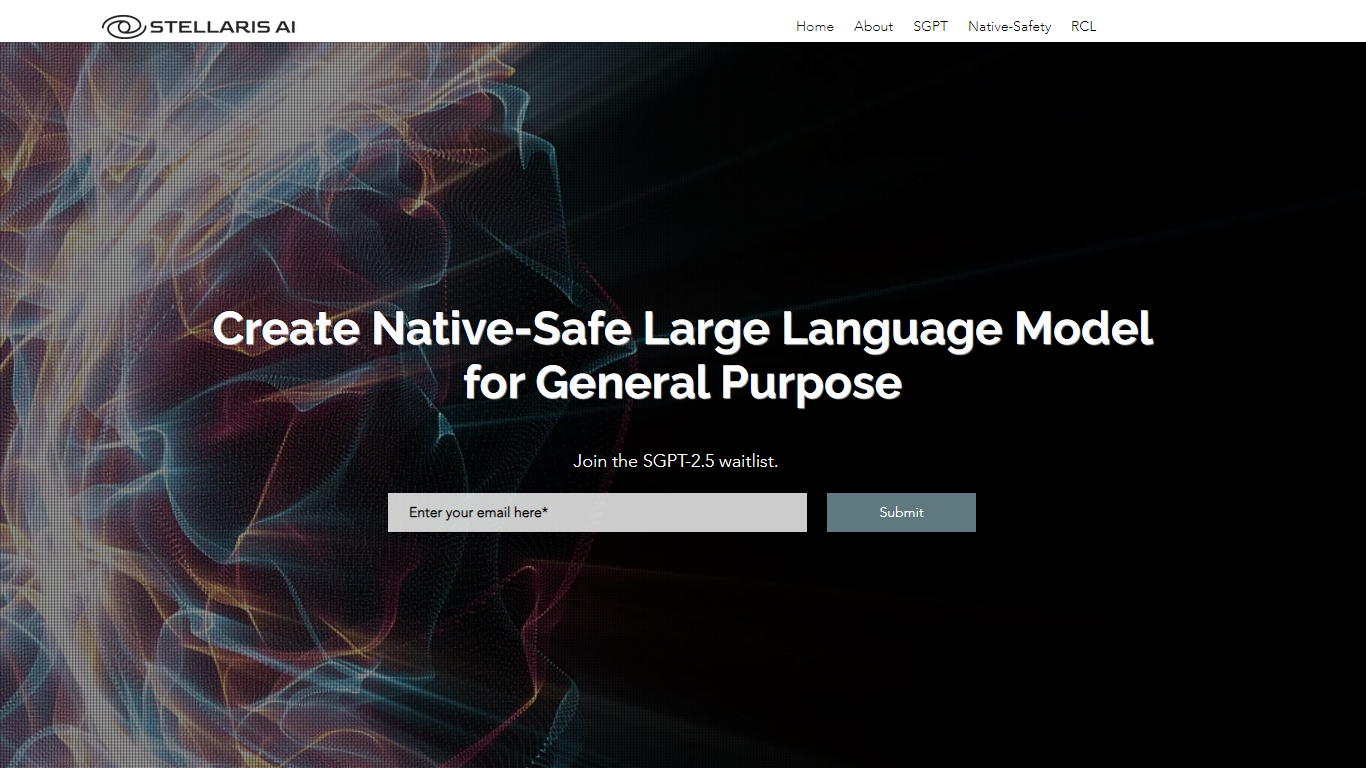

What is Stellaris AI?
Stellaris AI builds large language models marketed around native safety and human-like reasoning for real-world tasks. Its flagship SGPT line targets text and code generation, knowledge Q&A, logical reasoning, and analytics at a scale the company describes as hundreds of billions of parameters. The public site centers on a waitlist for SGPT-4.5 rather than a self-serve chat product you can open today.
Where many LLM labs bolt safety filters on after training, Stellaris AI frames safety as part of the model stack through strict source referencing and harm minimization in the architecture. It also highlights Real-time Context Learning (RCL) for adapting answers with live knowledge, a combination aimed at teams that want cited outputs instead of unchecked generation.
Researchers, enterprise AI teams, and early adopters join the SGPT-4.5 waitlist for first access. The company cites 10+ years of research and three core product pillars: Stellaris GPT, Native Safety, and RCL.
GPT-4
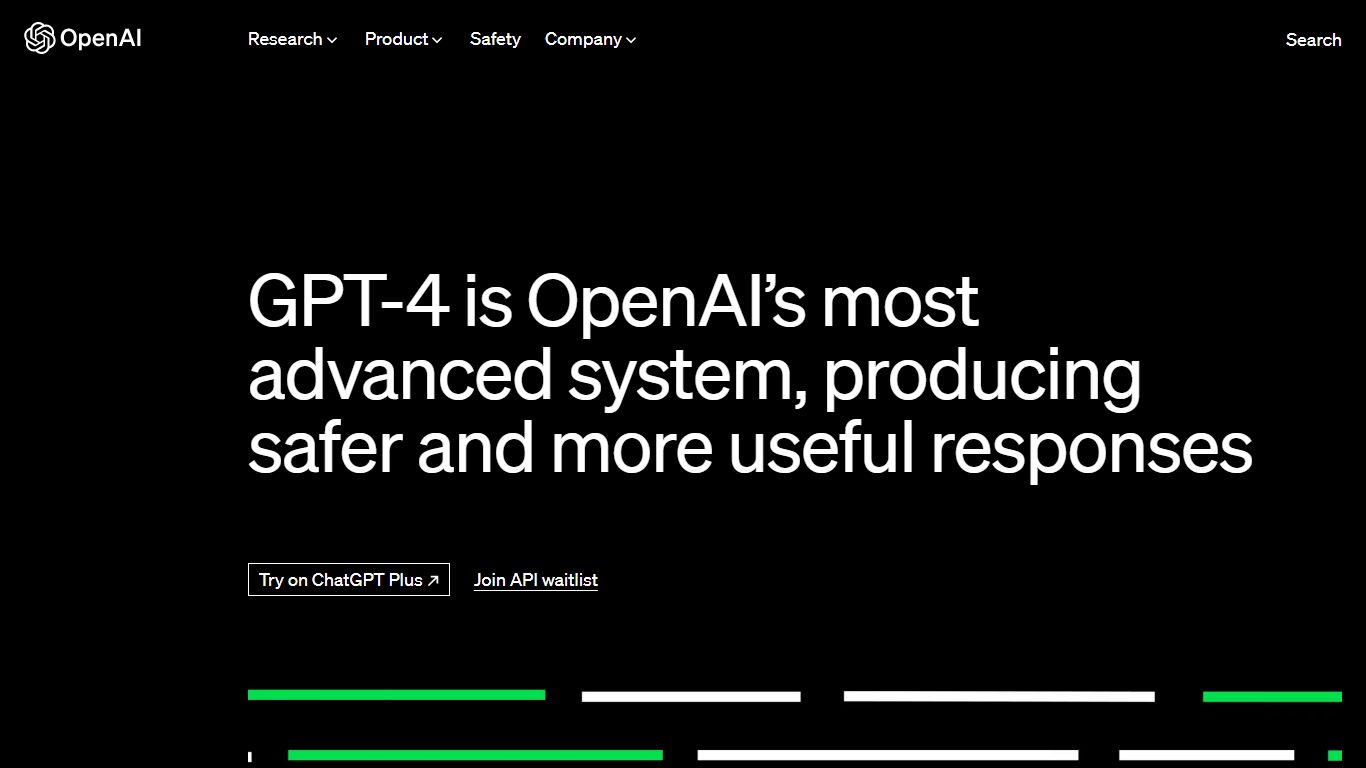
What is GPT-4?
GPT-4 is OpenAI's large language model built for advanced reasoning, instruction following, and safer responses across text tasks. OpenAI positions it as the successor along the GPT research line and makes it available through ChatGPT Plus and the developer API. The product page highlights alignment work with human feedback and expert review before release.
Compared with earlier GPT-3.5 chat models, GPT-4 emphasizes measurable safety and factuality gains rather than raw parameter counts alone. OpenAI reports it is 82% less likely to answer disallowed requests and 40% more likely to give factual replies on internal tests versus GPT-3.5. That trade-off targets teams that need stronger guardrails even if latency and cost run higher than smaller models.
GPT-4 shows up in production stories from Duolingo, Be My Eyes, Stripe, and Morgan Stanley wealth management on OpenAI's site. Developers reach it through the API platform, while ChatGPT Plus subscribers access it inside the chat product. OpenAI notes ongoing limitations around bias, hallucinations, and adversarial prompts that remain under active research.
Stellaris AI Upvotes
GPT-4 Upvotes
Stellaris AI Top Features
SGPT models described at 100B+ parameters for text, code, and reasoning tasks
Native Safety framework with strict source referencing and harm minimization
Real-time Context Learning (RCL) for live knowledge integration
Three product pillars: Stellaris GPT, Native Safety, and RCL
SGPT-4.5 waitlist open for early access signups on the homepage
GPT-4 Top Features
82% lower rate of disallowed responses versus GPT-3.5 on OpenAI internal tests
40% higher likelihood of factual answers versus GPT-3.5 on OpenAI evaluations
Alignment pipeline used feedback from over 50 expert reviewers before launch
Available through ChatGPT Plus and the OpenAI developer API
Trained on Microsoft Azure AI supercomputers per OpenAI infrastructure notes
Stellaris AI Category
- Large Language Model (LLM)
GPT-4 Category
- Large Language Model (LLM)
Stellaris AI Pricing Type
- Freemium
GPT-4 Pricing Type
- Freemium