Taylor vs TimeComplexity.ai
In the contest of Taylor vs TimeComplexity.ai, which AI Developer tool is the champion? We evaluate pricing, alternatives, upvotes, features, reviews, and more.
If you had to choose between Taylor and TimeComplexity.ai, which one would you go for?
When we examine Taylor and TimeComplexity.ai, both of which are AI-enabled developer tools, what unique characteristics do we discover? Both tools are equally favored, as indicated by the identical upvote count. The power is in your hands! Cast your vote and have a say in deciding the winner.
Don't agree with the result? Cast your vote and be a part of the decision-making process!
Taylor

What is Taylor?
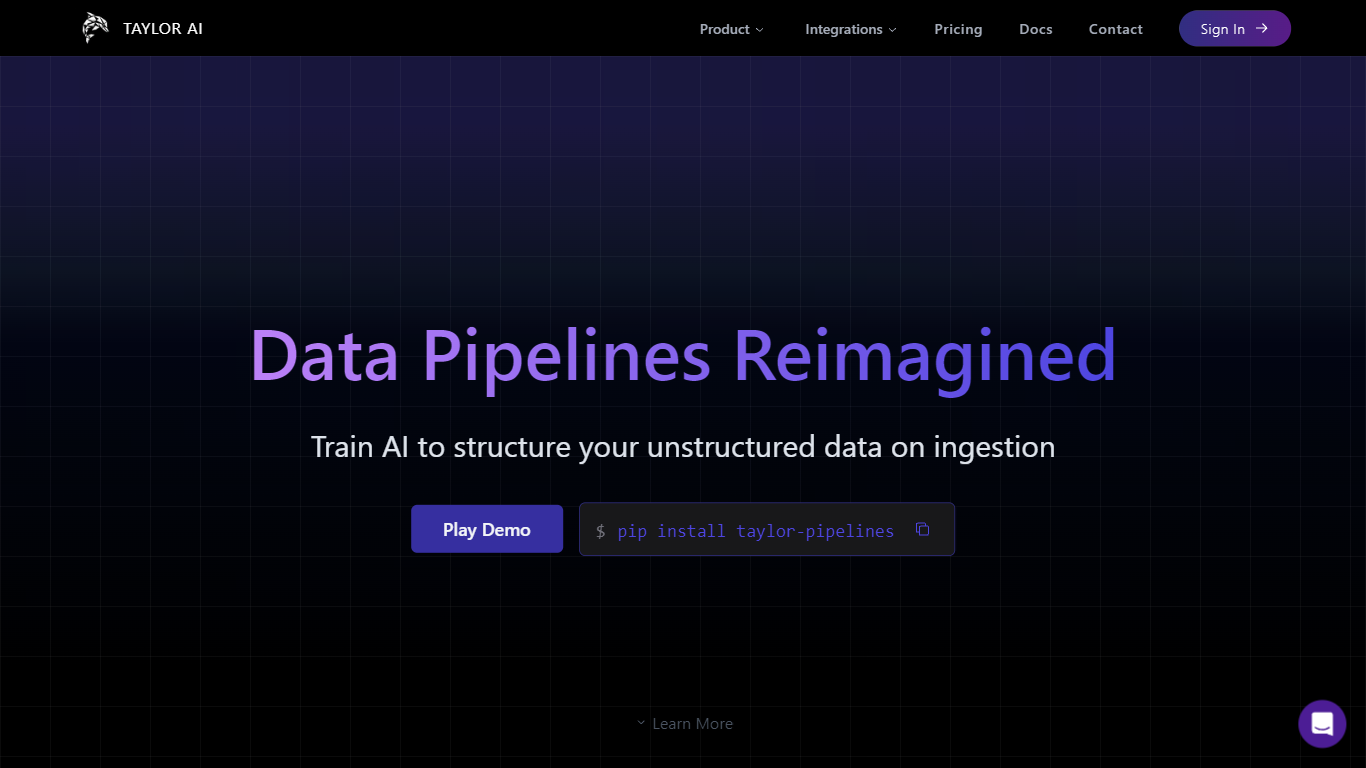
Taylor gives developers a production API for classifying and enriching unstructured text without running their own model stack. You send free-text records and Taylor returns labels from a taxonomy you define, using a classification ensemble tuned for deterministic results rather than open-ended LLM replies.
General-purpose LLMs work for one-off tagging but get expensive and inconsistent at volume. Taylor focuses on high-throughput text classification: batch parallel processing, drift monitoring, and private classifiers trained on taxonomies like IAB ad categories, O*NET occupation codes, NAICS industry classes, and legal clause types. The company also ships taylor-pipelines for building S3 data pipelines with a hosted UI.
Taylor was founded in 2023 in San Francisco and is backed by Y Combinator, General Catalyst, FoundersX, and Gaingels. The product targets government agencies, law firms, and private teams that need SOC2-compliant text enrichment through an API or spreadsheet workflow. Sign-in uses Google or GitHub, and support contact is [email protected].
TimeComplexity.ai
What is TimeComplexity.ai?
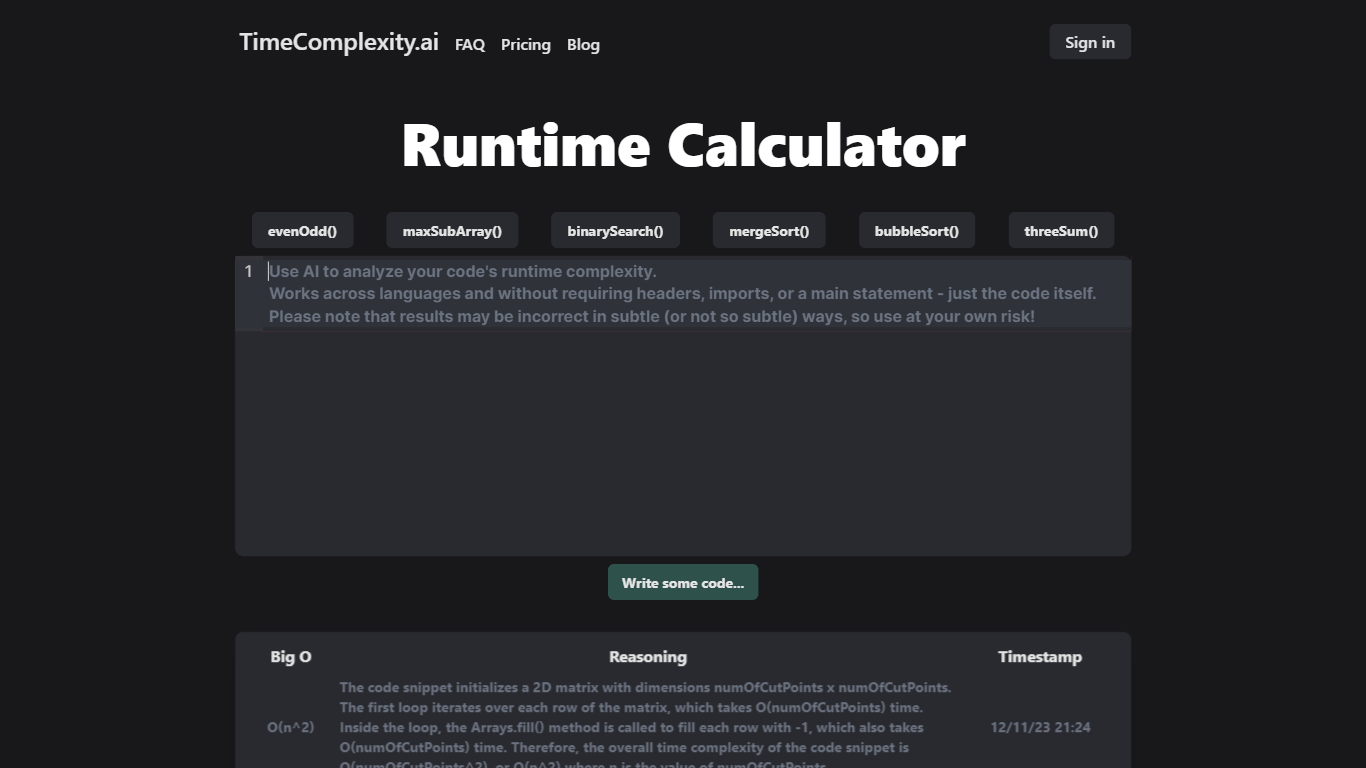
Paste a function into TimeComplexity.ai and it returns Big O runtime complexity with plain-language reasoning. You drop in an algorithm snippet, and the site responds with notation like O(n log n) plus an explanation of why that bound fits the loops and recursion it sees.
Static analyzers usually need a full file with imports and a main block. TimeComplexity.ai accepts partial snippets in Python, JavaScript, Java, C++, Go, and other languages without headers or setup code. That makes it useful for interview prep and quick checks on isolated functions pulled from a larger codebase.
Developers, CS students, and interview candidates use TimeComplexity.ai to sanity-check algorithm bounds before submitting homework or reviewing pull requests. Anonymous users get 20 queries per day, signed-in users get 50, and the $5 per month Pro plan removes the daily cap.
Taylor Upvotes
TimeComplexity.ai Upvotes
Taylor Top Features
Text classification API that accepts custom taxonomies such as IAB tags, O*NET codes, and NAICS classes
Batch processing mode for high-volume parallel classification jobs
Monitoring alerts for accuracy drift, failures, and performance issues
taylor-pipelines library for streaming unstructured data from Amazon S3 into hosted workflows
Configurable score thresholds and max label counts per classification request
SOC2-compliant security with API and spreadsheet implementation options
TimeComplexity.ai Top Features
Returns Big O notation plus written reasoning for each pasted code snippet
Accepts partial code without headers, imports, or a main function across common languages
Uses GPT-3.5 Turbo with a formatted prompt, per the site FAQ
Anonymous users receive 20 queries per day; signed-in users receive 50 free queries daily
Pro plan at $5 per month unlocks unlimited queries with query history and deletion
Each analysis gets a shareable ID so you can link results with teammates
Taylor Category
- Developer
TimeComplexity.ai Category
- Developer
Taylor Pricing Type
- Freemium
TimeComplexity.ai Pricing Type
- Freemium