TextLayer vs Elicit
In the clash of TextLayer vs Elicit, which AI Research tool emerges victorious? We assess reviews, pricing, alternatives, features, upvotes, and more.
When we put TextLayer and Elicit head to head, which one emerges as the victor?
Let's take a closer look at TextLayer and Elicit, both of which are AI-driven research tools, and see what sets them apart. Interestingly, both tools have managed to secure the same number of upvotes. Be a part of the decision-making process. Your vote could determine the winner.
Want to flip the script? Upvote your favorite tool and change the game!
TextLayer
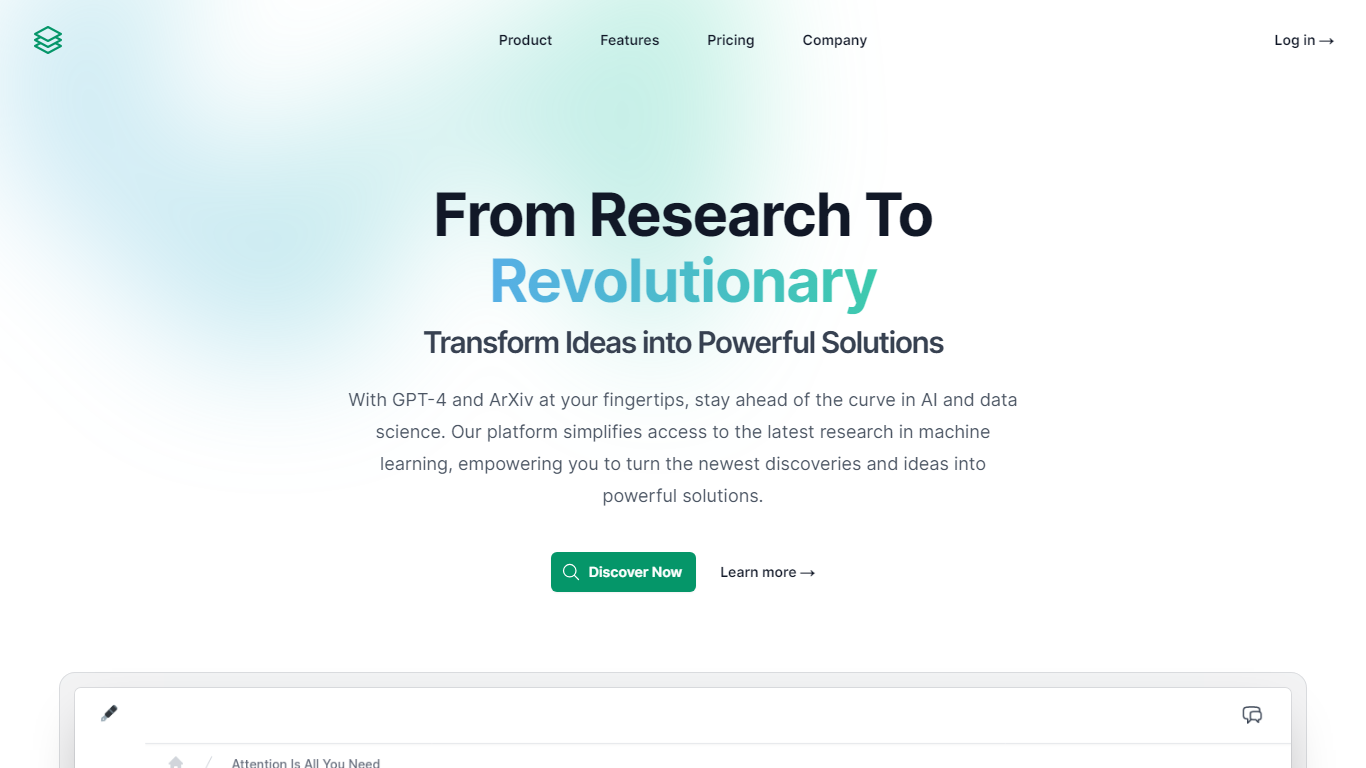

What is TextLayer?
Immerse yourself in the frontier of Artificial Intelligence with TextLayer, the go-to platform for AI and data science professionals. TextLayer equips you with the power of GPT-4 and immediate access to ArXiv—the hub for cutting-edge machine learning research. This web-based platform revolutionizes how research is conducted, transforming the latest AI insights into viable, robust solutions.
At TextLayer, innovation is accelerated. The platform provides tailored recommendations, AI-generated insights, and exhaustive implementation guidance to power up your data science projects. Users can benefit from the platform's ability to simplify complex research papers into concise, easy-to-understand summaries, complete with responsive Q&A sessions for in-depth exploration.
TextLayer's trusted environment caters to your specific research needs. Whether you're at the start of your AI journey or a seasoned researcher seeking advanced tools, TextLayer's flexible pricing plans provide the freedom to choose the level of support you need. From the free Explorer plan offering GPT-4 generated summaries to the Trailblazer subscription with unlimited interaction capabilities, TextLayer is also a pioneer in keeping its users at the vanguard of AI innovation.
Elicit

What is Elicit?
Elicit is a research assistant built for scientists, policy analysts, and industry teams who need answers grounded in published evidence. You ask a research question, and it searches more than 138 million academic papers plus 545,000 clinical trials, then returns structured summaries, tables, and reports with sentence-level citations back to the source papers.
What sets Elicit apart from general chat tools is scale and traceability. It can screen thousands of papers for systematic reviews, extract data from tables and figures, and regenerate reports when you change criteria. Workflows follow systematic review principles, including PRISMA 2020 support, with auditable screening decisions and exclusion reasons.
Pharma teams, academic labs, medtech companies, and government researchers use Elicit to run literature reviews faster without dropping rigor. Over five million researchers have used the platform, including teams at institutions like Formation Bio, Oxford PharmaGenesis, and CSIRO.
TextLayer Upvotes
Elicit Upvotes
TextLayer Top Features
Simplified Access: Utilize a search portal to easily discover the latest in ML research.
Personalized Recommendations: Receive AI-curated research suggestions that align with your interests.
Responsive Q&A Sessions: Engage with GPT-4 for a deeper understanding of ML concepts.
Implementation Support: Get step-by-step guidance from GPT-4 to apply AI research effectively.
Flexible Pricing: Choose from various subscription plans tailored to your research journey.
Elicit Top Features
Semantic search across 138 million papers and 545,000 clinical trials
Research reports inspired by systematic review methodology
Screen up to 5,000 papers on Pro or 40,000 on Enterprise plans
Every claim links to the exact sentence or figure in the source
Library and Alerts to organize sources and track new publications
REST API for programmatic search and report generation on paid tiers
TextLayer Category
- Research
Elicit Category
- Research
TextLayer Pricing Type
- Freemium
Elicit Pricing Type
- Freemium