Upheal vs Docus
In the contest of Upheal vs Docus, which AI Healthcare tool is the champion? We evaluate pricing, alternatives, upvotes, features, reviews, and more.
If you had to choose between Upheal and Docus, which one would you go for?
When we examine Upheal and Docus, both of which are AI-enabled healthcare tools, what unique characteristics do we discover? The users have made their preference clear, Upheal leads in upvotes. Upheal has received 7 upvotes from aitools.fyi users, while Docus has received 6 upvotes.
Think we got it wrong? Cast your vote and show us who's boss!
Upheal


What is Upheal?
Therapists reach for Upheal when they need healthcare documentation and billing in one system. Session audio, dictation, or uploads become signed clinical notes in about 60 seconds, with scheduling, telehealth, client payments, and insurance claims kept in the same workspace.
Most therapy note scribes stop at documentation and push finished text into another EHR. Upheal is built as a full practice system with usage-based pricing at $1 per completed session, capped at $69 per month, and insurance billing that charges per claim rather than a monthly clearinghouse subscription. That makes it a stronger fit for solo and small-group providers who want one login for notes and revenue cycle work.
The product serves individual clinicians, group practices, and virtual care organizations running in-person or telehealth sessions. Intake forms, HIPAA-compliant messaging, treatment plans linked to progress notes, and a browser extension for SimplePractice or TherapyNotes let teams adopt it gradually or replace an existing EHR when ready.
Docus
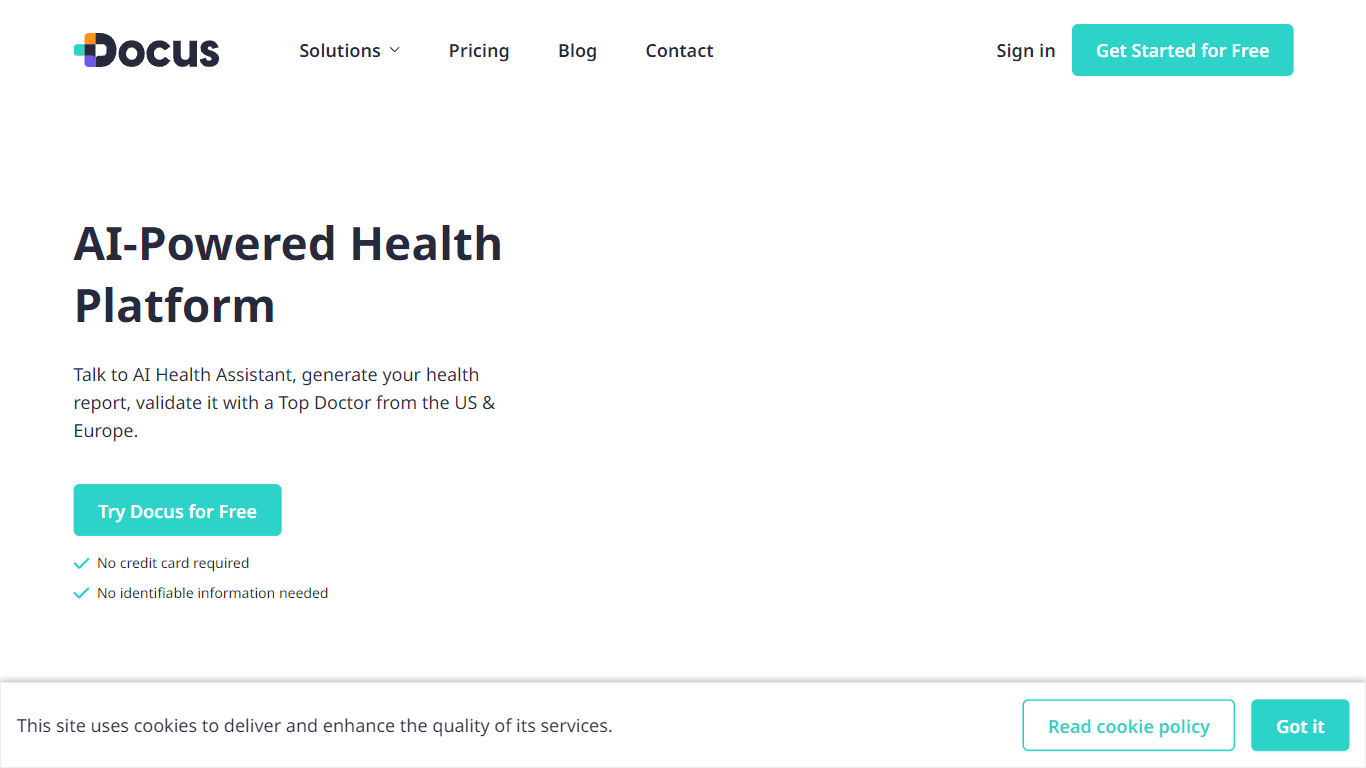
What is Docus?
Docus gives diagnostic laboratories an AI layer on top of their lab information system, turning raw test results into clinical interpretation reports for doctors and plain-language summaries for patients. Labs can also deploy modules for follow-up test recommendations, ICD compliance checks, and digital requisitions that route into an LIS. The company also sells separate products for physicians and consumers, including clinical decision support and a personal AI health assistant.
Where general clinical chatbots chase open-ended Q&A, Docus is wired for the lab result lifecycle. It produces separate doctor and patient report formats from the same result set, runs medical necessity and repeat-testing compliance checks before claims get denied, and uses historical biomarker data to deepen interpretations. Labs connect through API or HL7 feeds, or run white-labeled Docus interfaces when a full integration is not ready.
Reference labs, direct-to-consumer labs, and in-house hospital labs use Docus to cut interpretation workload and lift follow-up test volume. A Blood Cells Laboratories case study on the site reports 230% test volume growth and a follow-up testing rate that rose from 5% to 27%. Physicians get SOAP note generation, lab interpretation, and patient messaging scaled by patient count. Consumers upload labs, chat with an AI doctor, check symptoms, or pay for expert second opinions.
Docus states HIPAA, GDPR, and SOC 2 alignment, encrypts data at rest and in transit, and does not require personally identifiable information for core lab workflows. The company is based in Wilmington, Delaware.
Upheal Upvotes
Docus Upvotes
Upheal Top Features
Drafts SOAP, DAP, GIRP, BIRP, and 30+ note templates from session capture in under 60 seconds
Golden Thread links auto-generated treatment plans to every progress note for payer audits
Insurance billing at $0.30 per claim and $0.15 per eligibility check with no monthly clearinghouse fee
Built-in HIPAA telehealth with one-click client join and no downloads required
Individual plan costs $1 per completed session capped at $69 per month after a 30-day trial
AI Assistant in beta handles scheduling, billing questions, and note edits from natural-language prompts
Docus Top Features
Dual-format interpretation reports with clinical DDx for doctors and plain-language summaries for patients
Follow-up test recommendations and automated patient reminders to improve lab retention
AI compliance agent for ICD validation, repeat testing frequency rules, and denial prevention
Digital requisitions with autocomplete, AI medical necessity drafts, and e-signature workflows
API and HL7 integration into LIS, CRM, or EHR systems, or standalone branded interfaces
Supports routine, microbiology, toxicology, pharmacogenomics, and pathology test workflows
Upheal Category
- Healthcare
Docus Category
- Healthcare
Upheal Pricing Type
- Freemium
Docus Pricing Type
- Freemium