
Last updated 08-31-2026
Category:
Reviews:
Join thousands of AI enthusiasts in the World of AI!
Docus
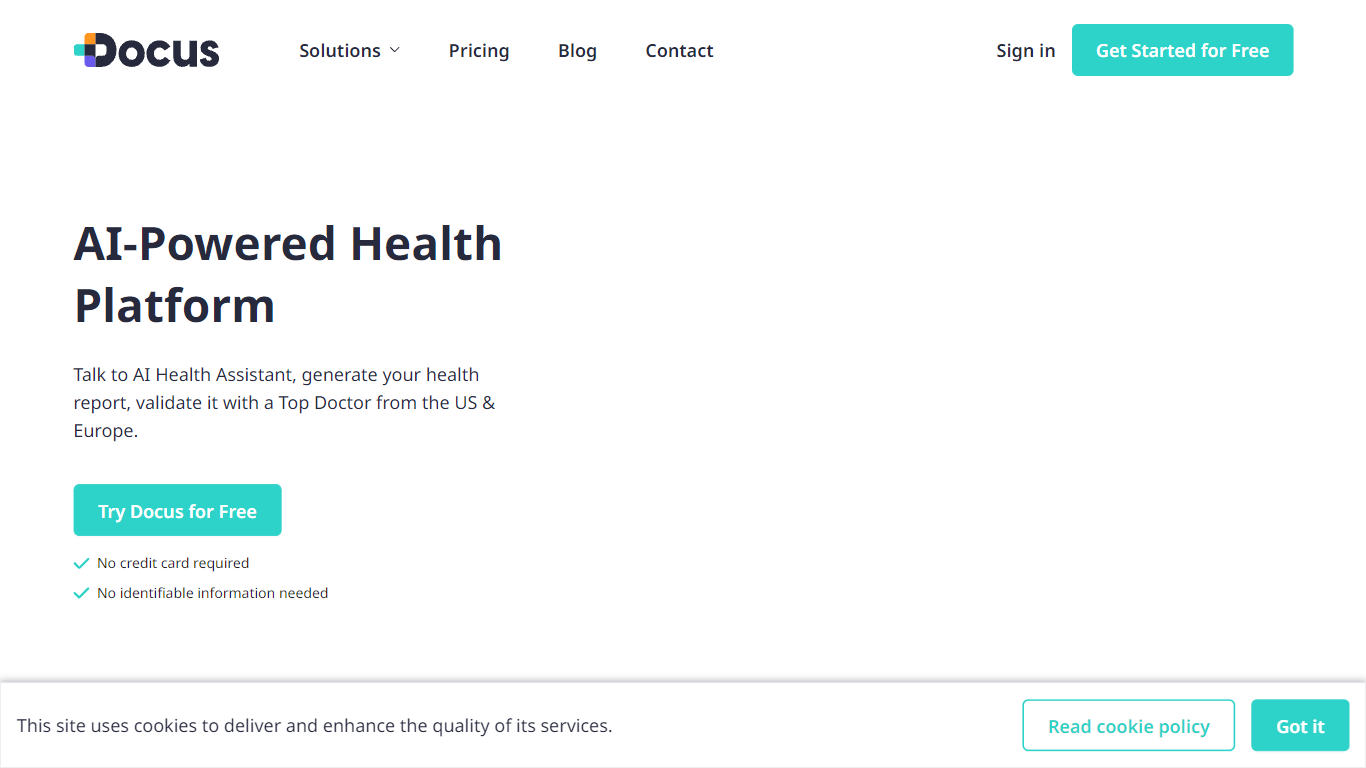
Docus gives diagnostic laboratories an AI layer on top of their lab information system, turning raw test results into clinical interpretation reports for doctors and plain-language summaries for patients. Labs can also deploy modules for follow-up test recommendations, ICD compliance checks, and digital requisitions that route into an LIS. The company also sells separate products for physicians and consumers, including clinical decision support and a personal AI health assistant.
Where general clinical chatbots chase open-ended Q&A, Docus is wired for the lab result lifecycle. It produces separate doctor and patient report formats from the same result set, runs medical necessity and repeat-testing compliance checks before claims get denied, and uses historical biomarker data to deepen interpretations. Labs connect through API or HL7 feeds, or run white-labeled Docus interfaces when a full integration is not ready.
Reference labs, direct-to-consumer labs, and in-house hospital labs use Docus to cut interpretation workload and lift follow-up test volume. A Blood Cells Laboratories case study on the site reports 230% test volume growth and a follow-up testing rate that rose from 5% to 27%. Physicians get SOAP note generation, lab interpretation, and patient messaging scaled by patient count. Consumers upload labs, chat with an AI doctor, check symptoms, or pay for expert second opinions.
Docus states HIPAA, GDPR, and SOC 2 alignment, encrypts data at rest and in transit, and does not require personally identifiable information for core lab workflows. The company is based in Wilmington, Delaware.
Dual-format interpretation reports with clinical DDx for doctors and plain-language summaries for patients
Follow-up test recommendations and automated patient reminders to improve lab retention
AI compliance agent for ICD validation, repeat testing frequency rules, and denial prevention
Digital requisitions with autocomplete, AI medical necessity drafts, and e-signature workflows
API and HL7 integration into LIS, CRM, or EHR systems, or standalone branded interfaces
Supports routine, microbiology, toxicology, pharmacogenomics, and pathology test workflows
Lab module covers interpretation, follow-ups, compliance, and digital requisitions in one stack
Dual doctor and patient report formats from the same lab result set
Free entry tiers for both patients and doctors with clear upgrade paths
HIPAA, GDPR, and SOC 2 compliance stated on site with a public trust center
API and HL7 integration for labs plus standalone interfaces when integration is not needed
Lab software pricing is custom only, so costs are not transparent upfront
Medical second opinions cost $490 each and are not included in subscriptions
Platform does not provide diagnoses, prescriptions, or emergency care
Doctor paid plans are billed annually, which may not suit every practice size
Who is Docus built for?
Docus serves diagnostic labs that need interpretation and workflow automation, doctors who want clinical decision support, and patients who want an AI health assistant. Each product line has its own pricing and feature set on docus.ai.
How is Docus Lab Software priced?
Docus Lab Software uses flexible subscription pricing based on monthly test volume, workflow complexity, and regional regulations. Labs contact sales for a custom quote rather than buying from a public price list.
What do patient plans cost on Docus?
Docus patients can start free with 3 AI Doctor messages per week and 1 lab interpretation per month. Paid Lite is $3.99 per month billed annually ($47.88 per year), and Pro is $7.99 per month billed annually ($95.88 per year) with higher message and interpretation limits.
What do doctor plans cost on Docus?
The first patient is free on Docus. Paid doctor plans are billed annually: Starter is $25 per month ($300 per year) for up to 50 patients, Pro is $50 per month ($600 per year) for up to 500 patients, and Ultimate is $100 per month ($1,200 per year) for up to 2,000 patients.
Is a medical second opinion included in a Docus subscription?
No. Docus second opinions from top doctors are billed separately at $490 per consultation. They are not included in patient, doctor, or lab subscription plans.
Can Docus integrate with lab and hospital systems?
Yes. Docus supports API and HL7 integration to send lab data and receive interpretation outputs in an LIS, CRM, or EHR. Labs and doctors can also use Docus-hosted interfaces without a technical integration.
Does Docus replace a doctor or provide prescriptions?
No. Docus is a clinical decision support and patient education tool. It does not provide official diagnoses, prescriptions, or emergency care. Final medical decisions stay with licensed healthcare professionals.