Vespa vs STRING
Compare Vespa vs STRING and see which AI Data Science tool is better when we compare features, reviews, pricing, alternatives, upvotes, etc.
Which one is better? Vespa or STRING?
When we compare Vespa with STRING, which are both AI-powered data science tools, The upvote count is neck and neck for both Vespa and STRING. Your vote matters! Help us decide the winner among aitools.fyi users by casting your vote.
Want to flip the script? Upvote your favorite tool and change the game!
Vespa
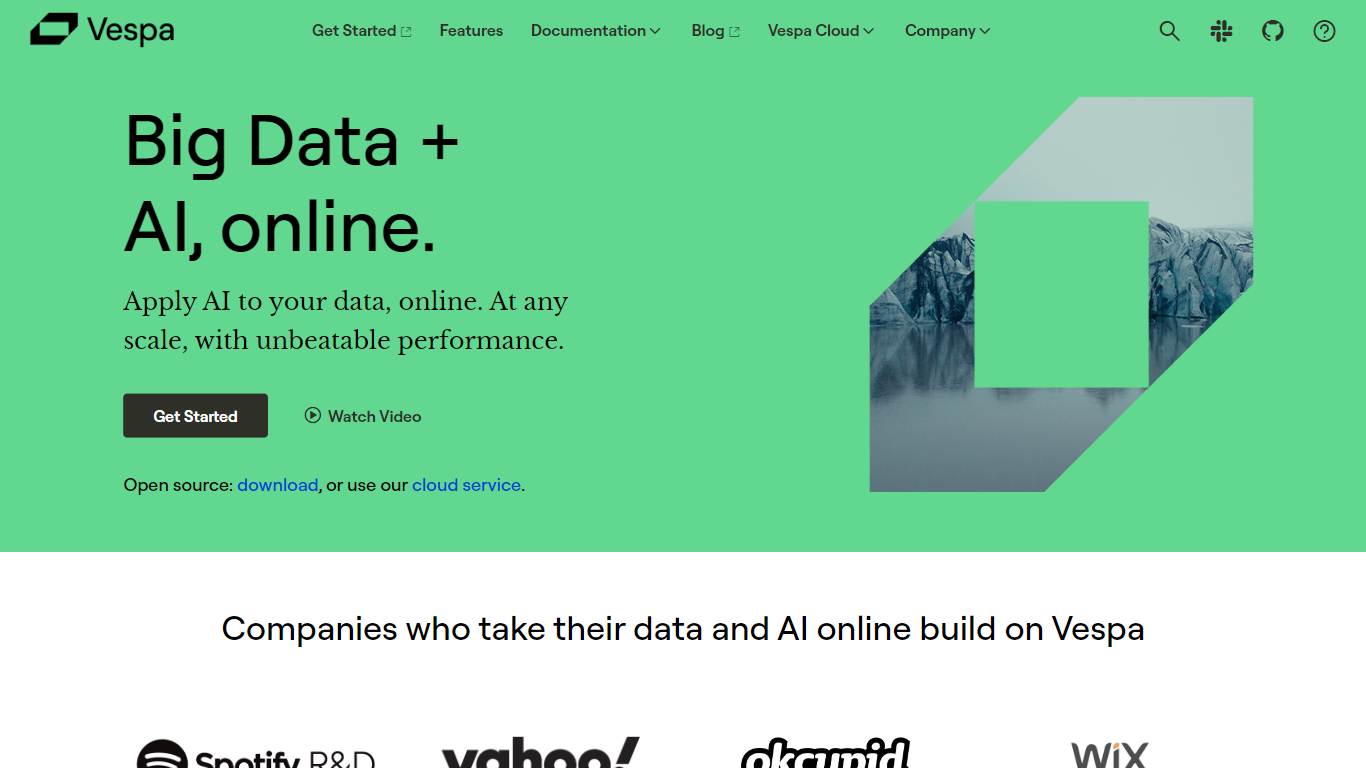

What is Vespa?
Vespa enables developers to build powerful search and recommendation applications by combining vector, text, and structured data search with machine-learned ranking and real-time data serving. It supports complex queries over billions of constantly changing data items with latencies below 100 milliseconds, making it suitable for high-performance, data-driven applications.
What sets Vespa apart is its ability to integrate multiple data types and machine-learned models within a single platform, allowing hybrid search and personalized ranking at scale. It offers infinite automated scalability and continuous deployment, with options for fully managed cloud services or self-hosted deployments, providing flexibility for various enterprise needs.
Vespa supports advanced use cases such as generative AI retrieval-augmented generation (RAG), personalized content delivery, and semi-structured navigation. Its architecture is designed to handle high query volumes and large datasets efficiently, ensuring low latency and strong security for business-critical AI applications.
Developers benefit from Vespa's open-source ecosystem, extensive documentation, and active community, which facilitate building and deploying AI-powered search and recommendation systems with complex ranking and inference capabilities.
STRING
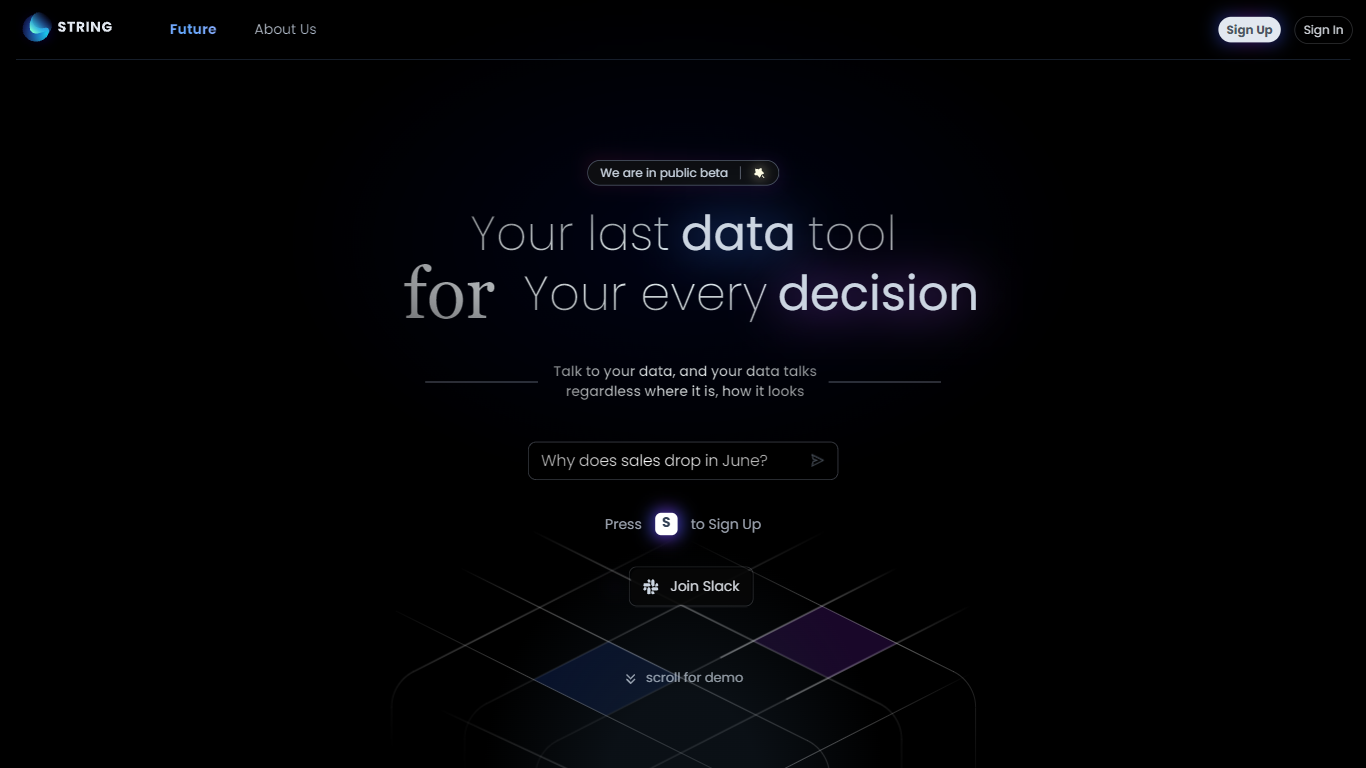
What is STRING?
STRING lets you talk to your data through a conversational analytics interface marketed as your last data tool. You sign up for the public beta, connect sources wherever they live, and ask questions in natural language instead of building dashboards first. The product pitch centers on decisions: your data answers back regardless of format or location.
Legacy BI stacks expect hours of SQL and chart assembly before you get a useful answer. STRING's team, with backgrounds at Google, Uber, CMU, and UW, frames the product around AGI-style analytics that listens, understands unstructured text, and takes initiative beyond rigid queries. The Future page contrasts this with older tools that crunch structured tables slowly.
Data analysts, product managers, and operators who want quick answers without standing up a full BI project fit STRING best. It is still in public beta with Slack community access, so teams should expect evolving features rather than a finished enterprise contract page.
Vespa Upvotes
STRING Upvotes
Vespa Top Features
Combined vector, text, and structured search supporting billions of data items
Real-time machine-learned ranking with ONNX and XGBoost model integration
Automated scaling to thousands of queries per second with sub-100ms latency
Continuous deployment with automatic platform upgrades multiple times per week
Fully managed cloud service with strong security and compliance
Streaming search mode for personal/private data at 20x lower cost
Integration with multi-vector representations for generative AI (RAG)
STRING Top Features
Natural language interface to query data without pre-built dashboard workflows
Public beta signup with Slack community invite for early users
Designed to handle structured databases and unstructured sources like docs and notes
Team includes alumni from Google, Uber, Carnegie Mellon, and University of Washington
Slack community invite linked on homepage for public beta testers
Future roadmap targets proactive analytics that initiates insights beyond user prompts
Vespa Category
- Data Science
STRING Category
- Data Science
Vespa Pricing Type
- Paid
STRING Pricing Type
- Freemium