Vidu vs Lumiere
In the battle of Vidu vs Lumiere, which AI Video Generation tool comes out on top? We compare reviews, pricing, alternatives, upvotes, features, and more.
Between Vidu and Lumiere, which one is superior?
Upon comparing Vidu with Lumiere, which are both AI-powered video generation tools, In the race for upvotes, Vidu takes the trophy. Vidu has garnered 79 upvotes, and Lumiere has garnered 6 upvotes.
Does the result make you go "hmm"? Cast your vote and turn that frown upside down!
Vidu
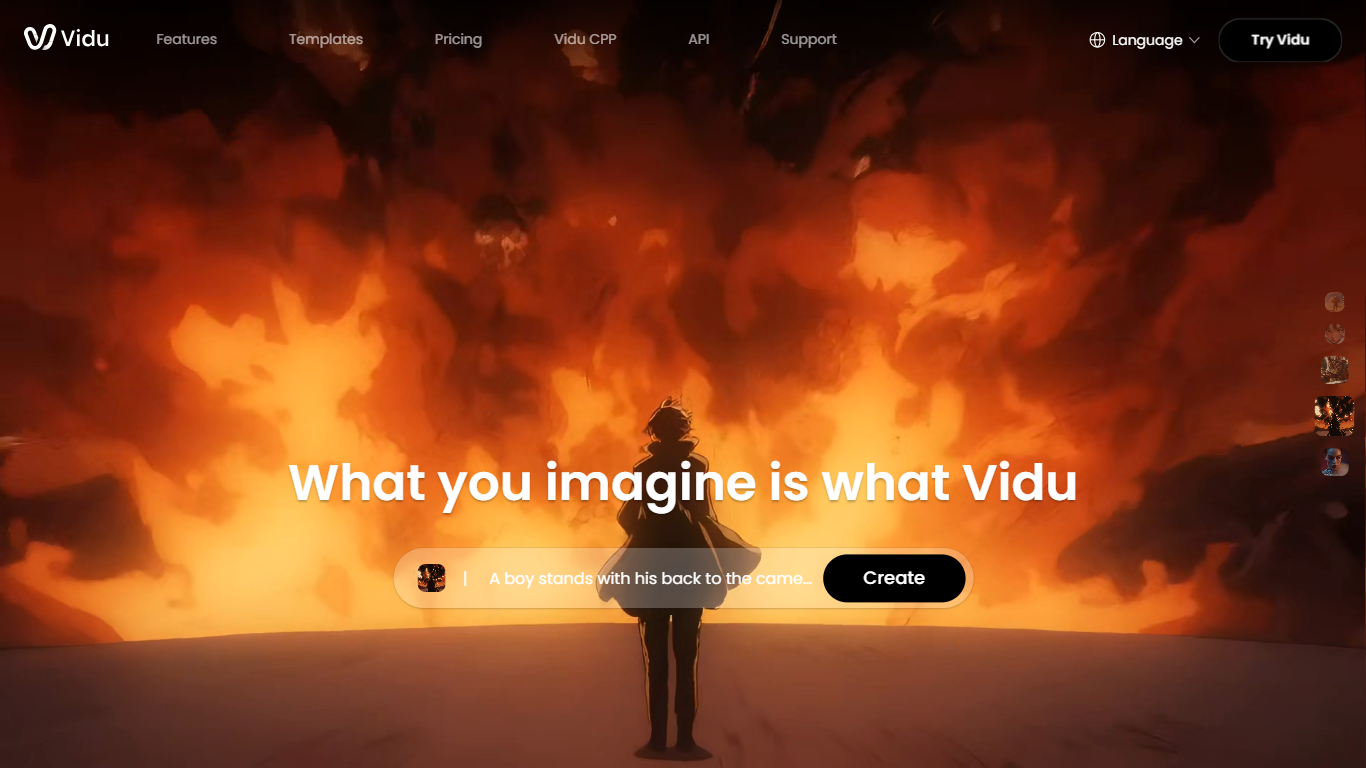

What is Vidu?
Vidu is an all-in-one platform for generating images and videos from text, still images, or references. It is built for independent creators and production teams who want to turn ideas into finished clips without a traditional post pipeline. The core modes are text-to-video, image-to-video, and reference-to-video, with output up to 1080p.
Reference-to-video is where Vidu stands out. Upload up to seven images to keep characters, objects, and scenes consistent across a clip, or save assets in My References for reuse on later projects. The Vidu Q3 model adds native audio in the same generation pass, so dialogue, voiceover, sound effects, and music land with the picture instead of in a separate editing step.
Creators working in anime, advertising, social content, and short-form film use Vidu for everything from template-based viral clips to 16-second narrative shots with frame-level camera control. Studios and marketers also use image-to-video to animate product shots or swap ad backgrounds while keeping subjects on-model.
New accounts receive starter credits, with more available through daily logins, subscriptions, and platform events.
Lumiere
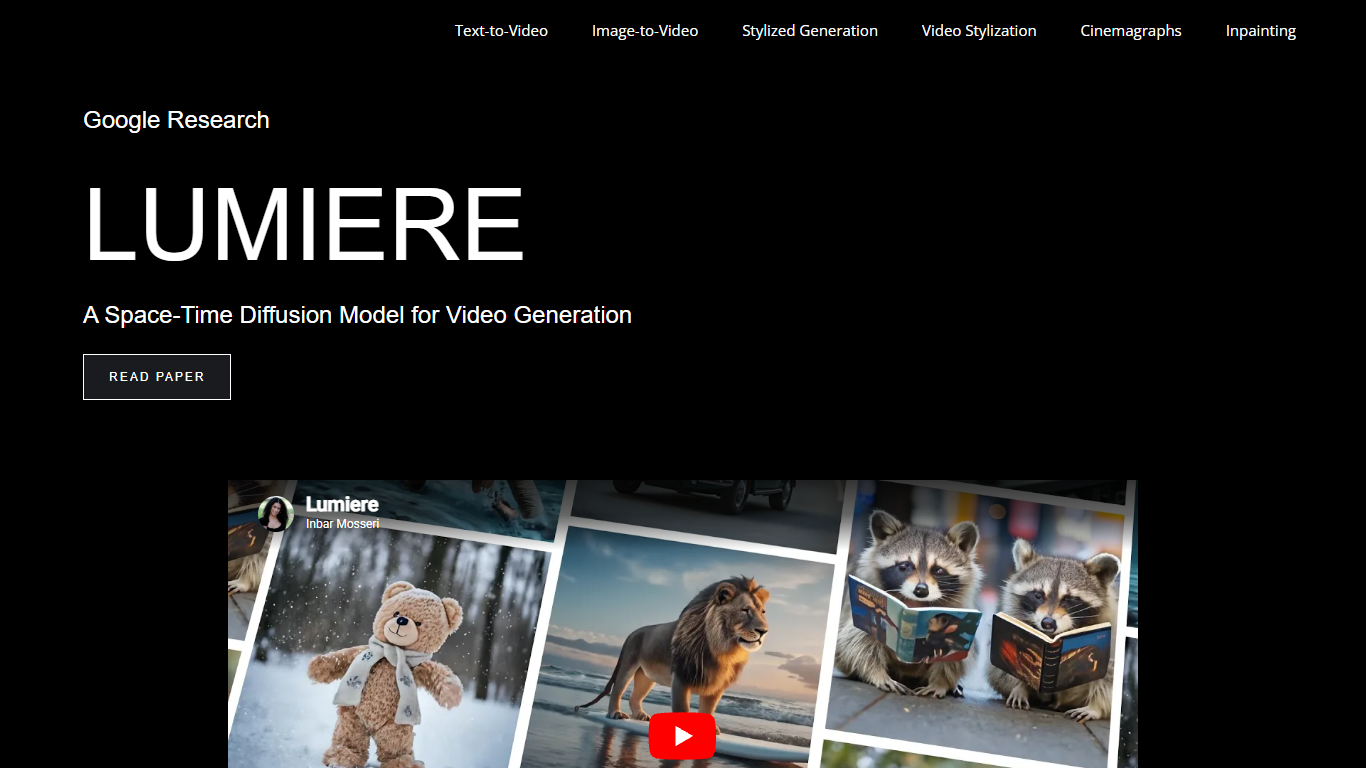
What is Lumiere?
Lumiere is a text-to-video diffusion model from Google Research built to synthesize videos with realistic, diverse, and coherent motion. The project page showcases sample outputs for text-to-video, image-to-video, stylized generation, video stylization, cinemagraphs, and video inpainting.
Its Space-Time U-Net architecture generates an entire video clip in one model pass, rather than creating distant keyframes and filling gaps with temporal super-resolution. The model uses spatial and temporal down- and up-sampling and builds on a pre-trained text-to-image diffusion backbone to produce full-frame-rate video across multiple space-time scales.
The site is a research demo and paper companion, not a consumer app. It is aimed at researchers, engineers, and creators who want to study state-of-the-art video diffusion and see what the model can do across generation and editing tasks.
Vidu Upvotes
Lumiere Upvotes
Vidu Top Features
Generates a full video in about 10 seconds flat
Upload up to 7 reference images and the output stays consistent across all of them
Set the first and last frame, and Vidu fills in the motion between them
Vidu Q3 bakes dialogue, sound effects, and music directly into the video in one pass
Lumiere Top Features
Turns text prompts into full motion clips with dozens of sample outputs on the demo page
Animates a still image into video when you pair it with a short text description
Stylized generation copies a reference image style using fine-tuned text-to-image weights
Video stylization applies text-based image editing methods frame by frame for consistent looks
Cinemagraph mode animates only a masked region while the rest of the image stays still
Video inpainting fills masked areas or edits clothing and accessories from text prompts
Vidu Category
- Video Generation
Lumiere Category
- Video Generation
Vidu Pricing Type
- Freemium
Lumiere Pricing Type
- Free