Vidu vs Open Voice OS
Explore the showdown between Vidu vs Open Voice OS and find out which AI Video Generation tool wins. We analyze upvotes, features, reviews, pricing, alternatives, and more.
In a face-off between Vidu and Open Voice OS, which one takes the crown?
When we contrast Vidu with Open Voice OS, both of which are exceptional AI-operated video generation tools, and place them side by side, we can spot several crucial similarities and divergences. The upvote count shows a clear preference for Vidu. Vidu has received 79 upvotes from aitools.fyi users, while Open Voice OS has received 7 upvotes.
Not your cup of tea? Upvote your preferred tool and stir things up!
Vidu
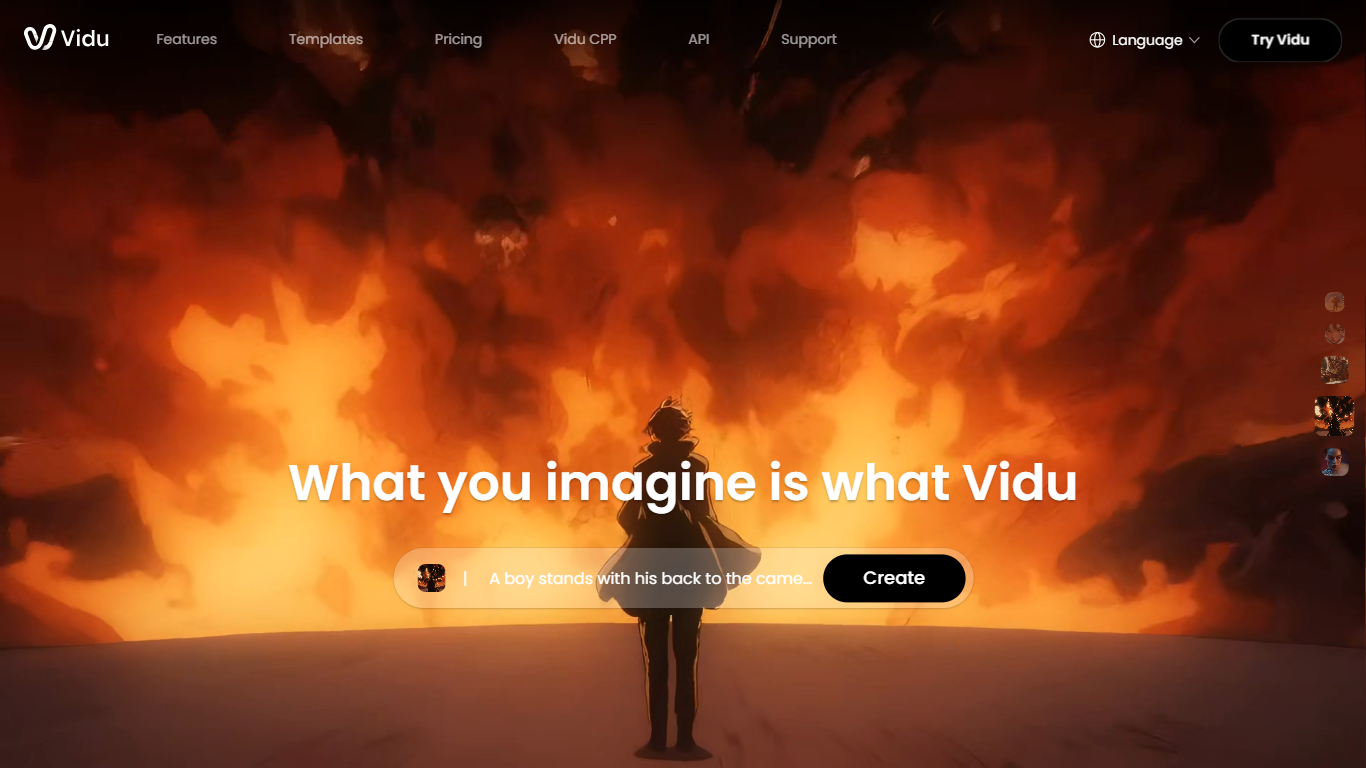

What is Vidu?
Vidu turns text prompts, still images, and reference photos into finished video clips up to 1080p. Independent creators and production teams use it to skip a traditional post pipeline and go from idea to export in the browser. The core modes are text-to-video, image-to-video, and reference-to-video.
Reference-to-video is where Vidu stands out. Upload up to seven images to keep characters, objects, and scenes consistent across a clip, or save assets in My References for reuse on later projects. The Vidu Q3 model adds native audio in the same generation pass, so dialogue, voiceover, sound effects, and music land with the picture instead of in a separate editing step.
Creators working in anime, advertising, social content, and short-form film use Vidu for everything from template-based viral clips to 16-second narrative shots with frame-level camera control. Studios and marketers also use image-to-video to animate product shots or swap ad backgrounds while keeping subjects on-model.
New accounts receive starter credits, with more available through daily logins, subscriptions, and platform events.
Open Voice OS
What is Open Voice OS?
Open Voice OS lets you build custom voice-controlled interfaces on Raspberry Pi, Mycroft devices, and Linux desktops using an open voice assistant stack. Install OVOS through Docker or a Python virtual environment, then extend skills with NLP pipelines that can run offline for privacy-sensitive setups.
Commercial smart speakers lock data in vendor clouds. Open Voice OS is community-driven FOSS descended from the Mycroft ecosystem, with a customizable UI, prebuilt images for embedded screens, and an installer script for major Linux distributions plus Raspberry Pi 3, 4, and 5.
Developers, hobbyists, and organizations building DIY smart speakers use OVOS to experiment with speech recognition and text-to-speech before upstreaming features. The project received an NGI Zero Commons fund grant and welcomes contributions through its public GitHub repositories.
Vidu Upvotes
Open Voice OS Upvotes
Vidu Top Features
Generates a full video in about 10 seconds flat
Upload up to 7 reference images and the output stays consistent across all of them
Set the first and last frame, and Vidu fills in the motion between them
Vidu Q3 bakes dialogue, sound effects, and music directly into the video in one pass
Unlimited free video generation in Off-Peak Mode with no credits required
Open Voice OS Top Features
Install via Docker or Python virtual environment with a one-line installer script
Supports Raspberry Pi 3, 4, and 5 plus major Linux desktop distributions
Prebuilt image for embedded headless and small touch-screen devices
Offline-capable speech recognition and text-to-speech pipelines
Customizable UI descended from the Mycroft and KDE GUI lineage
Community-driven skill development with public contribution guides
Compatible with legacy Mycroft Mark 1 and Mark 2 hardware
Vidu Category
- Video Generation
Open Voice OS Category
- Video Generation
Vidu Pricing Type
- Freemium
Open Voice OS Pricing Type
- Free