Vidu vs SoraWebui
In the clash of Vidu vs SoraWebui, which AI Video Generation tool emerges victorious? We assess reviews, pricing, alternatives, features, upvotes, and more.
When we put Vidu and SoraWebui head to head, which one emerges as the victor?
Let's take a closer look at Vidu and SoraWebui, both of which are AI-driven video generation tools, and see what sets them apart. The community has spoken, Vidu leads with more upvotes. The number of upvotes for Vidu stands at 79, and for SoraWebui it's 6.
Think we got it wrong? Cast your vote and show us who's boss!
Vidu
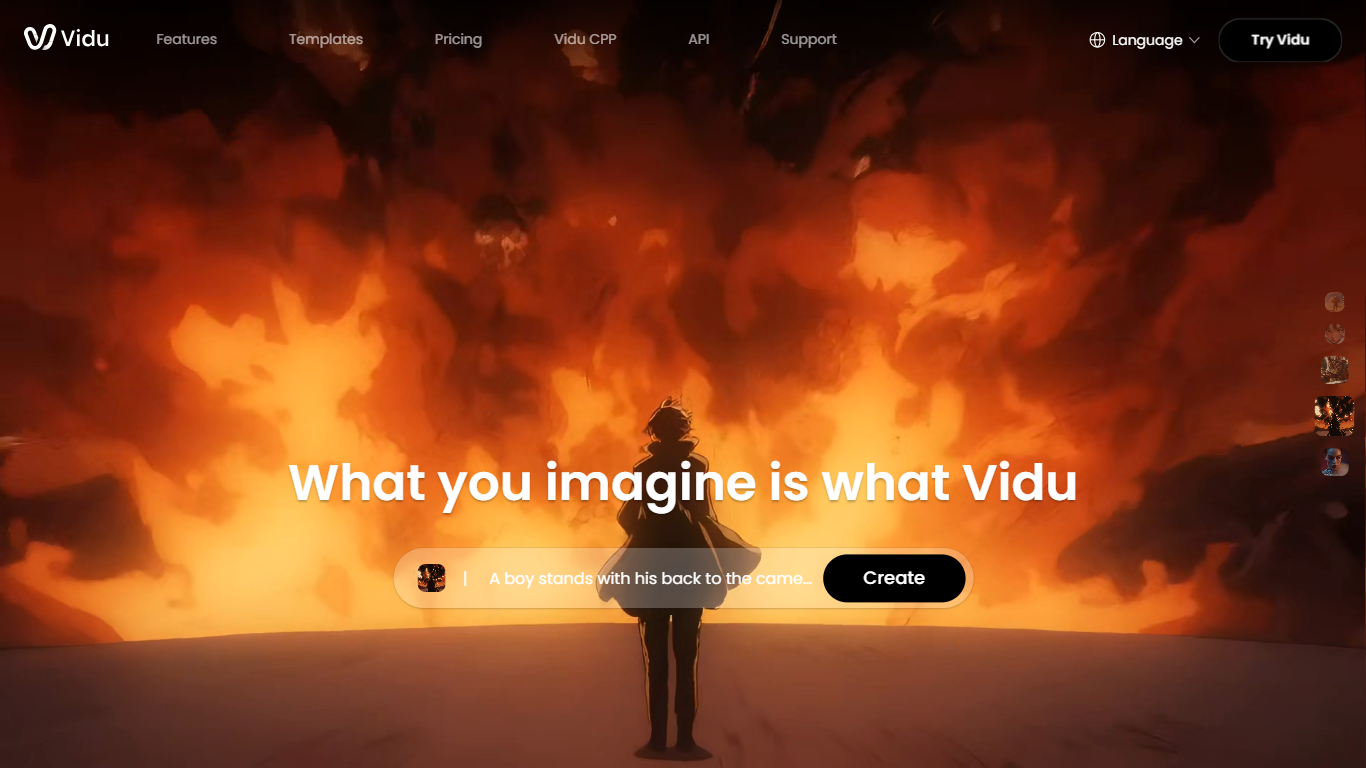

What is Vidu?
Vidu turns text prompts, still images, and reference photos into finished video clips up to 1080p. Independent creators and production teams use it to skip a traditional post pipeline and go from idea to export in the browser. The core modes are text-to-video, image-to-video, and reference-to-video.
Reference-to-video is where Vidu stands out. Upload up to seven images to keep characters, objects, and scenes consistent across a clip, or save assets in My References for reuse on later projects. The Vidu Q3 model adds native audio in the same generation pass, so dialogue, voiceover, sound effects, and music land with the picture instead of in a separate editing step.
Creators working in anime, advertising, social content, and short-form film use Vidu for everything from template-based viral clips to 16-second narrative shots with frame-level camera control. Studios and marketers also use image-to-video to animate product shots or swap ad backgrounds while keeping subjects on-model.
New accounts receive starter credits, with more available through daily logins, subscriptions, and platform events.
SoraWebui
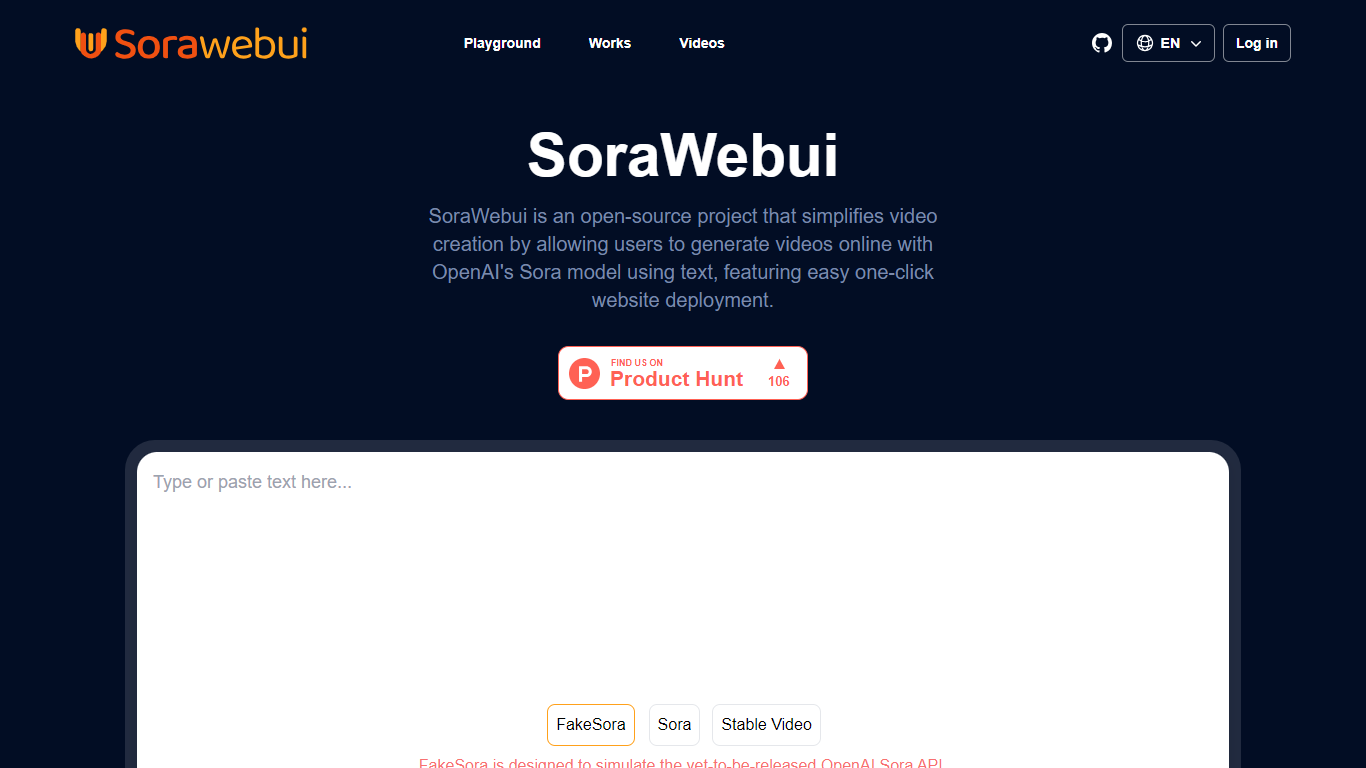
What is SoraWebui?
SoraWebui is an open-source web client for text-to-video generation built around OpenAI's Sora model. You type a scene description in the browser playground, hit generate, and get a clip back without wiring up your own interface. The site also hosts a gallery of example Sora outputs paired with the prompts that produced them.
Most text-to-video tools are closed hosted products. SoraWebui ships the whole stack as open source with one-click deployment so you can run a branded front end on your own domain. Its FakeSoraAPI layer mimics the unreleased Sora API by copying OpenAI's DALL-E request format, which lets developers test integrations before the official endpoint exists.
The hosted demo suits hobbyists who want to experiment with generative video in a browser. Developers fork the repo to prototype Sora app flows, and teams deploy private instances when they need a self-hosted text-to-video UI. A separate Stable Video Diffusion playground on the site adds image-to-video generation alongside the text-to-video path.
Vidu Upvotes
SoraWebui Upvotes
Vidu Top Features
Generates a full video in about 10 seconds flat
Upload up to 7 reference images and the output stays consistent across all of them
Set the first and last frame, and Vidu fills in the motion between them
Vidu Q3 bakes dialogue, sound effects, and music directly into the video in one pass
Unlimited free video generation in Off-Peak Mode with no credits required
SoraWebui Top Features
Type a text prompt in the playground and generate a video clip in the browser
FakeSoraAPI mimics OpenAI's DALL-E API request format to simulate the unreleased Sora API
One-click website deployment for self-hosting the full web client on your own domain
Videos gallery lists sample Sora clips with the exact text prompts that created them
Stable Video Diffusion playground converts uploaded images into short video clips
Vidu Category
- Video Generation
SoraWebui Category
- Video Generation
Vidu Pricing Type
- Freemium
SoraWebui Pricing Type
- Free