Top 12 Website Clone AI tools in 2026
AI website clone tools are getting impressively good. With just one click, you can replicate an entire site, saving hours of development time. These tools aren't just about copying a design, they also handle the underlying functionality that makes a website tick.
Many of these platforms offer connections to databases, payment gateways, and CRM systems. This means you're not just cloning a website's look, but also its core functionalities. Imagine copying an entire e-commerce site and having all the payment processing set up automatically.
When it comes to pricing, there's something for everyone. Some tools are completely free, others require a subscription, but most fall into the freemium category. You get basic features for free and can upgrade for more advanced options. This makes it easy to start small and scale up as needed.
One of the coolest things about these tools is how user-friendly they are. Often, you can simply chat with the tool, describe what you want, and watch as it generates a fully functional website. Its like having a developer at your fingertips, ready to build whatever you need.
These AI tools are democratizing web development. Whether you're a seasoned developer or a complete novice, you can create a professional-looking site without writing a single line of code. They're not perfect, but they're getting pretty close.
Lovable
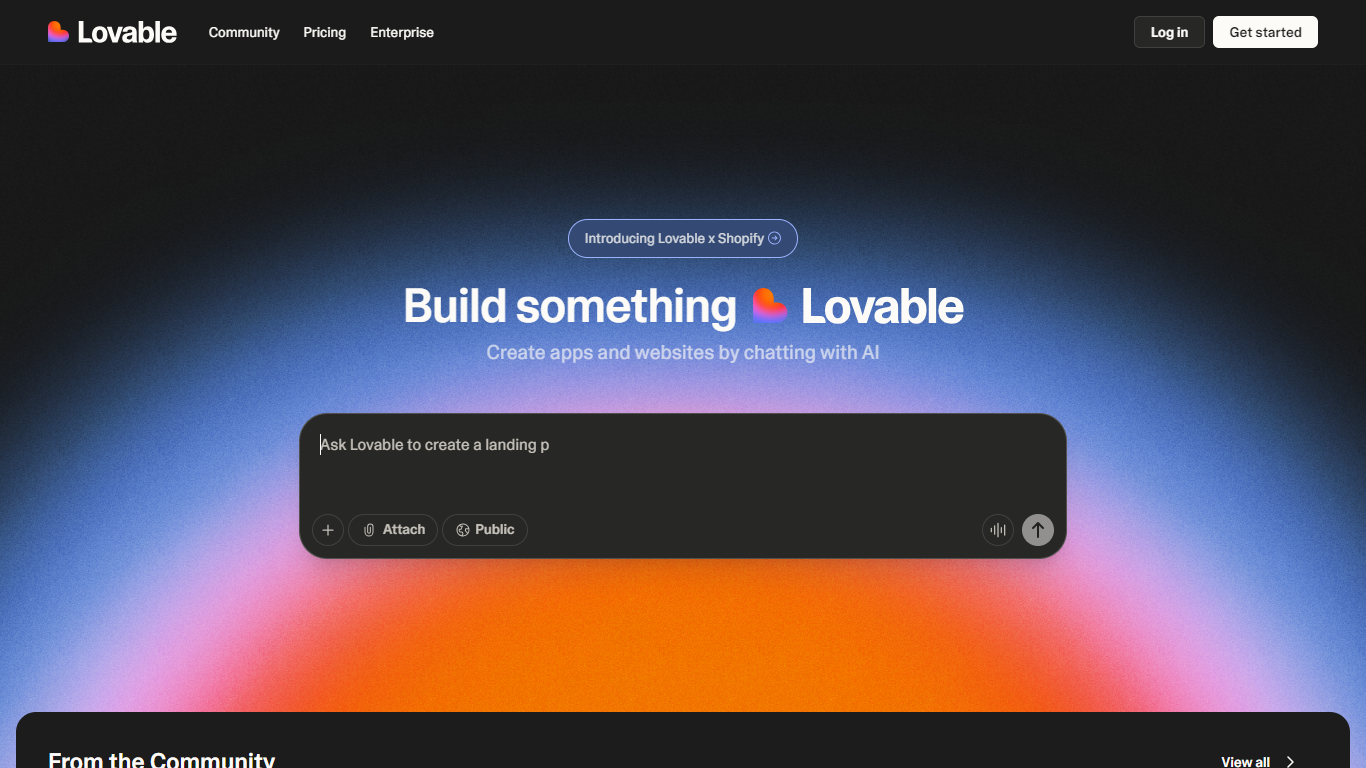
Why choose Lovable?
Lovable turns plain-language prompts into full-stack web apps you can deploy, host, and iterate on in the browser. Describe a product idea, watch it generate frontend, backend, and database code in real time, then refine the UI until it ships. The free tier includes daily build credits so you can test a real project before upgrading.
Traditional no-code builders hide the code and charge per seat. Lovable exports production-grade projects, handles hosting, SSL, auth, and payments on its cloud, and bills by workspace credits instead of user count. That model fits fast-moving teams who want vibe-coded prototypes that can graduate to internal tools without a separate DevOps pass.
Founders, product managers, and designers at companies like Adidas and Nvidia use Lovable to replace one-off SaaS contracts with custom software. Pro covers solo builders who need code download and custom domains, while Business adds SSO, data training opt-out, and team governance for organizations with security policies.
Free plan includes 5 daily build credits capped at 30 per calendar month
Pro starts at $25 per month for 100 credits with unlimited collaborators
Business starts at $50 per month with SSO and data training opt-out
Hosted apps include SSL, authentication, and payment processing in 200+ countries
Monthly Cloud grant of 20 credits and AI grant of 4 credits on all non-Enterprise plans
Paid subscription credits roll over; daily build credits reset at 00:00 UTC
MCP server and connector marketplace for extending generated apps
Link Mama
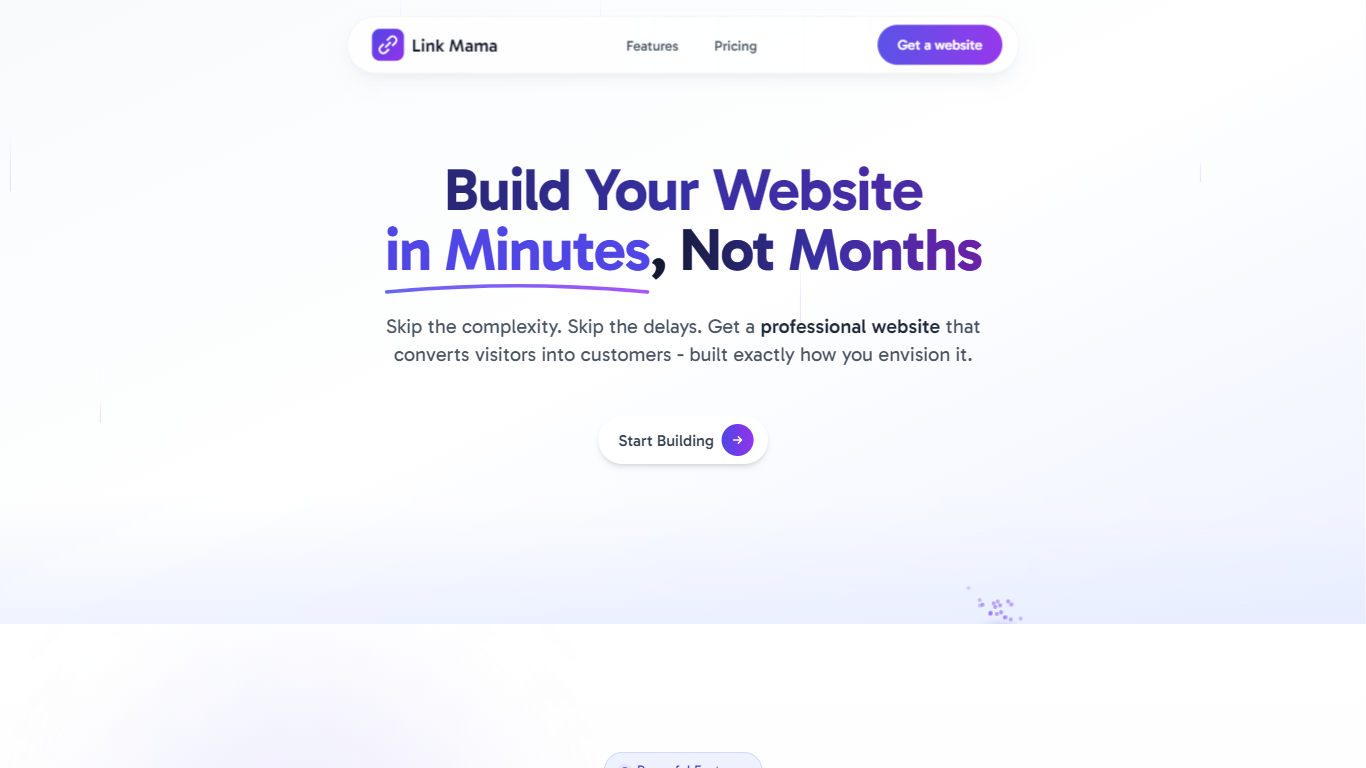
How does Link Mama work?
Link Mama builds business websites from a short prompt, turning a preview into a live site at your own URL in minutes rather than months. You pick a plan, unlock the generated site, and publish without writing code or hiring a developer. The workflow targets people who want a professional online presence fast, with SSL, a custom web address, and the option to remove Link Mama branding on paid tiers.
Most website builders hand you a blank canvas and expect you to design every section. Link Mama starts from an generated preview site you can claim, then limits monthly edits by plan so you know what maintenance costs upfront. Basic allows 5 changes per month, Business allows 15, and Premium removes the cap entirely.
Freelancers and solo founders use it for portfolio and service pages without a credit card to start. Small businesses pick the Business plan for priority email support and enough monthly edits for seasonal updates. Growing teams on Premium get unlimited changes plus priority phone and email support when they need hands-on help.
Generates a preview website from your inputs before you choose a paid plan to go live
Basic plan includes 5 site changes per month, Business includes 15, and Premium allows unlimited edits
Annual billing saves 33% with Basic at $9.99 per month, Business at $19.99, and Premium at $29.99
Every paid plan includes SSL, your own web address, and the option to remove Link Mama branding
Optional add-ons cover domain setup ($19.99 per year), custom logo design ($79.99 one-time), and managed updates ($199.99 per year)
No credit card required to start building, with setup advertised in minutes and cancel-anytime terms
new.website
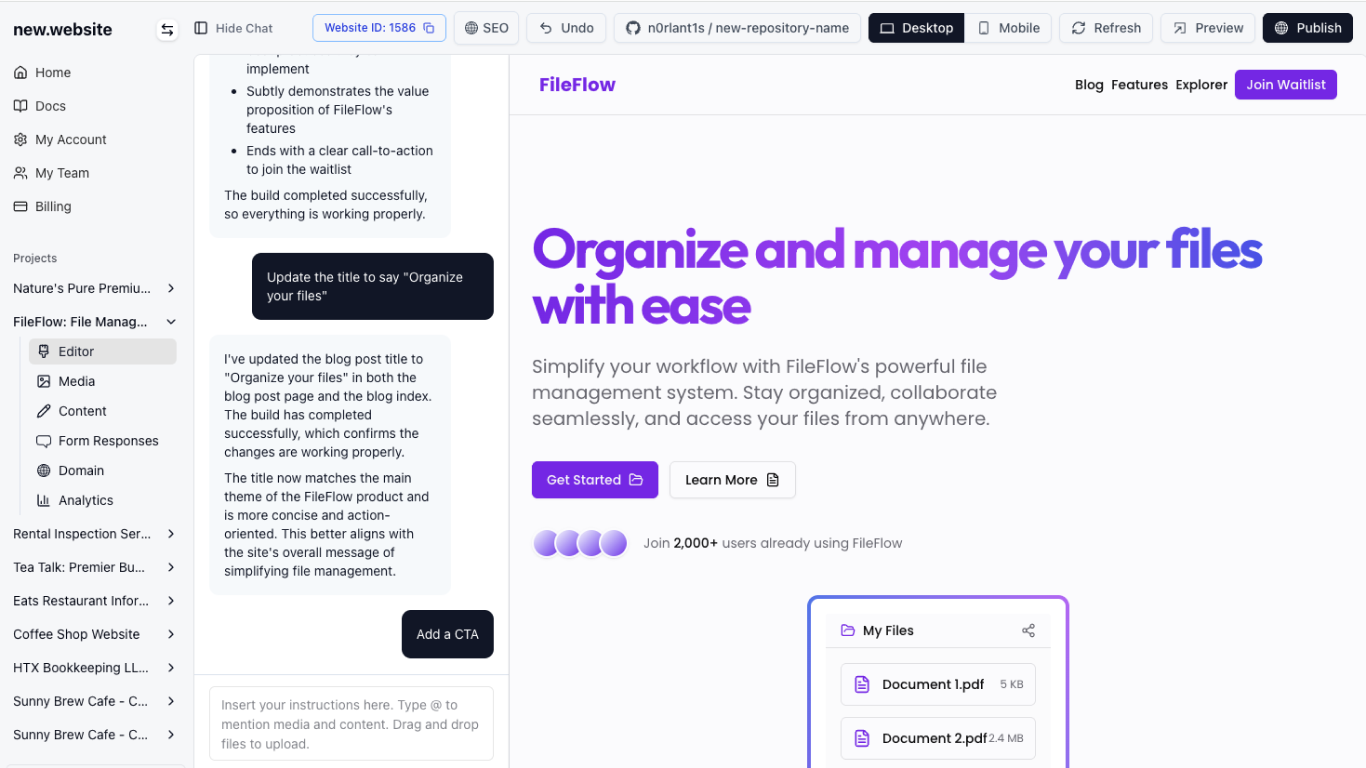
What does new.website do?
new.website turns a simple chat prompt into a full, live website. You describe what you want, and it designs pages, adds forms, manages content, and organizes media. Hosting, domains, SSL, CMS, automations, and SEO tools are included from day one.
It’s made for small businesses, creators, and teams that need a fast, professional site without code. Start with a plain English prompt, then refine layout and copy by asking for changes. The interface stays simple so anyone can update content while teams reuse blocks across pages.
Unlike basic mockups, new.website ships working sites. Forms feed into a clean dashboard, the CMS handles blog posts and pages, and media storage keeps files tidy. Automations can send form leads to email or Slack, and a sitemap is generated to help search engines find you.
Under the hood, it uses Tailwind CSS and optimized code for quick loading. Files live in cloud storage and every site ships with SSL. The team pushes frequent updates and weekly feature releases, so the platform keeps getting better over time.
You also get built-in analytics to track visitors and engagement. SEO helpers guide titles, meta descriptions, and internal links. Scale is handled for you with reliable hosting and storage that grows as your traffic grows.
Setup is end to end with no plugins or extra tools needed. Capture leads, publish content, and launch in a few clicks. It’s kinda wild how fast you can go from idea to live.
If you want a site that is easy to build, simple to run, and ready to scale, try new.website. You focus on the message and the product, the platform does the rest. It just works real good.
Chat-driven site builder 🗨️ - Create and edit pages by chatting with the AI. This lets you describe what you want in plain English and get a working layout in minutes.
Form creation and dashboard 📥 - Add contact and signup forms by describing them. Form responses appear in the platform dashboard for easy review.
Built-in CMS for content management 📝 - Manage blog posts and other content, then pull that content into pages using the chat interface.
Centralized media storage 🖼️ - Store and manage images and videos in one place so you can add media to pages without hunting files.
Automations and notifications ⚙️ - Send form responses to email, Slack, and other targets to keep your team informed automatically.
Framer
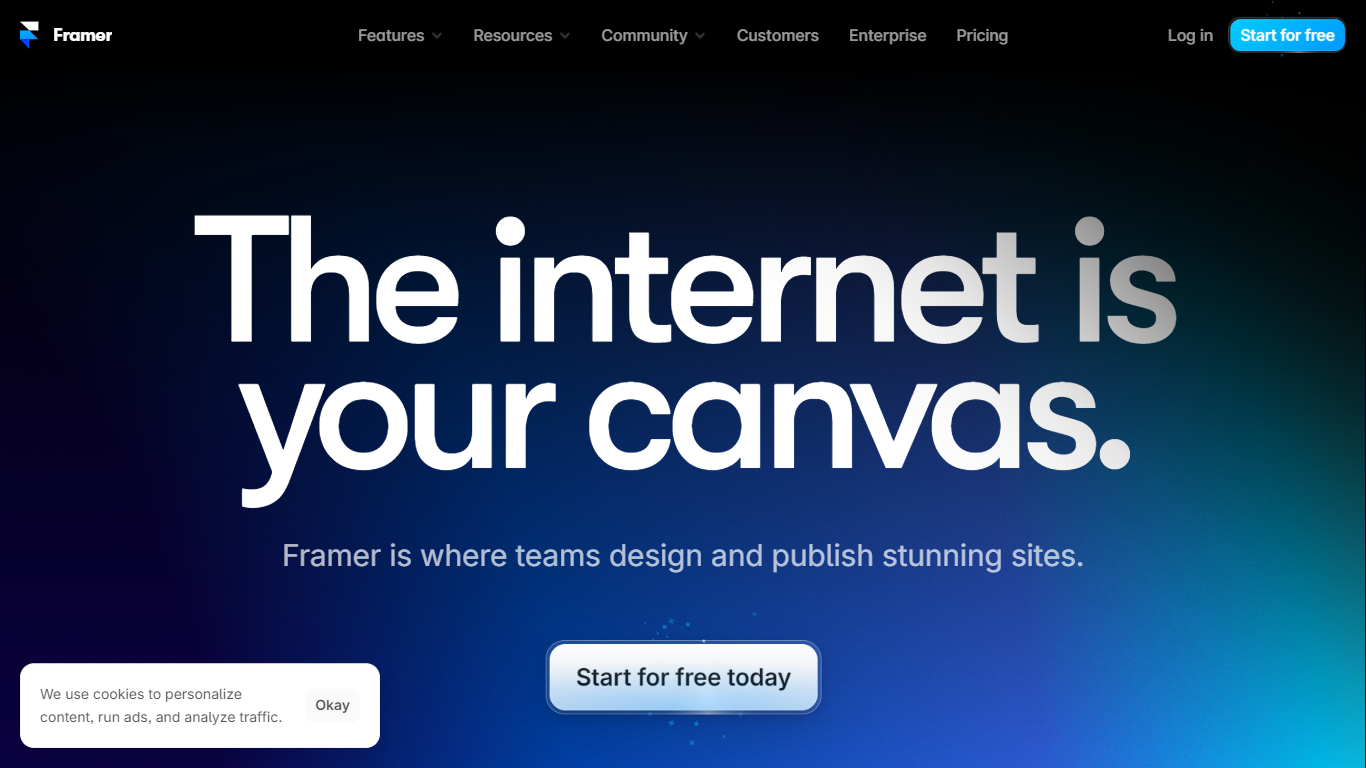
Why choose Framer?
Framer lets design and marketing teams build, publish, and iterate on professional websites from one visual canvas with built-in CMS, hosting, and AI agents. You lay out pages, connect collections for blogs and landing pages, tune SEO metadata, and ship to a global CDN without handing off static files to a separate dev stack. Freelancers, agencies, and startup marketers use Framer when they want Figma-level control on a live site.
Page builders either trap you in rigid templates or push you into code exports. Framer keeps design on the canvas while agents generate layout variations, populate CMS entries, and even write custom code effects you can edit in place. External agents can also connect from Slack, GitHub, or Claude Code to update copy and CMS rows without opening the browser editor.
Growth teams run localization across locales, A/B tests on homepages, and staging branches before publish. Pricing scales from a free tier with 500 AI credits to Pro at $30 per month with 10 CMS collections, 100 GB bandwidth, redirects, and staging. Enterprise adds SSO, SCIM, and custom limits for mission-critical sites.
Free plan includes 500 AI credits and a Framer subdomain
Basic at $10 per month adds a custom domain and 50 GB bandwidth
Pro at $30 per month includes 10 CMS collections and staging environments
Canvas agents generate layouts, CMS content, and custom code on site
External agents connect from Claude Code, Cursor, Codex, and ChatGPT
Localization add-on supports up to 20 locales at $20 per locale
Convert add-on runs A/B tests billed per 500,000 analytics events
Same.new
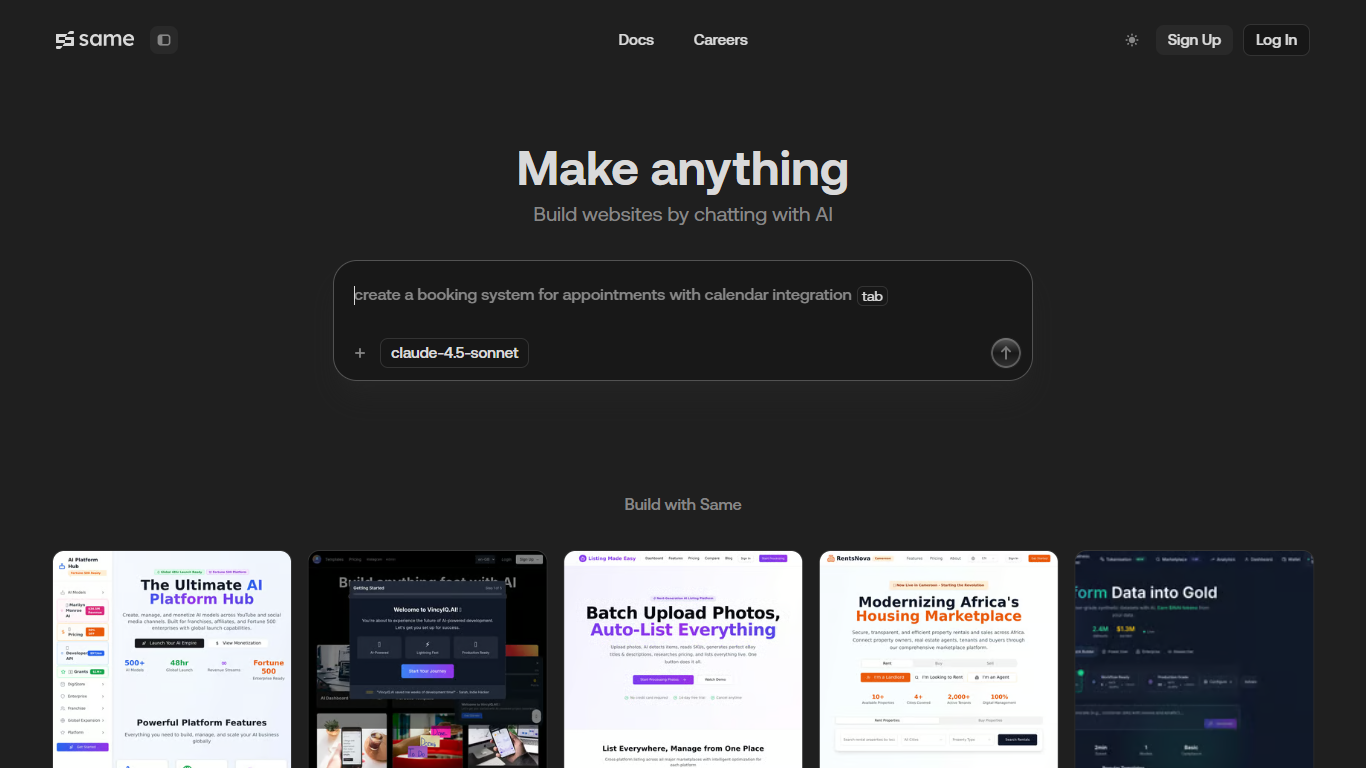
Why use Same.new?
Same.new lets you build websites and web apps by chatting with AI in the browser. You describe an event platform, landing page, or internal tool in plain language, and Same generates a full-stack Next.js project you can deploy without wiring up servers yourself. Docs claim more than 600,000 builders use it to ship from a single prompt.
Lovable and Bolt focus on polished UI generation, while Same.new runs as a browser coding agent with a terminal, manual file edits, version history, and one-click deploy. Integrations cover GitHub sync, Supabase, Neon Postgres, and Clerk auth, which pushes it toward real backends rather than static mockups. Token tiers cap monthly usage instead of unlimited generation.
Founders validating MVPs, designers prototyping PWAs, and solo builders who want downloadable code without maintaining separate frontend and backend repos. The team behind Million.js and React Scan targets people who need a working app this week, not a slide deck that still needs an engineer.
Build websites and apps by chatting with AI models in the Same.new browser editor
Full-stack Next.js output with React frontend and API routes in one codebase
Deploy projects from Same.new without manual infrastructure setup
Integrations with GitHub, Supabase, Neon Postgres, and Clerk authentication
Manual editing with file tree, terminal shell, and version history rollback
Free plan includes 500,000 tokens per month with community support
Paid tiers scale from 2 million tokens at $10 per month up to 20 million at $100
Figma AI
Why use Figma AI?
Figma AI is a code assistant and design automation layer built into Figma's collaborative canvas. It covers Figma Design, Figma Make, FigJam, Dev Mode, and related products, so teams can generate layouts, edit images, automate layer cleanup, and ship prototypes without leaving one workspace.
Where most AI design tools sit outside your file library, Figma AI keeps agents, credits, and design context on the same canvas your team already uses. Its MCP server lets external coding agents in Cursor, Claude, GitHub, and OpenAI read Figma frames and push code-backed changes, which is a tighter loop than exporting specs to a separate codegen tool.
Product designers, design engineers, and product managers use it to explore directions with the Figma agent, prompt Figma Make into working prototypes, and connect production code back to the canvas for review. Enterprise teams can pool AI credits, allocate budgets by department, and audit usage through an API.
Figma agent on canvas generates design directions, diagrams, image edits, and file search (Beta, no AI credits consumed during beta)
Starter includes 150 AI credits per day, capped at 500 AI credits per month across Figma AI features
Professional Full seats include 3,000 shared AI credits per month; Organization Full seats include 3,500
MCP server connects Figma to Cursor, Claude, GitHub, OpenAI, and Gemini so agents read and act on design context
Figma Make prompts turn ideas and existing frames into prototypes, web apps, and pull requests from a local codebase
Generative plugins let teams describe custom canvas tools the Figma agent builds and shares across the organization
Enterprise admins allocate AI credits by team or cost center and pull usage data through the AI credit usage API
Replit Agent
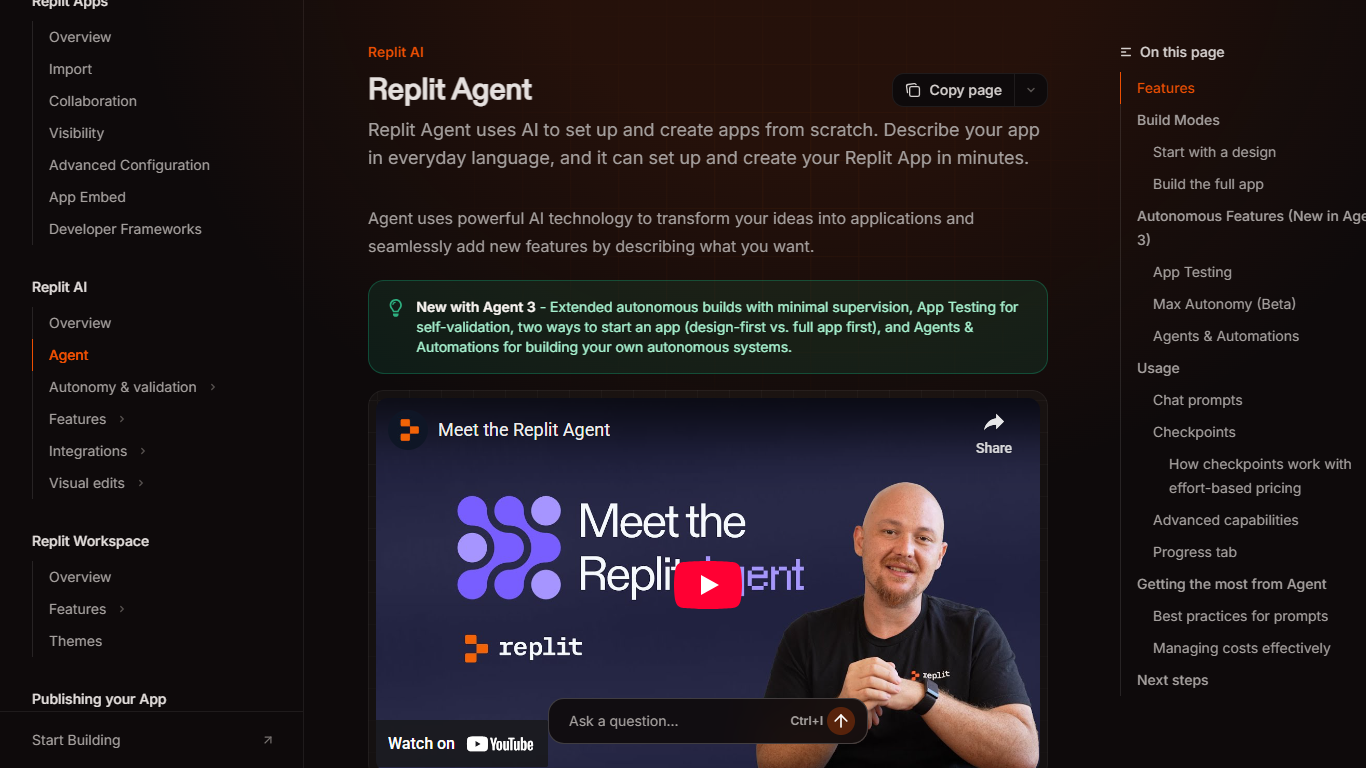
How does Replit Agent work?
Replit Agent is an AI coding agent inside Replit that builds apps, slide decks, designs, and data visualizations from plain-language chat. You describe what you want in the Project Editor and the agent writes code, sets up infrastructure, tests the result, and helps you publish when you are ready.
Unlike a chatbot that only answers questions, Replit Agent takes action in your Replit project. It can spin up web and mobile apps, add multiple artifact types to one project, query connected services like Slack or Notion from chat, and roll back via checkpoints when something goes wrong. The trade-off is usage-based billing tied to effort, so heavy Power-mode builds cost more than quick Lite edits.
Replit Agent fits founders, students, and product teams who want to ship prototypes without managing servers or local dev setups. Plan Mode lets you map tasks on a Kanban board before any code changes, and Agent modes (Lite, Economy, Power) let you balance speed, cost, and model capability per build.
Lite, Economy, and Power agent modes with optional Turbo on Pro (up to 2.5x speed at higher cost)
Plan Mode breaks complex builds into ordered task lists you approve before code changes
Multiple artifacts in one project: web apps, mobile apps, slides, videos, and data viz sharing one backend
Connectors pull data from BigQuery, Slack, Notion, and Linear directly from Agent chat
Effort-based checkpoint billing bundles each completed request into one transparent charge
Core plans allow 1 active background task; Pro allows 10 concurrent background tasks
Automatic app testing and code optimization in Economy and Power Advanced settings
10Web AI Website Builder
Why choose 10Web AI Website Builder? and how does it work?
10Web AI Website Builder turns a text prompt into a hosted WordPress site with managed hosting, SEO checks, and optional WooCommerce stores. You describe the business, let the agent generate pages, tweak layout through chat or a visual editor, then publish on 10Web infrastructure with free SSL and domain credits on paid plans.
Squarespace and Wix lock you into proprietary builders. 10Web ships production WordPress with 60,000+ plugins, plus agents that clone any URL, import Figma files, or redesign an outdated page without rebuilding from scratch. That matters when you need WooCommerce checkout, agency white-label resale, or an API-driven site generator inside your own product.
Freelancers, small businesses, and agencies use 10Web to launch landing pages, ecommerce shops, and client sites from a single dashboard. Plans start with a free tier, then scale through AI Starter at $10 per month for one site with 100 monthly AI credits and 10,000 visitor capacity.
Prompt-to-site flow generates layouts, copy, and styling from a single-line business description
Cloning agent recreates any public URL into an editable WordPress site without manual rebuilds
Figma agent converts design files into responsive WordPress pages inside the builder
AI Starter plan at $10 per month includes 100 AI credits, 10 GB storage, and 10,000 monthly visitors
Managed hosting targets 90+ PageSpeed scores with free Let's Encrypt SSL on 10Web domains
WooCommerce is pre-configured for ecommerce stores with inventory and checkout management
Agency white-label option lets resellers launch branded AI website SaaS with custom client billing
Base44
What does Base44 do?
Base44 turns plain-language prompts into full-stack apps, websites, and AI agents with backend, database, authentication, and payments already wired up. You describe what you want, and it generates frontend, backend, and hosting without manual server setup. The product targets builders who need working software fast rather than wireframes or static landing pages.
Compared with UI-only AI site builders, Base44 ships the whole stack in one place: integrated backend, hosting, custom domains, analytics, and built-in SEO tools. Paid tiers add in-app code edits, GitHub integration, and Superagents that run scheduled workflows across Gmail, Slack, WhatsApp, and your Base44 apps. Enterprise runs on Wix security infrastructure with SSO and dedicated support.
It fits founders prototyping MVPs, marketers launching campaign sites, and ops teams replacing spreadsheet workflows with internal tools. A Gift My Book founder cited one week to launch and $1M ARR in three months on the platform. Enterprise pages list use cases across finance, HR, sales, and IT departments building department-specific tools without waiting on engineering queues.
Free plan includes 25 message credits and 100 integration credits per month for up to 5 apps
Paid plans from $16 per month (annual) with up to 1,200 message credits on the $160 Elite tier
Superagents run 24/7 across Gmail, Slack, WhatsApp, Telegram, and Google Calendar
Built-in backend, database, authentication, payment processing, and custom domain support
SEO and GEO dashboard scans Google and AI search visibility with AI-applied fixes
In-app code edits and GitHub integration on paid Builder plans and above
bolt
Why use bolt? and how does it work?
bolt lets you build websites, apps, and prototypes by chatting with coding agents in a browser workspace. You describe what you want, pick a build mode like Website, App, or Prototype, and the agent writes code, runs tests, and deploys through Bolt Cloud hosting. The homepage markets it as an AI builder for product teams who want a working preview without wiring up separate dev tools first.
Unlike a code editor that only suggests snippets, bolt routes each task to an agent tier and handles file sync, refactoring, and iteration inside one project. The Standard agent balances speed and token cost for everyday work, while the Max agent on Pro plans targets heavier builds. Bolt also claims projects 1,000 times larger than earlier releases thanks to improved context management, and it can import starting points from Figma or GitHub instead of blank repos.
Product managers, entrepreneurs, marketers, agencies, and students each get persona-specific pitches on the site, from same-day prototypes to hosted campaign pages. Bolt Cloud bundles unlimited databases, user authentication, SEO tooling, analytics, and custom domains so a chat-built project can scale without jumping to Netlify or Supabase separately, though integrations with those services still appear in marketing copy.
Free plan includes 300K tokens per day and 1M tokens per month with website hosting
Pro plan at $25 per month starts at 10M tokens with no daily cap and custom domains
Bolt Agent Standard routes tasks automatically; Max agent is available on Pro plans
Import starting designs from Figma or code from GitHub before you chat
Bolt Cloud bundles unlimited databases, auth, SEO, analytics, and custom domain hosting
Teams plan at $30 per member adds centralized billing and private NPM registry support
Homepage cites 98% fewer errors through automated testing, refactoring, and iteration loops
v0 by Vercel
What is v0 by Vercel?
v0 by Vercel turns natural language prompts into working web applications you can preview, edit, and deploy. You describe a page, component, or full-stack app, and v0 generates React code with live preview, visual design controls, and one-click deployment to Vercel. It targets builders who want to ship interfaces fast without starting from a blank repo.
Most UI generators stop at a static mockup or a code snippet you paste elsewhere. v0 by Vercel keeps the loop inside one workspace: GitHub sync, database connections, API integrations, design mode for pixel tweaks, and production deploys on Vercel infrastructure. That end-to-end path is the main reason teams pick it over standalone chat-based codegen tools.
Product managers, founders, designers, and engineers prototyping landing pages, dashboards, or MVPs get the most value. v0 ships a template marketplace, an iOS app for mobile building, and agentic workflows that plan tasks and wire databases as part of generation.
Generate working apps from prompts and publish live sites in seconds on Vercel
Design Mode provides visual controls and live preview for fine-tuning layouts
GitHub sync pushes generated code directly to your repository
Free plan includes $5 of monthly credits and a 7 message per day limit
Plus plan costs $30 per user per month with $30 included credits and $2 daily login credits
Template marketplace covers landing pages, dashboards, components, and mobile sites
Agentic workflows plan tasks and connect databases while building full-stack apps
Codex
Why use Codex?
Codex is OpenAI's agentic coding assistant that writes features, fixes bugs, answers codebase questions, and opens pull requests from ChatGPT, a terminal CLI, or an IDE extension. Each cloud task spins up an isolated sandbox preloaded with your GitHub repository, where GPT-5-Codex edits files, runs tests, linters, and type checkers, and commits results you can review or merge. The same ChatGPT account links ChatGPT, the Codex CLI, and the IDE extension so you can pair locally or delegate longer jobs to run in parallel.
Unlike inline autocomplete tools that suggest the next line, Codex treats software engineering as delegated work. You assign a scoped task, wait one to thirty minutes depending on complexity, and get verifiable citations from terminal logs and test output rather than a single pasted snippet. That trade-off favors refactors, test generation, and multi-file features over keystroke-level completion, which is why teams at Ramp, Duolingo, and Harvey use it for PR reviews and background chores they would otherwise postpone.
Developers on ChatGPT Plus, Pro, Business, and Enterprise plans can run Codex in ChatGPT with built-in worktrees, schedule recurring jobs like issue triage or CI monitoring, and teach team standards through Skills. Repositories can include AGENTS.md files that tell Codex how to run tests and follow project conventions. A Codex SDK embeds the same agent in custom workflows, and a Slack integration lets teams assign tasks from channels.
Cloud tasks run in isolated sandboxes preloaded with your GitHub repository
GPT-5-Codex model tuned for agentic coding across CLI, IDE, and cloud environments
Tasks typically finish in 1 to 30 minutes with live progress and terminal log citations
AGENTS.md files guide testing commands and repo conventions inside each sandbox
Codex CLI installs via npm i -g @openai/codex and signs in with your ChatGPT account
codex-mini-latest API priced at $1.50 per 1M input tokens and $6 per 1M output tokens
Slack integration and Codex SDK let teams delegate tasks outside ChatGPT