
Last updated 08-11-2026
Category:
Reviews:
Join thousands of AI enthusiasts in the World of AI!
Boxo
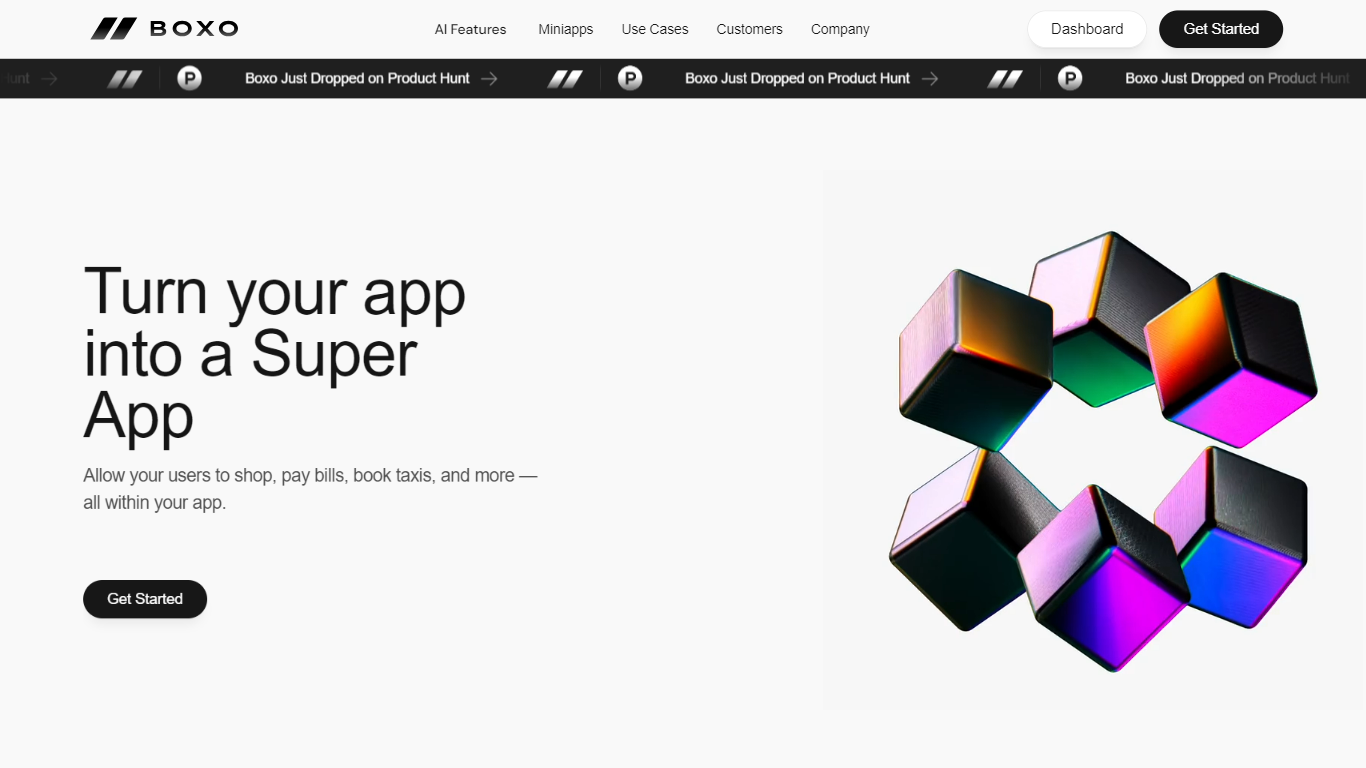
Boxo lets mobile app teams embed shopping, travel, telecom, and finance services without building each integration from scratch. You connect once through the Boxo SDK and enable white-label miniapps for marketplace, eSIM, flight booking, bill pay, and insurance inside your existing app. Banks, wallets, telcos, and lifestyle apps use it when they want a broader daily-use experience without signing separate vendor deals for every vertical.
Where most SDK vendors sell one vertical integration, Boxo ships a catalog of customizable miniapps behind a single integration point. That trade-off favors speed over deep bespoke builds: you brand the modules, choose which services fit your users, and launch in weeks rather than staffing separate teams for marketplace, travel, and payments. Case studies with KOHO, GCash, and Vodapay show fintech apps using Boxo to add commerce and connectivity without leaving the host app.
Product and engineering leaders with an installed base use Boxo to lift retention through services people open often. Fintech apps extend beyond transfers into marketplaces and eSIM sales; travel and lifestyle apps add lounges, hotels, and loyalty programs from the same dashboard. The docs site documents a lightweight SDK setup, and the company reports 75,000 merchants and 500 million combined users across its partner ecosystem.
Single Boxo SDK connects your app to multiple white-label miniapps without separate vendor integrations
Catalog spans marketplace, eSIM, flight booking, remittance, insurance, hotel booking, and bill pay modules
Brand customization lets teams recolor miniapps to match existing app design guidelines
Boxo reports 75,000 merchants and 500 million combined users across its super app partners
Case studies document launches with KOHO, GCash, Vodapay, World, and ROSHN on the same platform
Enterprise security page lists encryption at rest and in transit plus compliance-focused deployment checklists
One SDK unlocks a broad miniapp catalog spanning commerce, travel, telecom, and finance
Published case studies with major fintech and lifestyle brands validate production use
White-label branding controls help embedded services feel native to the host app
Security page documents encryption and compliance-focused deployment practices
No public pricing or plan table on the marketing site, so budgets require a sales conversation
Module depth depends on Boxo's catalog; niche verticals may need a custom feature request
Domain rating and third-party traffic signals were not available during this research pass
What is Boxo?
Boxo is a super app platform that lets mobile apps embed white-label miniapps for shopping, travel, telecom, and finance through one SDK integration. Host apps keep users inside a single interface while Boxo supplies the underlying service modules.
What miniapps does Boxo offer?
Boxo lists marketplace, eSIM, flight booking, remittance, insurance, hotel booking, airport lounges, loyalty programs, bill pay, ride hailing, games, and AI chatbot modules on its site. Teams pick the services that fit their app and brand the modules to match.
How does Boxo integration work?
Boxo integration starts with its mobile SDK, documented at docs.boxo.io with sample code for setting a client ID and opening a miniapp by app ID. One SDK connection grants access to the miniapp catalog instead of wiring each partner API separately.
Who uses Boxo today?
Boxo publishes customer stories for World, KOHO, GCash, Vodapay, Unacash, and ROSHN across fintech and lifestyle apps. Its about page states it has transformed 10 super apps globally with offices headquartered in Singapore.
Can Boxo miniapps match my brand?
Yes. Boxo advertises customizable miniapps where teams adjust colors and branding so embedded services look native to the host app. White-label pages for marketplace and eSIM describe end-to-end journeys tailored to each brand.
How long does a Boxo launch take?
Boxo markets launch timelines in weeks rather than years because modules are prebuilt behind the shared SDK. Exact schedules depend on which miniapps you enable and your internal release process, so sales teams handle specifics through the contact form.