Algo vs AutoPod
When comparing Algo vs AutoPod, which AI Video Editing tool shines brighter? We look at pricing, alternatives, upvotes, features, reviews, and more.
In a comparison between Algo and AutoPod, which one comes out on top?
When we put Algo and AutoPod side by side, both being AI-powered video editing tools, There's no clear winner in terms of upvotes, as both tools have received the same number. The power is in your hands! Cast your vote and have a say in deciding the winner.
Want to flip the script? Upvote your favorite tool and change the game!
Algo

What is Algo?
Algo builds custom video editing pipelines for teams that need motion graphics driven by live data, not one-off clips cut by hand. The Turin-based studio designs templates in After Effects, Lottie, or Cavalry, then hosts them on a cloud platform where your data triggers rendering without manual timeline work. Each client gets a tailored project dashboard and optional API access once the eight-step creative and technical setup is complete.
Where most video editors stop at a single export, Algo is built for campaigns that repeat at scale: a unique wrap video per wallet user, a daily chart that updates when markets move, or a city-specific clip pulled from an API call. You get a managed creative setup (about two months on average) rather than a self-serve SaaS template library, which is the trade-off if you want templates wired to your own data schema and delivery stack.
Marketing teams, publishers, fintech apps, and sports leagues use Algo's dashboard or API to launch, filter, and publish videos. Outputs ship as MP4, GIF, or Lottie JSON, with optional auto-posting to Instagram, YouTube, TikTok, LinkedIn, and cloud storage. The Figma plugin path lets in-house design teams edit motion systems inside familiar files after the studio hands off the template library.
Algo runs After Effects in Microsoft Azure and has rendered work for Bloomberg, The New York Times, Google, Johns Hopkins University, and Aave. Client projects span autonomous election trackers, podcast audiograms, and in-app personalized finance animations.
AutoPod
What is AutoPod?
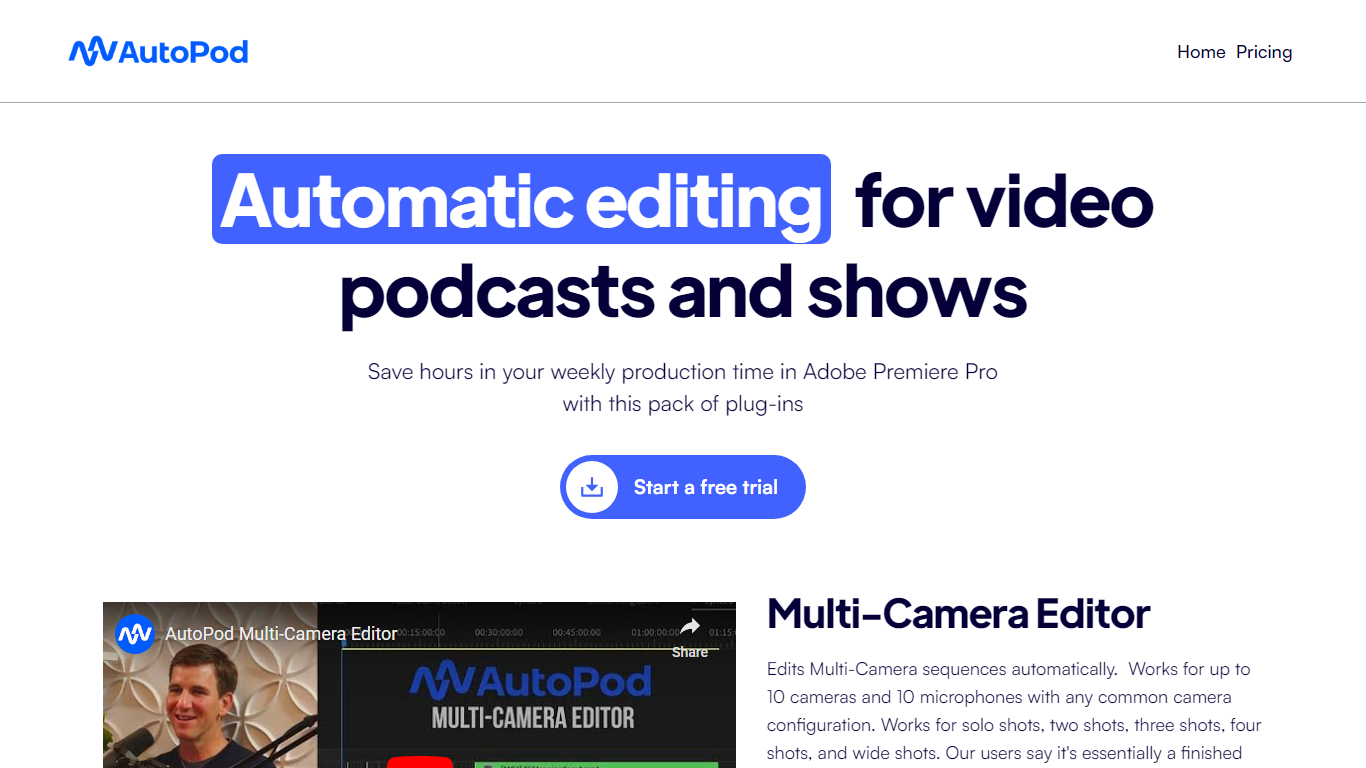
AutoPod is a pack of Adobe Premiere Pro extensions that automate the repetitive parts of video podcast editing. The Multi-Camera Editor cuts between up to 10 cameras and 10 microphones based on who is speaking, the Social Clip Creator exports 1920x1080, 1080x1350, and 1080x1920 clips from in/out points, and the Jump Cut Editor removes silence to keep social clips tight.
Unlike generic auto-edit tools that work across NLEs, AutoPod only targets Premiere Pro (with a separate DaVinci Resolve build) and trains its cuts on thousands of hours of podcast footage. That narrow focus means it handles solo shots, two-shots, three-shots, and wide shots out of the box, but it requires separate audio tracks per speaker and will not work with a single camera or single mic setup.
Video podcast producers and show editors who already live in Premiere Pro are the core audience. The $29 per month per-license price with a 30-day free trial targets freelancers and small teams who edit multi-cam interview shows weekly and want to skip the first-pass assembly before fine-tuning presets for their specific cutting style.
Algo Upvotes
AutoPod Upvotes
Algo Top Features
Builds custom data-driven templates in After Effects, Lottie, or Cavalry, then renders through a cloud After Effects engine
Scales from 5 videos per month to 200 million with server-side rendering, batch API calls, and on-demand triggers
Average render time of 30 seconds for a 30-second video file; Lottie customization completes in 0.012 seconds
Outputs responsive 16:9, 1:1, 4:5, and 9:16 videos from a single engineered template
Figma plugin subscription is $300 per month for unlimited cloud renders after studio setup packages from $16,000
REST API returns a status URL to track customization, rendering, and final MP4 or Lottie delivery
Auto-posts finished videos to Instagram, YouTube, TikTok, LinkedIn, Slack, AWS S3, Azure Storage, and FTP
AutoPod Top Features
Multi-Camera Editor supports up to 10 cameras and 10 microphones with solo, two-shot, three-shot, and wide shot layouts
Social Clip Creator exports 1920x1080, 1080x1350, and 1080x1920 clips with optional auto-reframe, watermarks, and end pages
Jump Cut Editor creates silence-based cuts with a customizable decibel cutoff per microphone
Custom presets for cutting style, wide-shot frequency, and standard vs multi-cam vs enable/disable modes
Batch export all social clips from a folder with a single click
Requires Adobe Premiere Pro 2023 or newer; DaVinci Resolve version available through a separate downloader
Algo Category
- Video Editing
AutoPod Category
- Video Editing
Algo Pricing Type
- Freemium
AutoPod Pricing Type
- Paid