AnythingLLM vs ggml.ai
In the battle of AnythingLLM vs ggml.ai, which AI Large Language Model (LLM) tool comes out on top? We compare reviews, pricing, alternatives, upvotes, features, and more.
Which one is better? AnythingLLM or ggml.ai?
Upon comparing AnythingLLM with ggml.ai, which are both AI-powered large language model (llm) tools, ggml.ai is the clear winner in terms of upvotes. ggml.ai has received 7 upvotes from aitools.fyi users, while AnythingLLM has received 6 upvotes.
Disagree with the result? Upvote your favorite tool and help it win!
AnythingLLM

What is AnythingLLM?
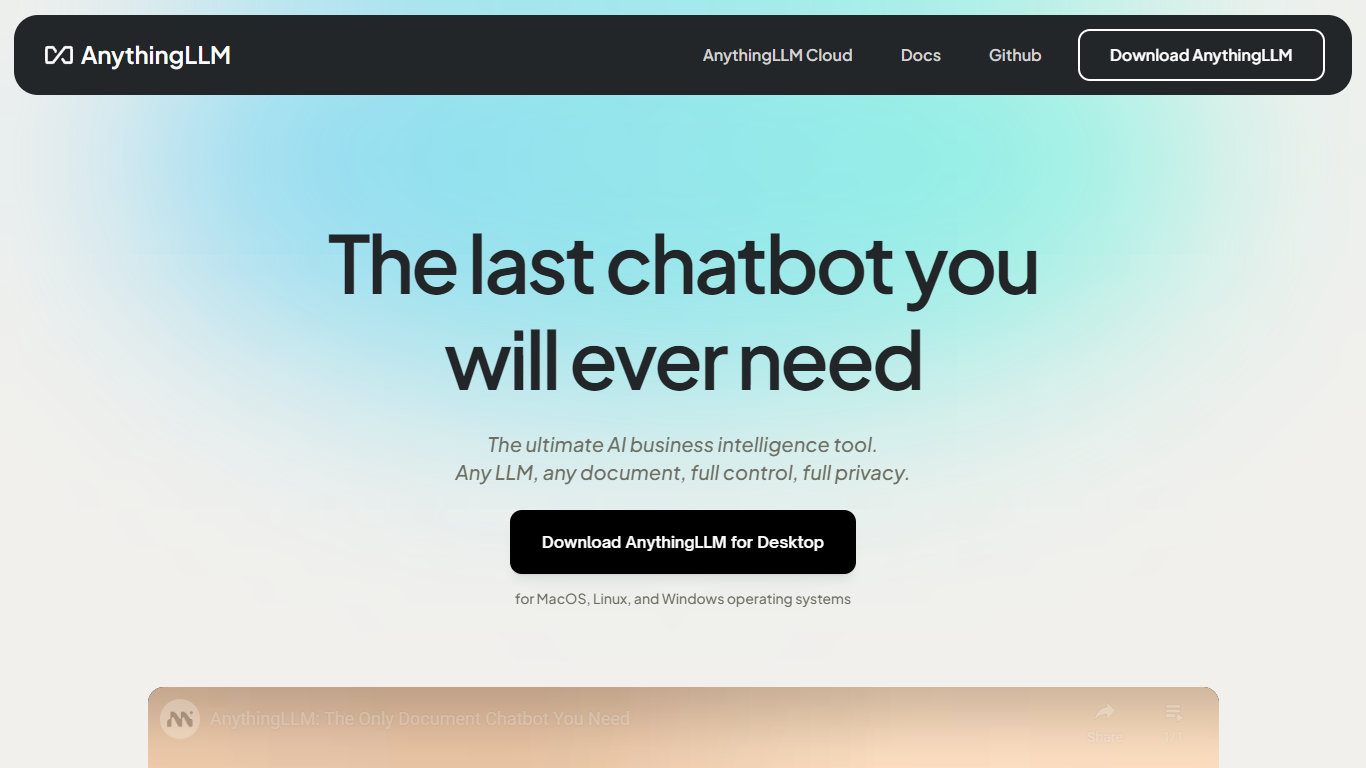
AnythingLLM is a private AI assistant that runs entirely on your computer, offering full control and privacy without requiring accounts, API keys, or internet connectivity. It supports MacOS, Linux, and Windows with a simple one-click installation. The tool allows you to select from various large language models or lets the system recommend the best model based on your hardware.
It integrates multiple document types into its knowledge base, enabling research, workflow building, and chat with documents all locally. Designed for both individual and team use, AnythingLLM supports multi-user environments with full tenant isolation and fine-grained admin controls. It also features tools like meeting transcription and summarization, web scraping, dynamic model selection, and custom agent skills, all running on-device to ensure data privacy.
The platform is open-source, MIT licensed, and can be self-hosted or used via cloud hosting with options for white-labeling and custom integrations.
ggml.ai
What is ggml.ai?
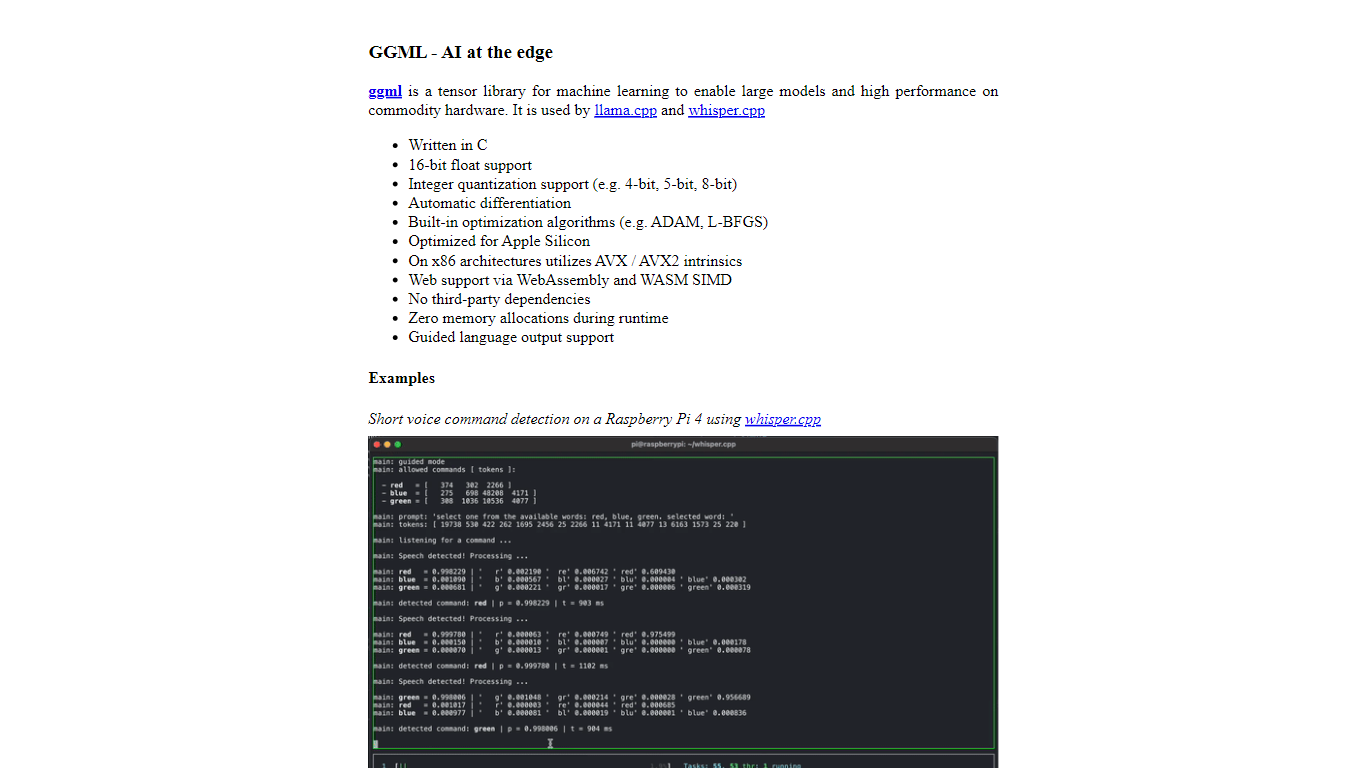
ggml runs large language and speech models on everyday CPUs and GPUs through a compact C tensor library built for on-device inference. ML engineers and app developers adopt it via llama.cpp and whisper.cpp when they want LLaMA or Whisper workloads without cloud-only dependencies.
Frameworks like PyTorch optimize for training clusters and heavy runtimes. ggml keeps the core library minimal with zero runtime memory allocations, no third-party dependencies, and integer quantization so llama.cpp can serve Meta LLaMA weights on laptops and Apple Silicon.
The ggml.ai company was founded in 2023 by Georgi Gerganov to support the library and was acquired by Hugging Face in 2026. The core ggml project stays MIT licensed with open development on GitHub.
AnythingLLM Upvotes
ggml.ai Upvotes
AnythingLLM Top Features
🖥️ Runs fully on your computer with no internet needed for complete privacy
👥 Supports multi-user workspaces with tenant isolation and admin controls
📄 Integrates all document types into a searchable knowledge base locally
📞 Automatically transcribes and summarizes meetings with action items
⚙️ Customizable agent workflows and white-labeling for organizational branding
ggml.ai Top Features
Powers llama.cpp for Meta LLaMA inference and whisper.cpp for OpenAI Whisper speech models
Written in C with zero runtime memory allocations during inference
Integer quantization support for smaller models on commodity hardware
No third-party dependencies in the core tensor library
Cross-platform low-level implementation with broad hardware support
MIT licensed open-core library with public development on GitHub
AnythingLLM Category
- Large Language Model (LLM)
ggml.ai Category
- Large Language Model (LLM)
AnythingLLM Pricing Type
- Paid
ggml.ai Pricing Type
- Free