ggml.ai vs ChatGPT Plugins
Explore the showdown between ggml.ai vs ChatGPT Plugins and find out which AI Large Language Model (LLM) tool wins. We analyze upvotes, features, reviews, pricing, alternatives, and more.
When comparing ggml.ai and ChatGPT Plugins, which one rises above the other?
When we contrast ggml.ai with ChatGPT Plugins, both of which are exceptional AI-operated large language model (llm) tools, and place them side by side, we can spot several crucial similarities and divergences. With more upvotes, ChatGPT Plugins is the preferred choice. ChatGPT Plugins has garnered 13 upvotes, and ggml.ai has garnered 7 upvotes.
Not your cup of tea? Upvote your preferred tool and stir things up!
ggml.ai
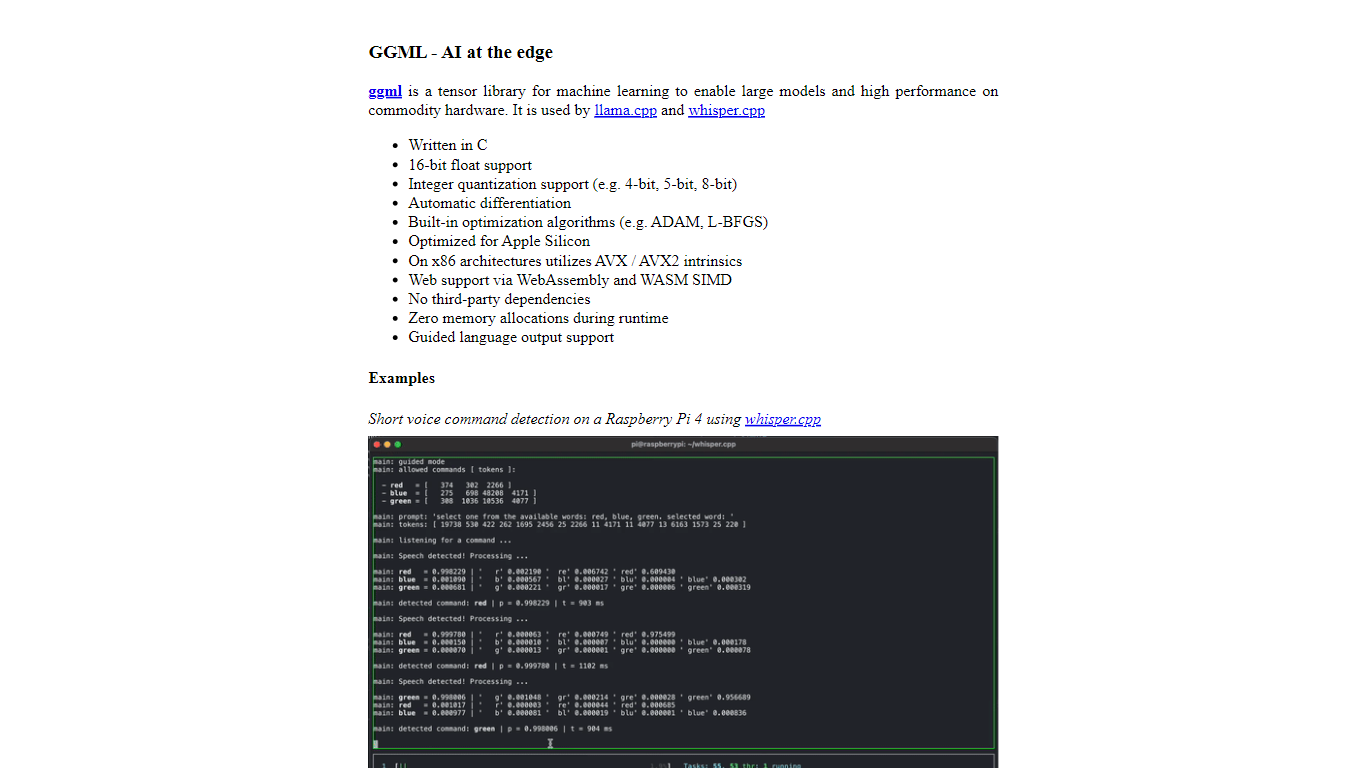

What is ggml.ai?
ggml runs large language and speech models on everyday CPUs and GPUs through a compact C tensor library built for on-device inference. ML engineers and app developers adopt it via llama.cpp and whisper.cpp when they want LLaMA or Whisper workloads without cloud-only dependencies.
Frameworks like PyTorch optimize for training clusters and heavy runtimes. ggml keeps the core library minimal with zero runtime memory allocations, no third-party dependencies, and integer quantization so llama.cpp can serve Meta LLaMA weights on laptops and Apple Silicon.
The ggml.ai company was founded in 2023 by Georgi Gerganov to support the library and was acquired by Hugging Face in 2026. The core ggml project stays MIT licensed with open development on GitHub.
ChatGPT Plugins
What is ChatGPT Plugins?
ChatGPT Plugins was OpenAI's 2023 extension system that let ChatGPT call third-party APIs for live data, calculations, and external services. Plugins appeared as tools the model could invoke during a conversation after users enabled them in ChatGPT. OpenAI's March 2023 announcement listed launch partners including Expedia, Instacart, KAYAK, Klarna, OpenTable, Shopify, Slack, Wolfram, and Zapier.
The beta also shipped OpenAI-built plugins for web browsing via Bing, a sandboxed Python code interpreter, and an open-source retrieval plugin for private document search. Developers published plugins through a manifest file and OpenAPI spec, and ChatGPT Plus subscribers were the first users to enable them in chat.
OpenAI deprecated the plugin beta in favor of custom GPTs. The official blog page now states plugins have been deprecated, and OpenAI ended new plugin conversations on March 19, 2024, with full shutdown on April 9, 2024. GPTs with custom actions replaced the integration model for developers and ChatGPT users.
ggml.ai Upvotes
ChatGPT Plugins Upvotes
ggml.ai Top Features
Powers llama.cpp for Meta LLaMA inference and whisper.cpp for OpenAI Whisper speech models
Written in C with zero runtime memory allocations during inference
Integer quantization support for smaller models on commodity hardware
No third-party dependencies in the core tensor library
Cross-platform low-level implementation with broad hardware support
MIT licensed open-core library with public development on GitHub
ChatGPT Plugins Top Features
Third-party plugins from 12 launch partners including Shopify, Slack, and Wolfram
OpenAI web browsing plugin using the Bing search API with source citations
Sandboxed Python code interpreter for math, data analysis, and file conversion
Open-source retrieval plugin supporting vector databases like Pinecone and Milvus
Plugin manifest plus OpenAPI spec defined each integration for the language model
Users chose which enabled plugins appeared in each ChatGPT conversation
ggml.ai Category
- Large Language Model (LLM)
ChatGPT Plugins Category
- Large Language Model (LLM)
ggml.ai Pricing Type
- Free
ChatGPT Plugins Pricing Type
- Paid