Apera AI vs Meshy
In the battle of Apera AI vs Meshy, which AI 3D Generation tool comes out on top? We compare reviews, pricing, alternatives, upvotes, features, and more.
Between Apera AI and Meshy, which one is superior?
Upon comparing Apera AI with Meshy, which are both AI-powered 3d generation tools, The users have made their preference clear, Meshy leads in upvotes. The number of upvotes for Meshy stands at 114, and for Apera AI it's 6.
Feeling rebellious? Cast your vote and shake things up!
Apera AI
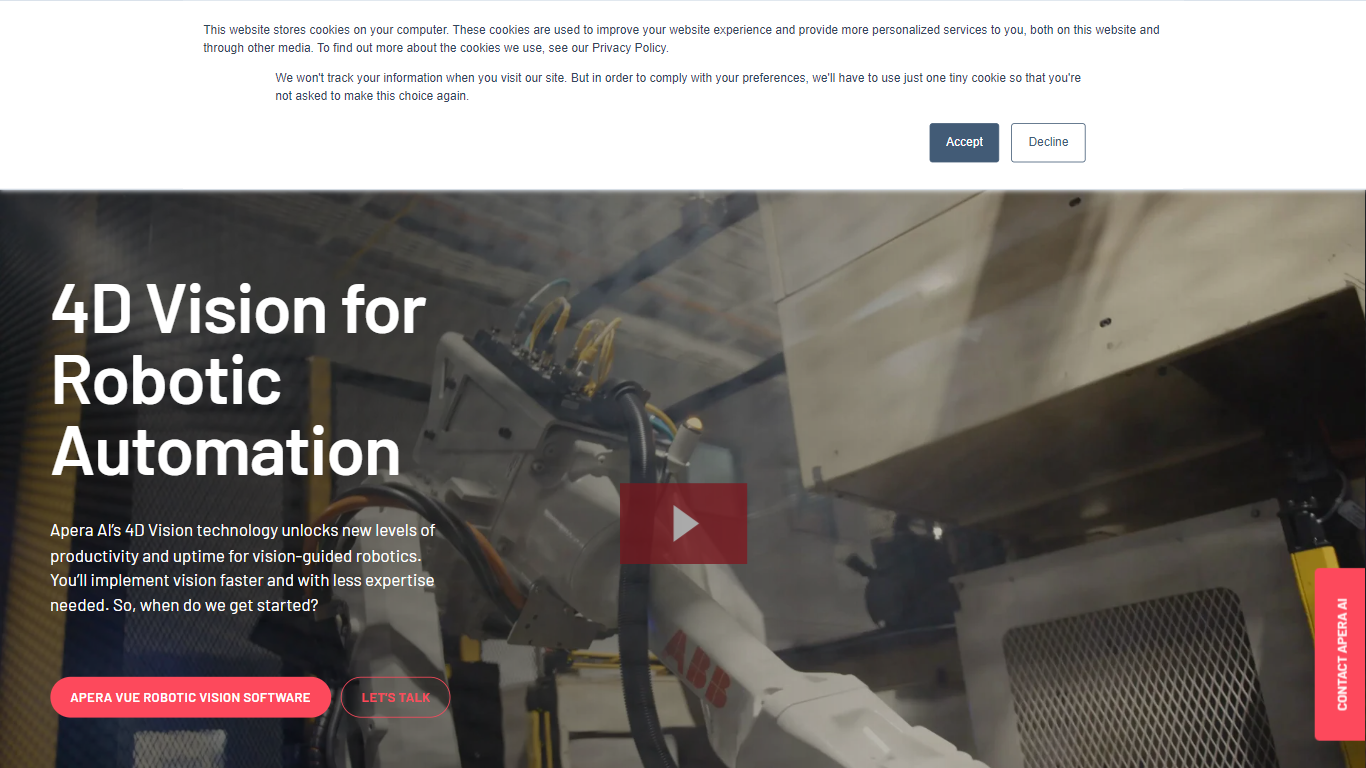

What is Apera AI?
Apera AI sells 4D Vision software and hardware that guides industrial robots through bin picking, assembly, machine tending, sorting, and packaging tasks. Its Vue robotic vision platform combines pairs of 2D cameras into a 3D scene model, then runs proprietary neural networks to pick the most graspable part and send path plans to the robot controller in as little as 0.3 seconds.
Traditional machine vision often needs reference photos or fails on shiny, clear, or randomly piled parts. Apera AI trains objects from CAD models or 3D scans using synthetic data, targets 99.99% reliability before delivery, and handles clear, translucent, and reflective parts in bright, dark, or outdoor lighting. One Vue computer can run up to four camera pairs, and commissioning after training takes about 15 minutes of calibration.
The company targets automotive, medical device, and metal fabrication plants plus the system integrators who build their cells. Projects follow a four-step Scope, Design, Install, and Support process with certified partners, a spec-based refund guarantee on vision programs, and a 30-minute support callback pledge during business hours.
Meshy
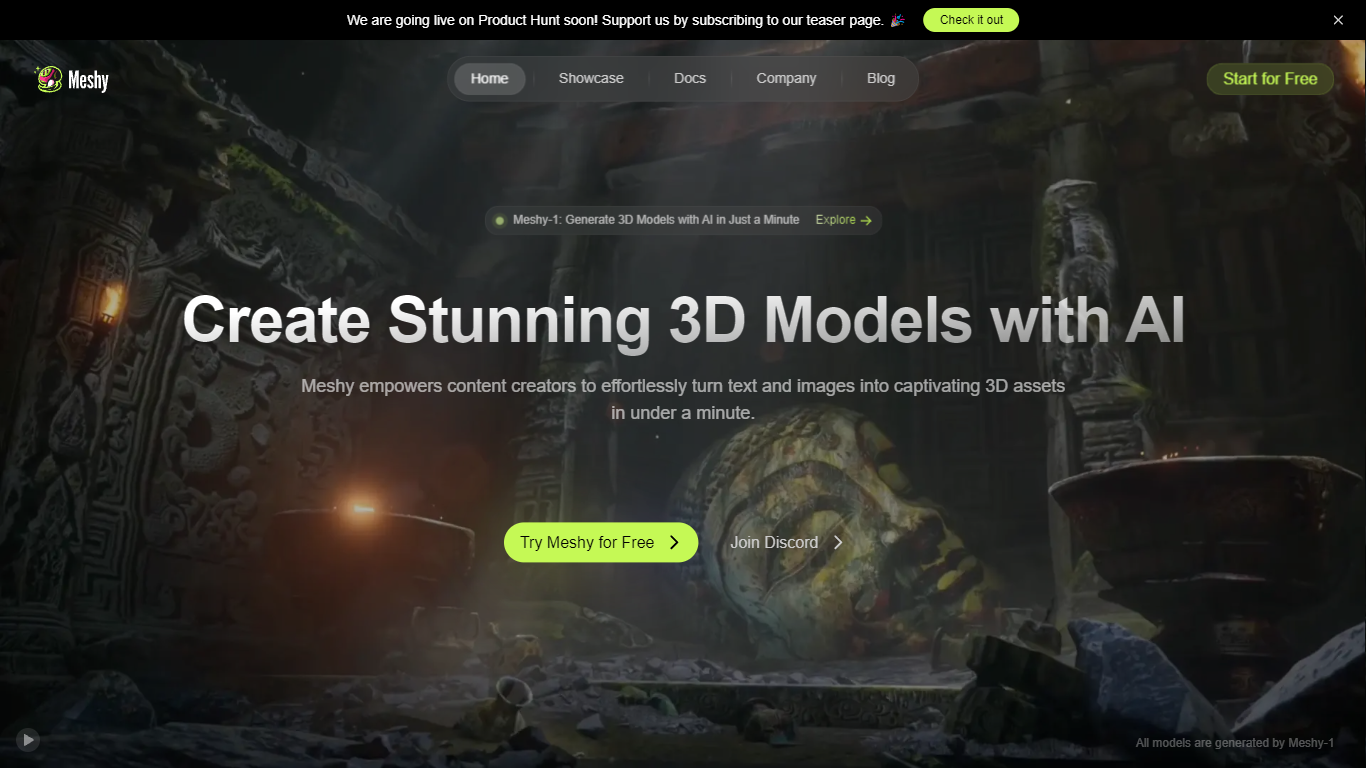
What is Meshy?
Meshy is a 3D generation platform that turns text prompts or reference images into textured 3D models in about a minute. You describe an object, upload a photo, or chat with the built-in 3D Agent, and Meshy returns export-ready meshes with PBR textures. The browser-based workflow targets game developers, 3D artists, and printing hobbyists who need assets without opening Blender first.
Most text-to-3D tools optimize for visuals alone. Meshy trains specifically for printability, exporting watertight, manifold models that pass slicer checks on the first try. It also ships dedicated Image to 3D, Text to 3D, and AI Texture Generator workflows, plus Blender and Unity plugins and a documented API at docs.meshy.ai.
Indie game studios, rapid prototypers, and makers use Meshy to block out characters, props, and printable figurines before refining in a DCC tool. Free users get 100 monthly credits; paid plans unlock private asset ownership, faster queues, and commercial rights without attribution.
Apera AI Upvotes
Meshy Upvotes
Apera AI Top Features
Vue software runs up to 4 pairs of 2D cameras on one computer for large workcell coverage
Synthetic data training from CAD or 3D scans targets 99.99% reliability before the vision program ships
Part identification and robot path planning completes in as little as 0.3 seconds at 3 Hz cycle rates
Handles clear, translucent, shiny, and randomly piled parts in bright, dark, and outdoor lighting
Forge Lab provides web-based AI training and simulation so engineers test cells before installation
Foresight processing method accelerates total robot cycle time on complex sorting tasks
Meshy Top Features
Text to 3D supports prompts up to 800 characters across Meshy 4, 5, and 6 model versions
Each text generation costs 20 credits and typically completes in about one minute
Exports 8 formats: FBX, OBJ, GLB, USDZ, STL, BLEND, 3MF, and DXF
Built-in printability check flags non-manifold edges and auto-repairs before slicing
Blender and Unity plugins plus REST API documented at docs.meshy.ai
Free plan includes 100 credits per month with no credit card required
Apera AI Category
- 3D Generation
Meshy Category
- 3D Generation
Apera AI Pricing Type
- Paid
Meshy Pricing Type
- Freemium