Meshy vs Text-To-4D
Dive into the comparison of Meshy vs Text-To-4D and discover which AI 3D Generation tool stands out. We examine alternatives, upvotes, features, reviews, pricing, and beyond.
In a comparison between Meshy and Text-To-4D, which one comes out on top?
When we compare Meshy and Text-To-4D, two exceptional 3d generation tools powered by artificial intelligence, and place them side by side, several key similarities and differences come to light. Meshy stands out as the clear frontrunner in terms of upvotes. The upvote count for Meshy is 114, and for Text-To-4D it's 26.
Does the result make you go "hmm"? Cast your vote and turn that frown upside down!
Meshy

What is Meshy?
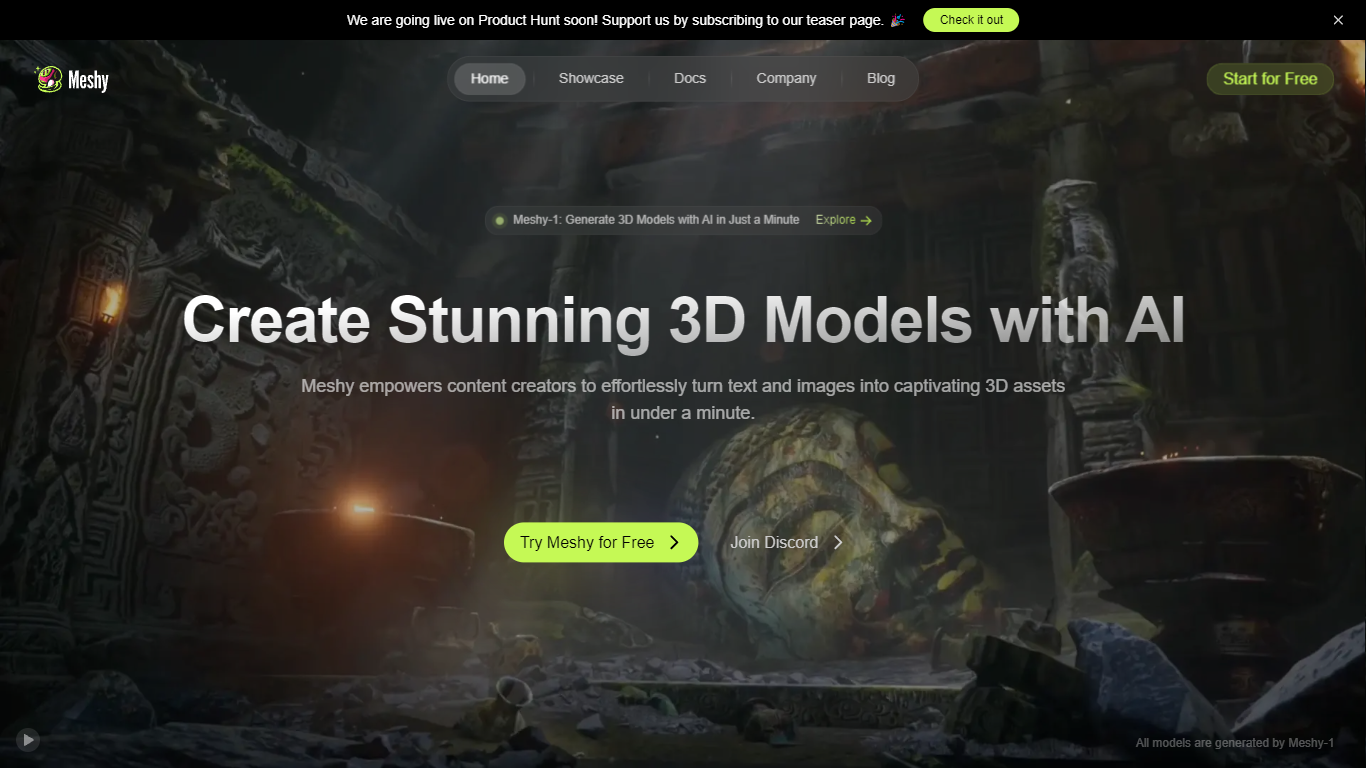
Meshy is a 3D generation platform that turns text prompts or reference images into textured 3D models in about a minute. You describe an object, upload a photo, or chat with the built-in 3D Agent, and Meshy returns export-ready meshes with PBR textures. The browser-based workflow targets game developers, 3D artists, and printing hobbyists who need assets without opening Blender first.
Most text-to-3D tools optimize for visuals alone. Meshy trains specifically for printability, exporting watertight, manifold models that pass slicer checks on the first try. It also ships dedicated Image to 3D, Text to 3D, and AI Texture Generator workflows, plus Blender and Unity plugins and a documented API at docs.meshy.ai.
Indie game studios, rapid prototypers, and makers use Meshy to block out characters, props, and printable figurines before refining in a DCC tool. Free users get 100 monthly credits; paid plans unlock private asset ownership, faster queues, and commercial rights without attribution.
Text-To-4D
What is Text-To-4D?
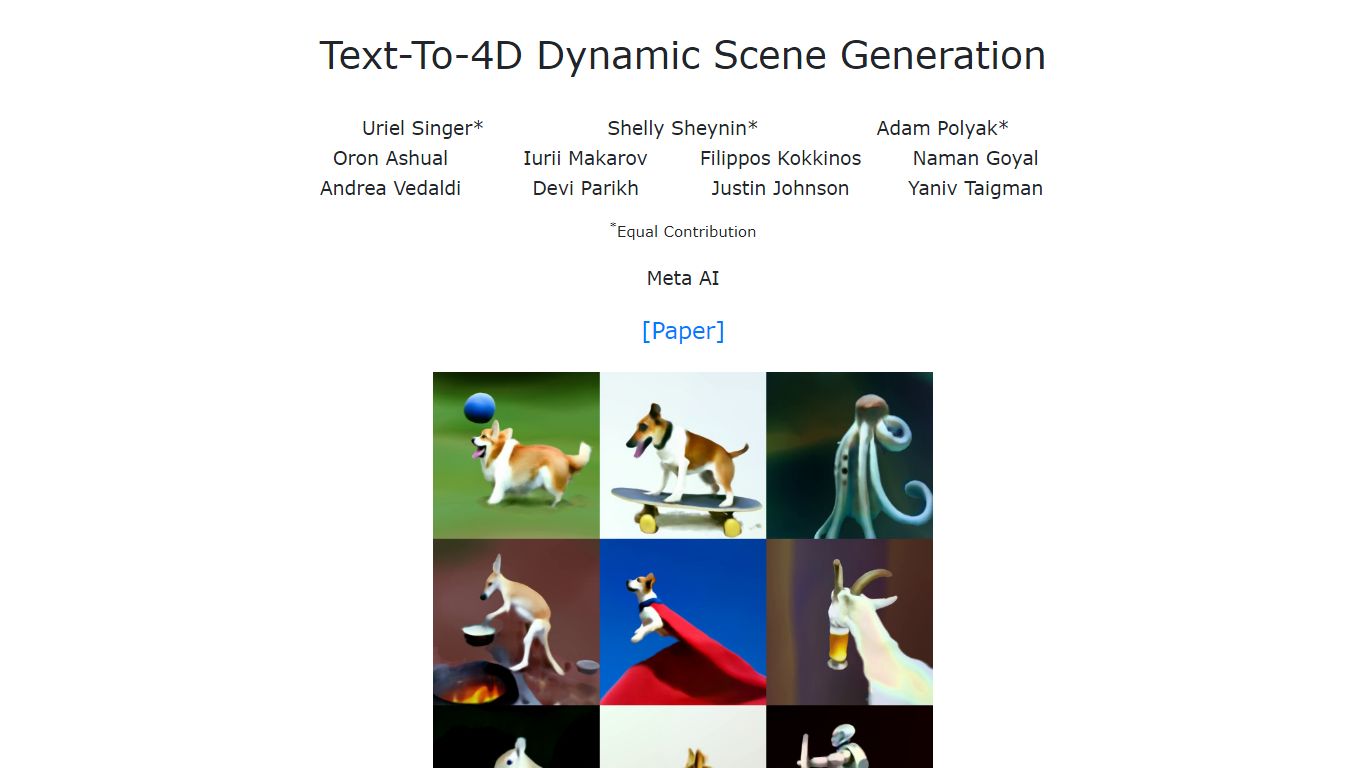
Text-To-4D is a Meta AI research project (MAV3D) that generates three-dimensional dynamic scenes from text descriptions. The method uses a 4D dynamic Neural Radiance Field optimized for appearance, density, and motion consistency by querying a text-to-video diffusion model.
Unlike static 3D generators that output a single mesh, Text-To-4D produces scenes you can view from any camera angle and composite into other 3D environments. The approach needs no 3D or 4D training data; the underlying text-to-video model trains only on text-image pairs and unlabeled videos.
The project page hosts demo samples for text-to-4D prompts like "a corgi playing with a ball" and image-to-4D conversions from still photos. It is a research showcase, not a commercial product with a public API or signup. Researchers and 3D artists interested in NeRF-based dynamic scene generation can explore the paper and sample outputs on the site.
Meshy Upvotes
Text-To-4D Upvotes
Meshy Top Features
Text to 3D supports prompts up to 800 characters across Meshy 4, 5, and 6 model versions
Each text generation costs 20 credits and typically completes in about one minute
Exports 8 formats: FBX, OBJ, GLB, USDZ, STL, BLEND, 3MF, and DXF
Built-in printability check flags non-manifold edges and auto-repairs before slicing
Blender and Unity plugins plus REST API documented at docs.meshy.ai
Free plan includes 100 credits per month with no credit card required
Text-To-4D Top Features
Generates 3D dynamic scenes from text prompts via MAV3D (Make-A-Video3D)
4D dynamic NeRF optimized for appearance, density, and motion consistency
View generated scenes from any camera location and angle
Image-to-4D mode converts still photos into dynamic video scenes
Trained only on text-image pairs and unlabeled videos, no 3D/4D data required
Published research paper on arXiv (2301.11280) with interactive demo samples
Meshy Category
- 3D Generation
Text-To-4D Category
- 3D Generation
Meshy Pricing Type
- Freemium
Text-To-4D Pricing Type
- Free