APIPark vs Pythia
When comparing APIPark vs Pythia, which AI Large Language Model (LLM) tool shines brighter? We look at pricing, alternatives, upvotes, features, reviews, and more.
In a comparison between APIPark and Pythia, which one comes out on top?
When we put APIPark and Pythia side by side, both being AI-powered large language model (llm) tools, The upvote count is neck and neck for both APIPark and Pythia. Be a part of the decision-making process. Your vote could determine the winner.
Feeling rebellious? Cast your vote and shake things up!
APIPark

What is APIPark?
APIPark is an open-source LLM gateway and API developer portal for enterprises that need one place to call, govern, and bill AI models and internal APIs. It routes traffic to 200+ large language models through a single OpenAI-compatible endpoint, so teams stop wiring separate vendor SDKs for every model they add.
Where most API gateways only forward requests, APIPark also treats models and APIs as tradable assets. It bundles unified authentication, approval workflows, recharge billing, multi-level distribution, and profit reporting so platform teams can sell surplus model capacity or package business APIs without building a separate marketplace stack.
Platform engineers and AI teams use it to set per-tenant quotas, rate limits, and masking rules before production traffic hits upstream models. API managers get portals for publishing APIs, tracking usage, and approving access requests. The Community Edition covers core gateway and portal features; the Enterprise Edition adds advanced governance, runtime statistics, and premium support.
Pythia
What is Pythia?
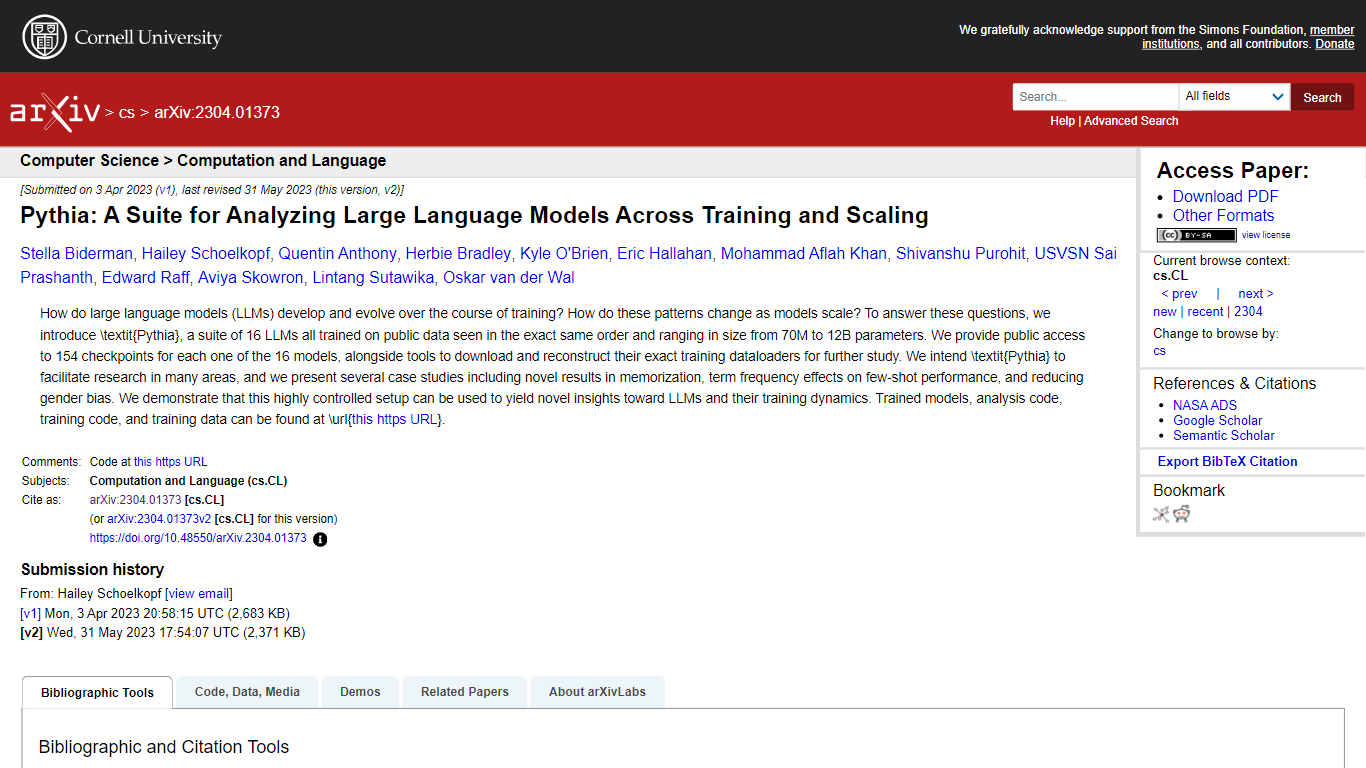
Researchers studying transformer training need checkpoints taken throughout pretraining, not just a finished weight file. Pythia delivers that by training matched LLM families on public data in a fixed order, then releasing weights, checkpoints, training code, and dataloader tools so you can inspect behavior at specific steps.
Where most LLM releases ship one finished checkpoint, Pythia publishes 154 snapshots per model and keeps data order constant across sizes. That control makes it useful for memorization studies, scaling comparisons, and causal training interventions, but it is not aimed at plug-and-play chat deployment the way instruction-tuned assistants are.
The suite targets machine learning researchers, interpretability labs, and alignment teams who need reproducible training trajectories. Typical work includes comparing checkpoints for memorization, testing how term frequency affects few-shot scores, and reproducing published case studies from the repository.
APIPark Upvotes
Pythia Upvotes
APIPark Top Features
Routes 200+ LLMs through one OpenAI-compatible API signature so existing client code needs no vendor-specific rewrites
Deploy the gateway and developer portal in about 5 minutes with a single command-line install
Load balancing distributes requests across LLM instances to keep failover and throughput predictable under load
Built-in API billing tracks per-user consumption so teams can meter and monetize internal or partner API access
Fine-grained quotas cap daily or monthly spend by amount, tokens, or call counts to block runaway model usage
Data masking engine flags and masks sensitive fields in request and response payloads for compliance workflows
Pythia Top Features
154 checkpoints per model at steps 0, 1, 2, 4, 8, 16, 32, 64, 128, 256, 512, 1000, then every 1000 steps
16 model variants across 8 sizes from 70M to 12B, each with standard and deduped Pile training runs
Every model sees about 300 billion tokens in the same data order during training
Weights load from Hugging Face with revision tags such as step3000 via GPTNeoXForCausalLM
Apache 2.0 license covers the repository code and released model weights
APIPark Category
- Large Language Model (LLM)
Pythia Category
- Large Language Model (LLM)
APIPark Pricing Type
- Freemium
Pythia Pricing Type
- Free