AudioDoc vs Unreal Speech
In the battle of AudioDoc vs Unreal Speech, which AI Text to Speech (TTS) tool comes out on top? We compare reviews, pricing, alternatives, upvotes, features, and more.
Between AudioDoc and Unreal Speech, which one is superior?
Upon comparing AudioDoc with Unreal Speech, which are both AI-powered text to speech (tts) tools, The community has spoken, Unreal Speech leads with more upvotes. Unreal Speech has been upvoted 9 times by aitools.fyi users, and AudioDoc has been upvoted 6 times.
You don't agree with the result? Cast your vote to help us decide!
AudioDoc

What is AudioDoc?
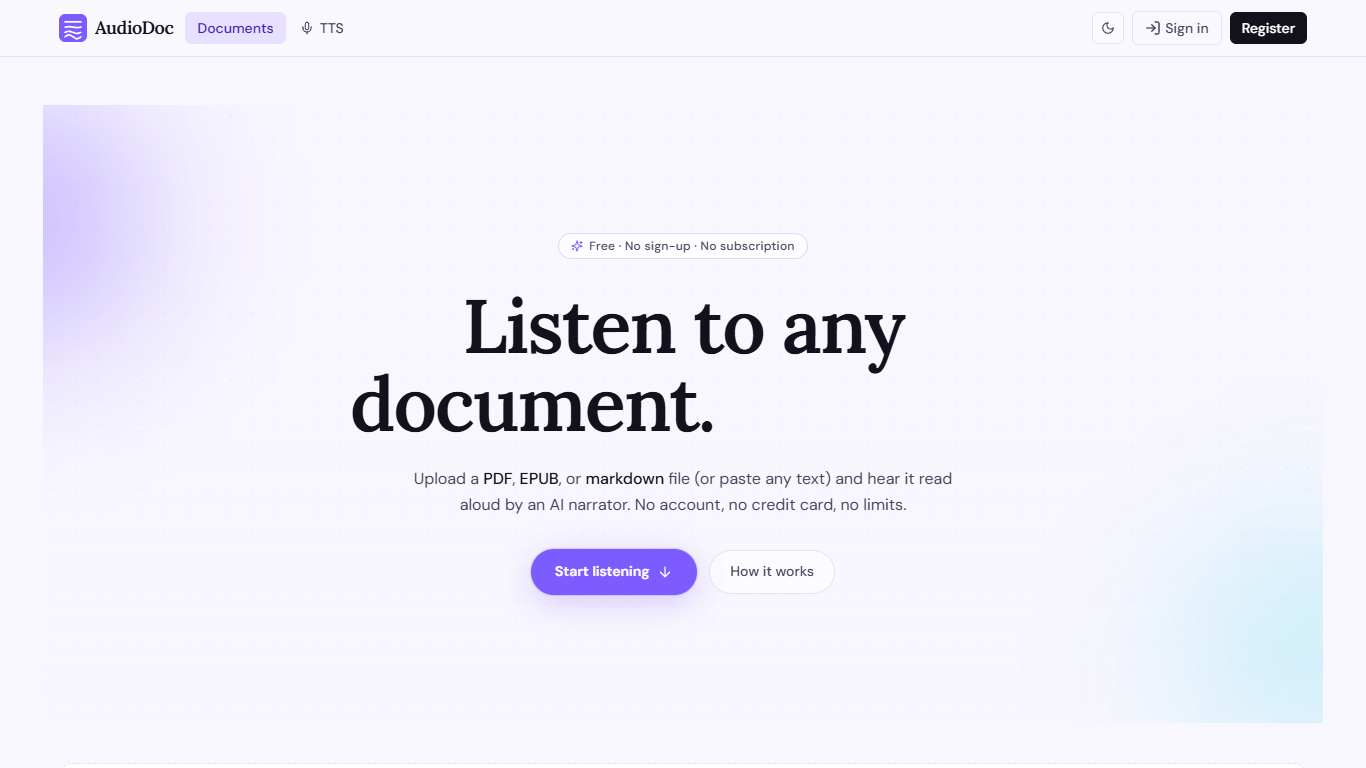
AudioDoc turns documents and pasted text into listenable audio in your browser. Upload a PDF, EPUB, or markdown file, or drop raw text into the TTS studio, and hear it read by natural narrators. There is no account requirement, no subscription, and no credit card gate to start.
The document library streams long files chapter by chapter as audio is generated, so you are not waiting on a full book conversion before playback begins. A separate TTS studio handles quick paste-and-listen jobs with downloadable clips and no watermarks.
It fits commuters who want articles read aloud, students reviewing coursework, writers proofreading drafts by ear, and anyone who needs hands-free or accessibility-friendly access to written material. Guest sessions last 24 hours; a free registered account keeps your library and listening progress beyond that window.
Unreal Speech
What is Unreal Speech?
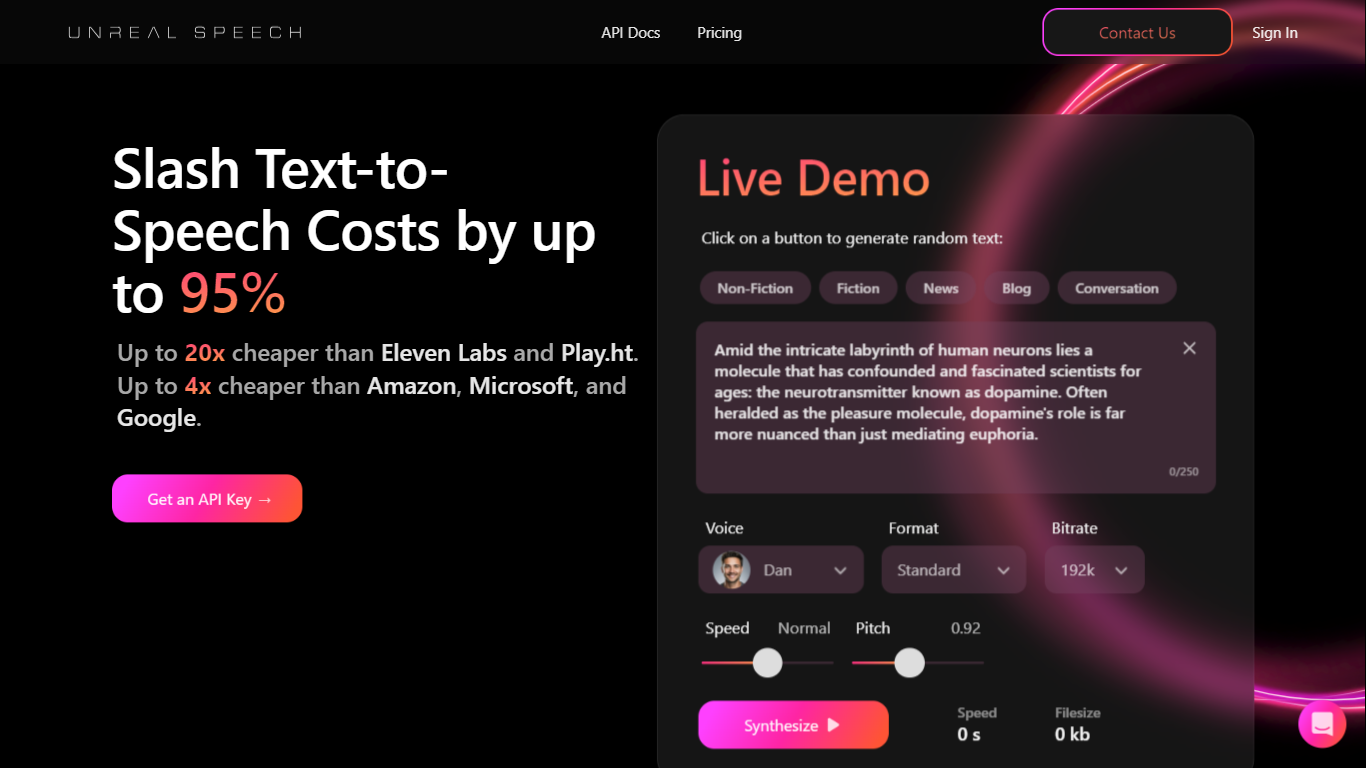
Unreal Speech is a production-ready text-to-speech API built on the open-source Kokoro TTS engine. It gives developers and businesses natural speech synthesis at a fraction of the cost of ElevenLabs, Amazon Polly, Google Cloud, and Microsoft Azure. The API streams audio in about 300 milliseconds and supports long-form jobs up to 10 hours per request.
Kokoro runs on an 82-million-parameter decoder-only model that blends ideas from StyleTTS 2 and iSTFTNet. You get 48 voices across eight languages, including US and UK English, Mandarin, Hindi, Spanish, Portuguese, Japanese, French, and Italian. Per-word timestamps let apps highlight text in sync with playback, which helps with accessibility, karaoke-style UIs, and interactive readers.
The REST API exposes four endpoints: /stream for sub-second synthesis of up to 1,000 characters, /speech for up to 3,000 characters with timestamp URLs, /synthesisTasks for async jobs up to 500,000 characters, and a websocket /streamWithTimestamps route for live audio plus word timing. SDKs ship for Python, Node.js, and React Native, with sample code on the homepage.
Kokoro TTS Studio on unrealspeech.com offers a free browser demo to test voices before signing up. Paid plans remove attribution requirements for commercial audio. Enterprise customers on the platform process billions of characters monthly with 99.9% uptime.
AudioDoc Upvotes
Unreal Speech Upvotes
AudioDoc Top Features
Upload PDF, EPUB, or markdown and stream audio chapter by chapter
Paste up to 1,000 words in the TTS studio for instant playback
American, British, Japanese, and Chinese narrator voices included
Download generated audio files with no watermarks
Start as a guest with no sign-up or credit card
Remembers your spot and works in mobile browsers without an app
Unreal Speech Top Features
Streams up to 1,000 characters in about 300ms via /stream
Async synthesis tasks handle up to 500,000 characters per request
Per-word timestamps sync text highlighting with audio output
48 voices across eight languages with speed and pitch controls
Websocket /streamWithTimestamps delivers live audio plus timing data
Python, Node.js, and React Native SDKs ship with code samples
Single synthesis jobs can produce up to 10 hours of audio
AudioDoc Category
- Text to Speech (TTS)
Unreal Speech Category
- Text to Speech (TTS)
AudioDoc Pricing Type
- Free
Unreal Speech Pricing Type
- Freemium