BoldDesk vs Spatial.ai
In the clash of BoldDesk vs Spatial.ai, which AI Customer Support tool emerges victorious? We assess reviews, pricing, alternatives, features, upvotes, and more.
When we put BoldDesk and Spatial.ai head to head, which one emerges as the victor?
Let's take a closer look at BoldDesk and Spatial.ai, both of which are AI-driven customer support tools, and see what sets them apart. The upvote count favors BoldDesk, making it the clear winner. BoldDesk has 7 upvotes, and Spatial.ai has 6 upvotes.
Feeling rebellious? Cast your vote and shake things up!
BoldDesk
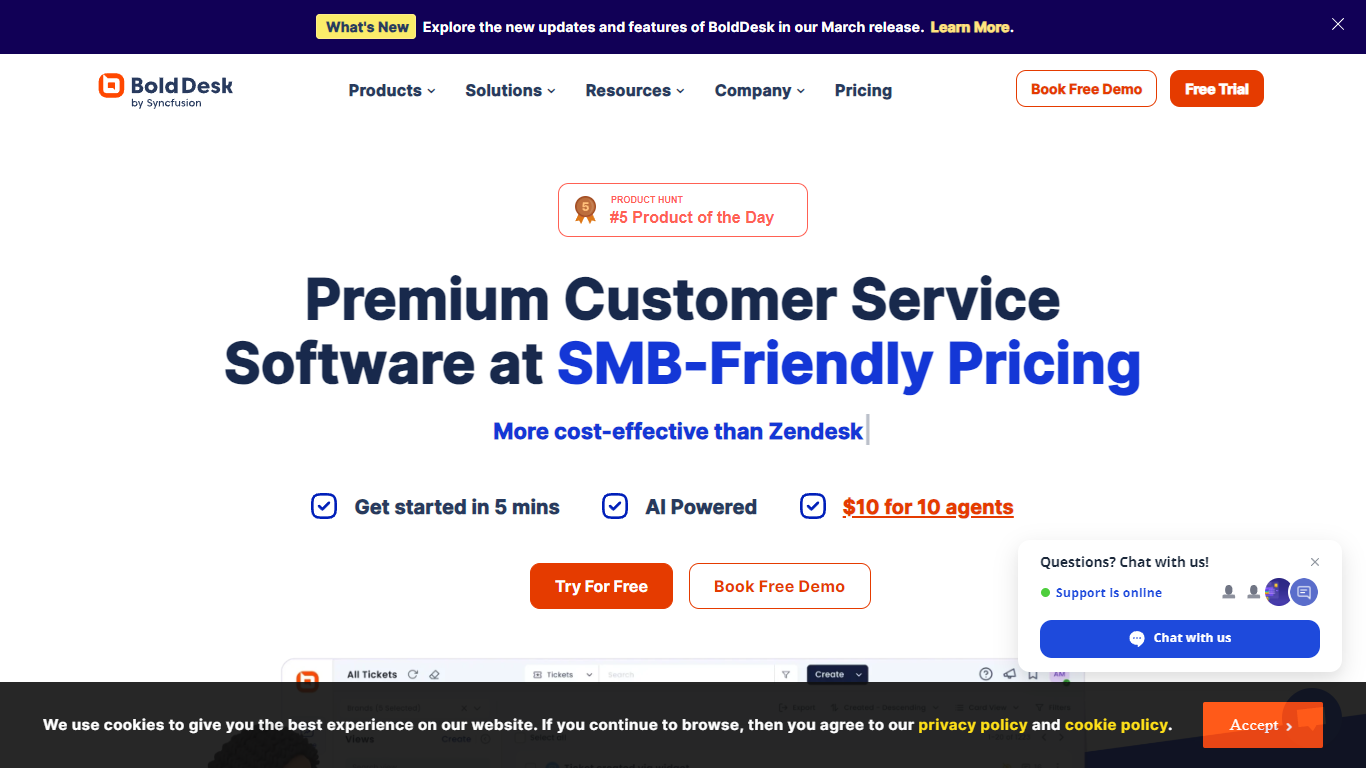

What is BoldDesk?
BoldDesk bundles customer support ticketing, live chat, and omnichannel inbox tools into one help desk platform priced by agent count. Email, WhatsApp, Instagram, SMS, and Facebook messages land in a shared queue with SLAs, workflows, and a self-service knowledge base. An AI agent resolves routine chats and drafts replies while human agents pick up escalations.
Zendesk-style suites often charge per resolution or gate AI behind add-ons. BoldDesk publishes flat plan pricing with every feature included and advertises AI agent rates without per-resolution fees. Teams switching from Zendesk or Freshdesk get free migration and onboarding, which matters when you are moving thousands of historical tickets.
Startups, SaaS companies, and enterprise support orgs use BoldDesk for centralized ticket handling and CSAT reporting. Syncfusion backs the product with 41,000-plus companies on its stack, SOC 2, GDPR, and HIPAA compliance badges, and a 99.9% uptime SLA on the marketing site.
Spatial.ai
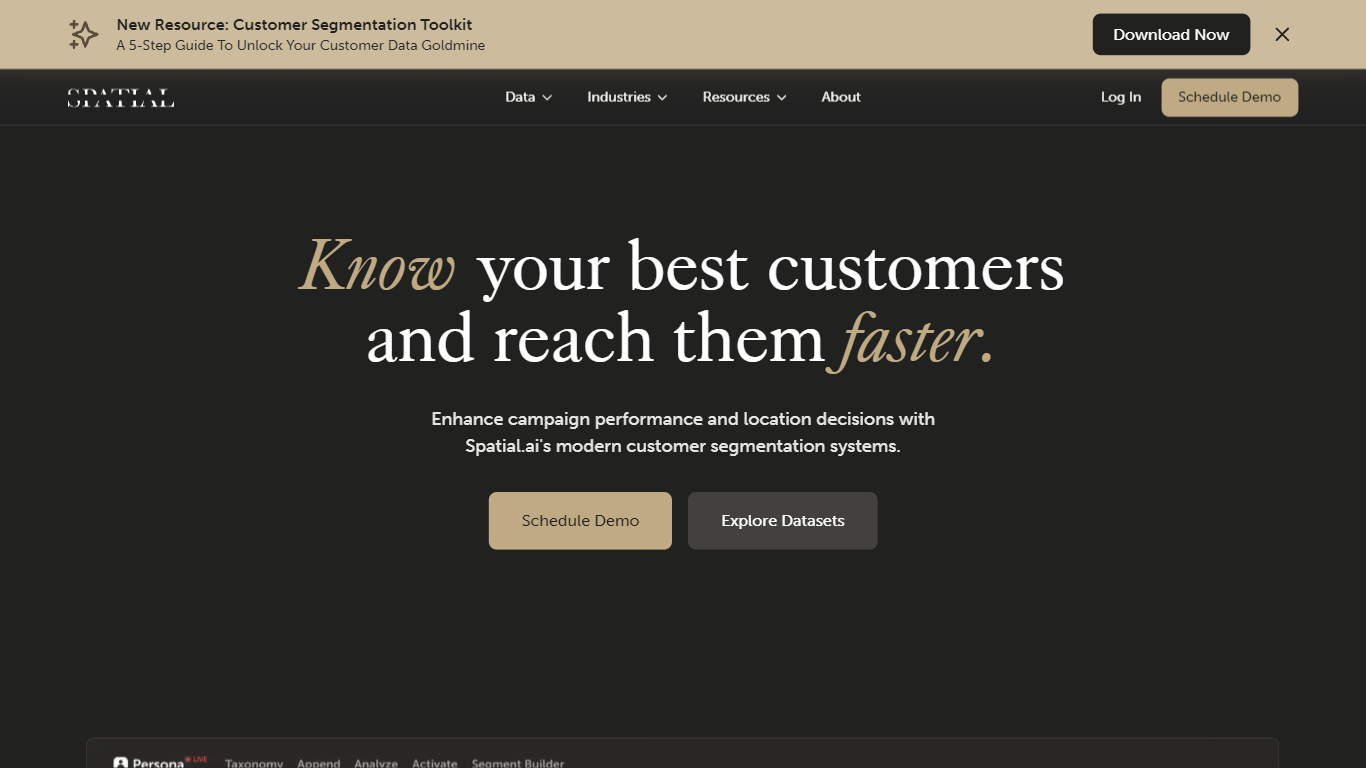
What is Spatial.ai?
Spatial.ai maps every U.S. household into 17 groups and 80 behavioral segments through PersonaLive, its segmentation product for retail marketers. The model pulls from social media activity, mobile movement data, credit card transactions, and census demographics to classify customers by how they actually behave, not just who they are on paper.
Where most segmentation tools stop at age and income brackets, Spatial.ai layers in where people actually shop, who they follow online, and how they spend. That four-dimensional model claims a 17% lift in retail behavior prediction and campaigns that perform up to 50% better than demographic-only targeting. Competitors like Claritas or Experian Mosaic offer similar household clusters, but Spatial.ai bundles segment discovery, competitive market share tracking, and multi-channel audience export in one self-serve dashboard.
Retail analysts, media buyers, and brand strategists at companies like AAA, SeaQuest, and Goodwill use it for site selection, CRM enrichment, and paid social targeting. Plans start at $500 per month with direct Stripe checkout, and the company reports 750+ retail and agency clients on its pricing page.
BoldDesk Upvotes
Spatial.ai Upvotes
BoldDesk Top Features
AI agent resolves up to 70% of inquiries with flat published rates
Omnichannel inbox covers email, live chat, WhatsApp, Instagram, SMS, and Facebook
5-agent plan starts at $99 per month billed yearly ($20 per agent)
25-agent popular tier costs $349 per month billed yearly
Free migration and onboarding from Zendesk or Freshdesk
Includes ticketing, workflows, knowledge base, and reporting in one plan
99.9% uptime SLA with SOC 2, GDPR, and HIPAA compliance listed
Spatial.ai Top Features
Maps all U.S. households into 17 groups and 80 behavioral segments
Strategist tier draws on 100M+ anonymized credit card transactions for market share tracking
Export audiences to Meta, TikTok, Google, Snapchat, X, programmatic, and direct mail
Analyst plan at $500 per month includes up to 5 users and CRM segment appending
Claims 17% better retail behavior prediction than demographics-only models
Upload CRM contacts or store visitation polygons to rank top segments in under 30 minutes
BoldDesk Category
- Customer Support
Spatial.ai Category
- Customer Support
BoldDesk Pricing Type
- Freemium
Spatial.ai Pricing Type
- Paid