BoldDesk vs Tiledesk
Explore the showdown between BoldDesk vs Tiledesk and find out which AI Customer Support tool wins. We analyze upvotes, features, reviews, pricing, alternatives, and more.
In a face-off between BoldDesk and Tiledesk, which one takes the crown?
When we contrast BoldDesk with Tiledesk, both of which are exceptional AI-operated customer support tools, and place them side by side, we can spot several crucial similarities and divergences. In the race for upvotes, BoldDesk takes the trophy. BoldDesk has 7 upvotes, and Tiledesk has 6 upvotes.
Not your cup of tea? Upvote your preferred tool and stir things up!
BoldDesk

What is BoldDesk?
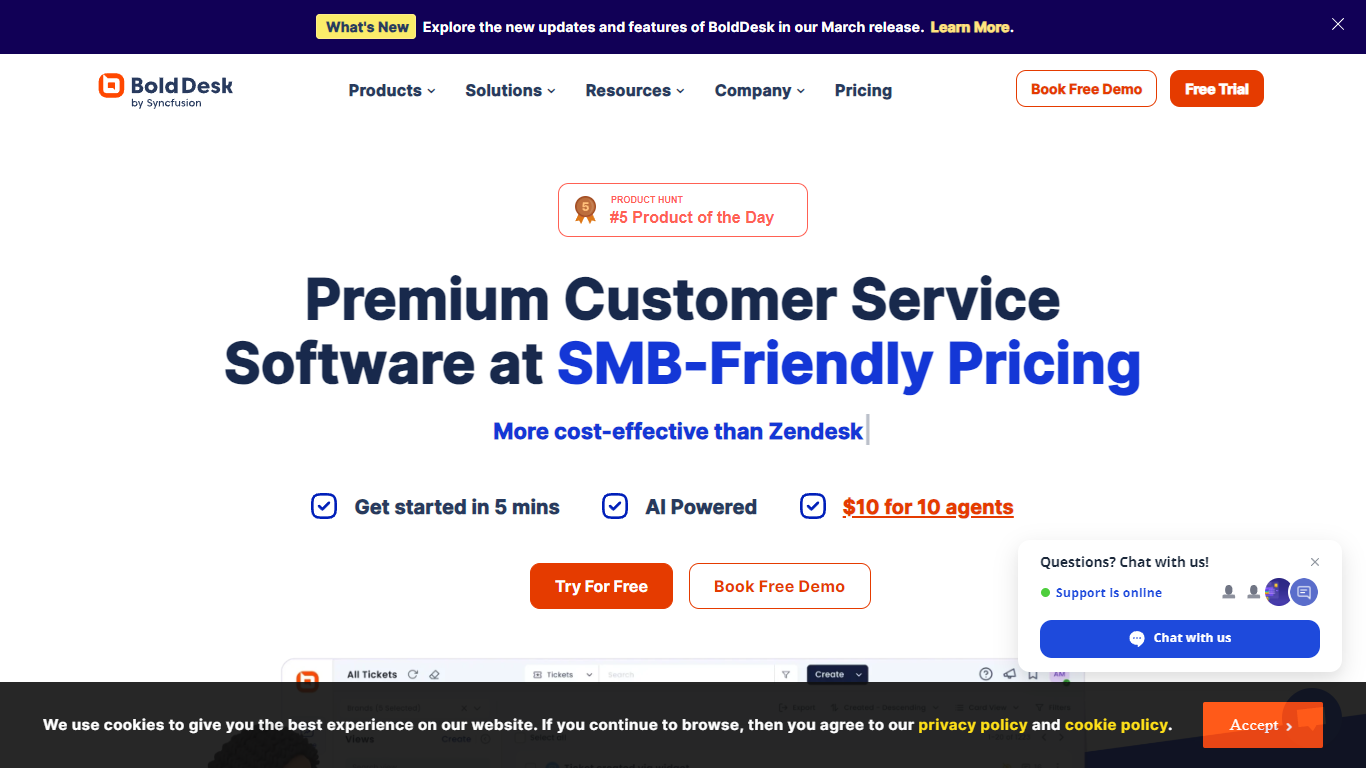
BoldDesk bundles customer support ticketing, live chat, and omnichannel inbox tools into one help desk platform priced by agent count. Email, WhatsApp, Instagram, SMS, and Facebook messages land in a shared queue with SLAs, workflows, and a self-service knowledge base. An AI agent resolves routine chats and drafts replies while human agents pick up escalations.
Zendesk-style suites often charge per resolution or gate AI behind add-ons. BoldDesk publishes flat plan pricing with every feature included and advertises AI agent rates without per-resolution fees. Teams switching from Zendesk or Freshdesk get free migration and onboarding, which matters when you are moving thousands of historical tickets.
Startups, SaaS companies, and enterprise support orgs use BoldDesk for centralized ticket handling and CSAT reporting. Syncfusion backs the product with 41,000-plus companies on its stack, SOC 2, GDPR, and HIPAA compliance badges, and a 99.9% uptime SLA on the marketing site.
Tiledesk
What is Tiledesk?
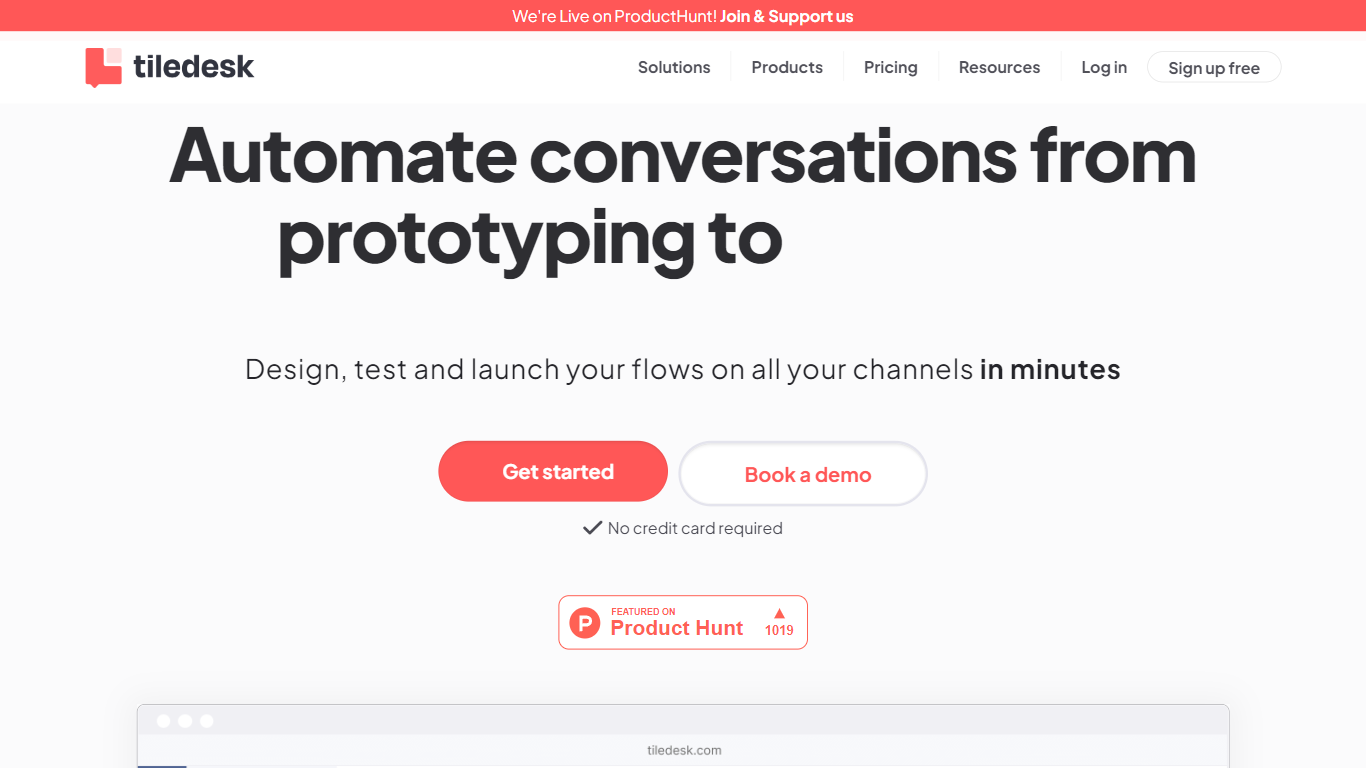
Tiledesk helps teams build agentic AI support workflows without code. Its Design Studio lets teams drag conversation flows, connect knowledge bases, chain multiple AI agents, and publish the same automations to web chat, WhatsApp, email, SMS, and voice. Live chat, human handoff, and an AI copilot for agents sit on the same stack, so support can start automated and escalate with full context.
Compared with lightweight chat widgets, Tiledesk pushes into orchestration: prompt chains, MCP tool connections, hybrid RAG search, API endpoints for batch automation, and on-prem open-core deployment. That breadth is the trade-off. You get an operating system for multi-channel support and internal retrieval, but setup spans agents, knowledge bases, and channel connectors rather than a single embed script.
Tiledesk targets customer support, RevOps, and operations teams in ecommerce, education, healthcare, telecom, and public sector use cases highlighted on the site. A 14-day trial with no credit card is advertised on the homepage, and paid Pro plans start at €149 per month with defined AI agent, token, and conversation limits.
BoldDesk Upvotes
Tiledesk Upvotes
BoldDesk Top Features
AI agent resolves up to 70% of inquiries with flat published rates
Omnichannel inbox covers email, live chat, WhatsApp, Instagram, SMS, and Facebook
5-agent plan starts at $99 per month billed yearly ($20 per agent)
25-agent popular tier costs $349 per month billed yearly
Free migration and onboarding from Zendesk or Freshdesk
Includes ticketing, workflows, knowledge base, and reporting in one plan
99.9% uptime SLA with SOC 2, GDPR, and HIPAA compliance listed
Tiledesk Top Features
Design Studio provides a drag-and-drop flow builder for AI agents, prompt chains, and MCP-connected actions
Pro plan includes 20 AI Agents, 5M AI tokens, and 3,000 conversations per month for 3 users
Multichannel publishing covers web, WhatsApp, Facebook Messenger, SMS, email, and voice
Agentic RAG supports multiple knowledge bases with hybrid full-text and semantic search
14-day free trial requires no credit card according to the homepage
Open-source core on GitHub with on-prem deployment and local LLM integration options
BoldDesk Category
- Customer Support
Tiledesk Category
- Customer Support
BoldDesk Pricing Type
- Freemium
Tiledesk Pricing Type
- Freemium