Cascadeur vs Timebolt
Dive into the comparison of Cascadeur vs Timebolt and discover which AI Video Editing tool stands out. We examine alternatives, upvotes, features, reviews, pricing, and beyond.
When comparing Cascadeur and Timebolt, which one rises above the other?
When we compare Cascadeur and Timebolt, two exceptional video editing tools powered by artificial intelligence, and place them side by side, several key similarities and differences come to light. The community has spoken, Timebolt leads with more upvotes. The number of upvotes for Timebolt stands at 18, and for Cascadeur it's 6.
Think we got it wrong? Cast your vote and show us who's boss!
Cascadeur


What is Cascadeur ?
Cascadeur is standalone 3D keyframe animation software for rigging, posing, and cleaning up character motion in video editing and game pipelines. You build animations from scratch, import baked clips from mocap or other DCC tools, and export finished work as FBX, DAE, or USD when your license allows. The desktop app runs on Windows, Mac, and Linux.
Where general-purpose suites leave you to fight secondary motion and finger poses by hand, Cascadeur bakes physics and neural posing into the workflow. AutoPhysics suggests gravity-correct motion on a green preview twin, AutoPosing fills in limbs from a few control points, and Animation Unbaking turns dense mocap keyframes into editable intervals. That focus is narrower than Blender or Maya, but it targets the grunt work those tools skip.
Game studios, VFX shops, and solo animators use Cascadeur to retarget clips between rigs, polish Rokoko or Move AI mocap, and block action sequences with believable body mechanics. Quick Rigging supports Mixamo, Metahuman, Daz3D, and Character Creator skeletons out of the box.
Timebolt
What is Timebolt?
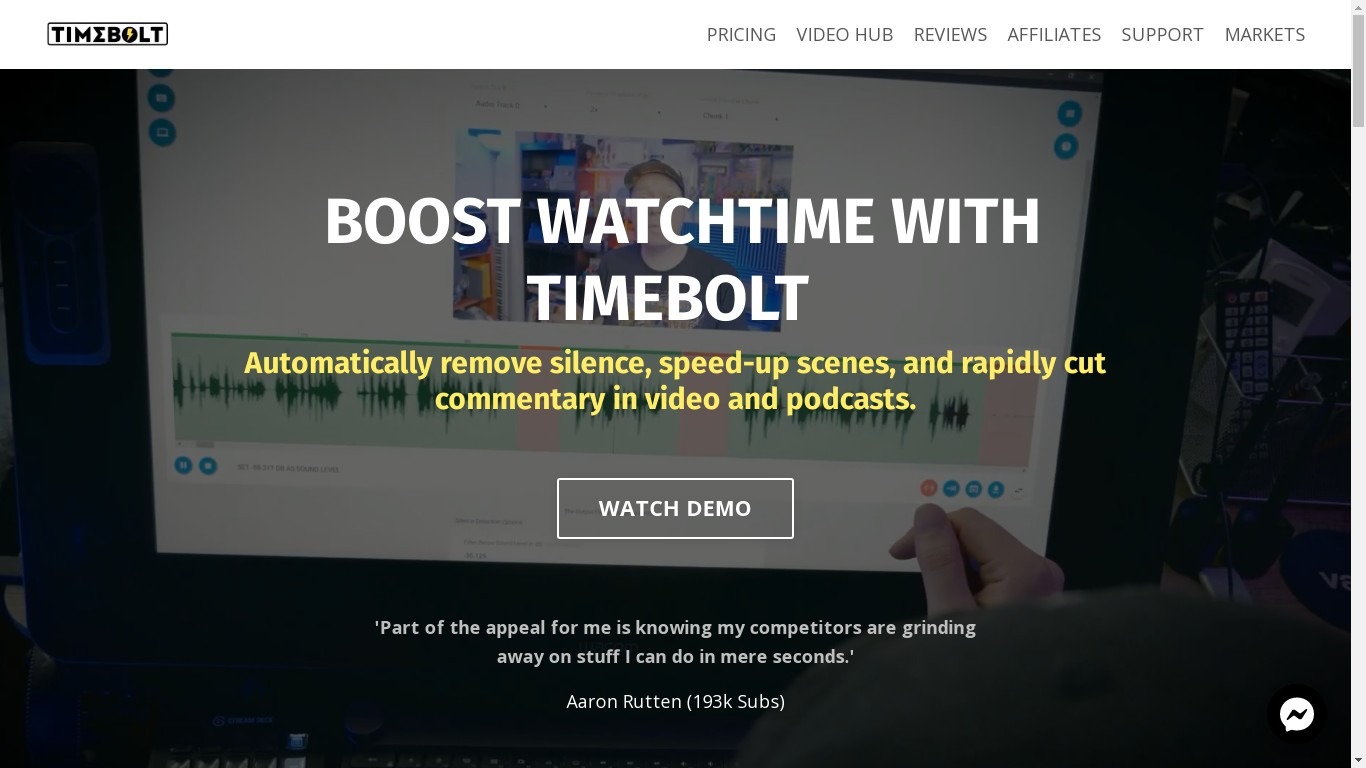
Timebolt is a desktop video editor built around waveform-first jump cuts for podcasts, interviews, and screen recordings. It strips silence, filler words, and bad takes with 0.01 second cut control, then exports timelines to Premiere Pro, Final Cut Pro, DaVinci Resolve, or Camtasia without re-cutting by hand.
Most text-based AI editors guess where pauses live and leave hundreds of missed cuts per hour. Timebolt measures the audio waveform first, which is why its benchmark claims zero mistakes left per hour while rivals like Descript and Gling still need manual cleanup. That trade-off favors editors who want frame-tight cuts over a chat-style transcript workflow.
Podcasters, YouTubers, and course creators use Timebolt to shrink raw talking-head footage before publishing. Post-production teams also route Riverside multicam sessions through Timebolt XML exports so senior editors finish polish work in their preferred NLE.
Cascadeur Upvotes
Timebolt Upvotes
Cascadeur Top Features
AutoPhysics previews gravity-correct motion on a green character twin before you commit changes
AutoPosing uses neural networks to position limbs from a handful of control points, including finger controllers
Animation Unbaking converts baked mocap (every frame a keyframe) into editable keyframe intervals
Copy/paste retargeting transfers animations between humanoid rigs of different proportions in two clicks
Imports and exports FBX, DAE, and USD files for Blender, Maya, Unreal Engine, and Unity workflows
Quick Rigging auto-generates rigs from Daz3D, Mixamo, Metahuman, Character Creator, and Unreal skeletons
Timebolt Top Features
0.01 second cut control on waveform-based silence removal
Processes an hour of footage in about 13 seconds for jump cuts
Exports XML timelines to Premiere Pro, Final Cut Pro, and DaVinci Resolve
UMCHECK removes filler words automatically from recorded speech
Free 4K screen capture tool for Mac and Windows
Benchmark reports zero missed cuts per hour versus hundreds on rival AI editors
Cascadeur Category
- Video Editing
Timebolt Category
- Video Editing
Cascadeur Pricing Type
- Freemium
Timebolt Pricing Type
- Freemium