Censius vs STRING
In the face-off between Censius vs STRING, which AI Data Science tool takes the crown? We scrutinize features, alternatives, upvotes, reviews, pricing, and more.
In a face-off between Censius and STRING, which one takes the crown?
If we were to analyze Censius and STRING, both of which are AI-powered data science tools, what would we find? Neither tool takes the lead, as they both have the same upvote count. Be a part of the decision-making process. Your vote could determine the winner.
Does the result make you go "hmm"? Cast your vote and turn that frown upside down!
Censius
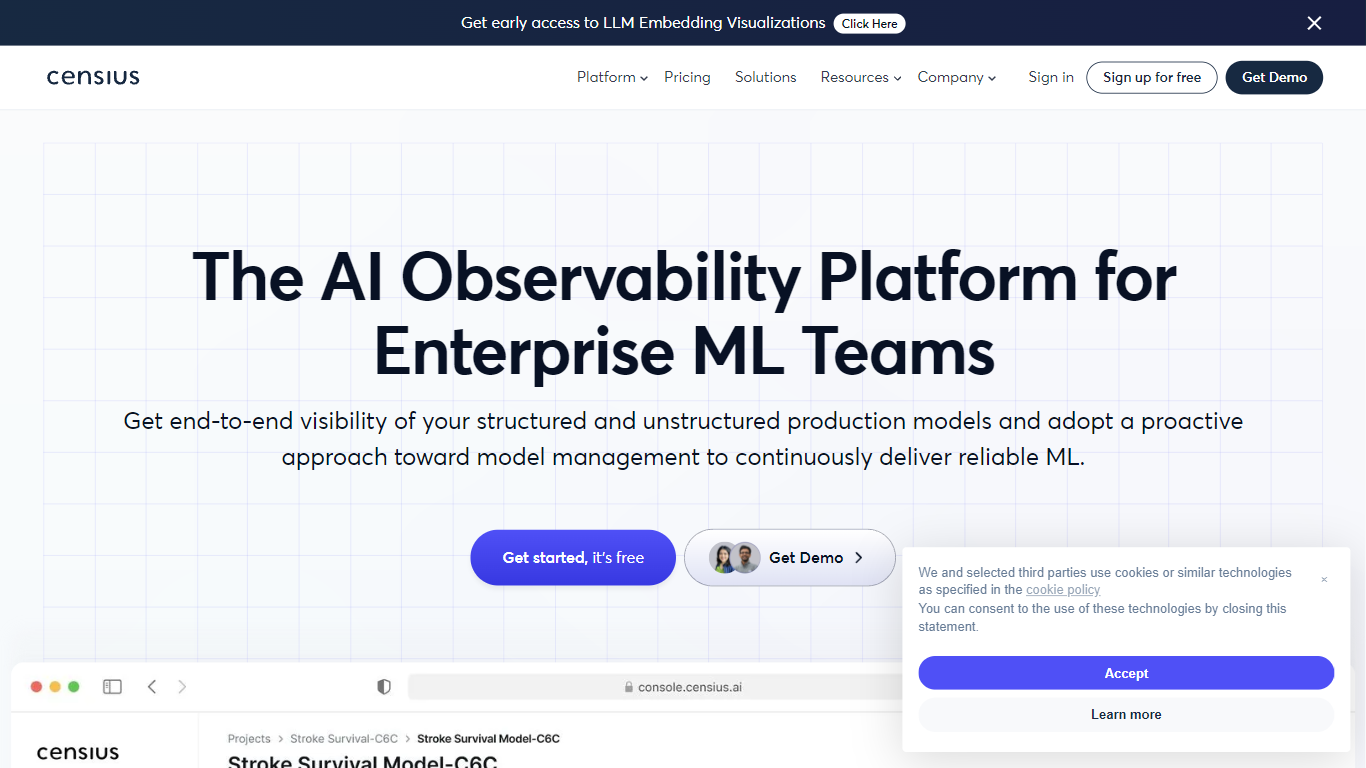

What is Censius?
Censius gives ML teams a single console to watch production models after deployment. You register datasets and models, stream predictions through a Python SDK or REST API, and Censius auto-builds monitors for performance, drift, data quality, and activity volume. Violations surface in dashboards with paths into root cause analysis instead of manual log digging.
Where many monitoring tools stop at accuracy charts, Censius ties monitoring to explainability. SHAP values show which features pushed each prediction, and guided workflows connect monitor alerts to the segments or model versions that triggered them. The platform also supports custom business metrics alongside standard scores like F1, sensitivity, and specificity.
Integration stays practical for enterprise stacks. Projects group models by client or use case, datasets register from CSV uploads, and bulk_log() batches daily prediction logs. Auto-initialized monitors can take 30 to 60 minutes after training data upload depending on feature count and dataset size. Logs aggregate every 60 minutes by default, with custom deployment frequencies available on request.
Data scientists use Censius to visualize assumptions in live models, while ML engineers catch pipeline bugs before users feel them. Business stakeholders get shareable dashboards for model health without reading raw telemetry. Access starts through the web console at console.censius.ai or by requesting a tenant via the signup flow.
STRING
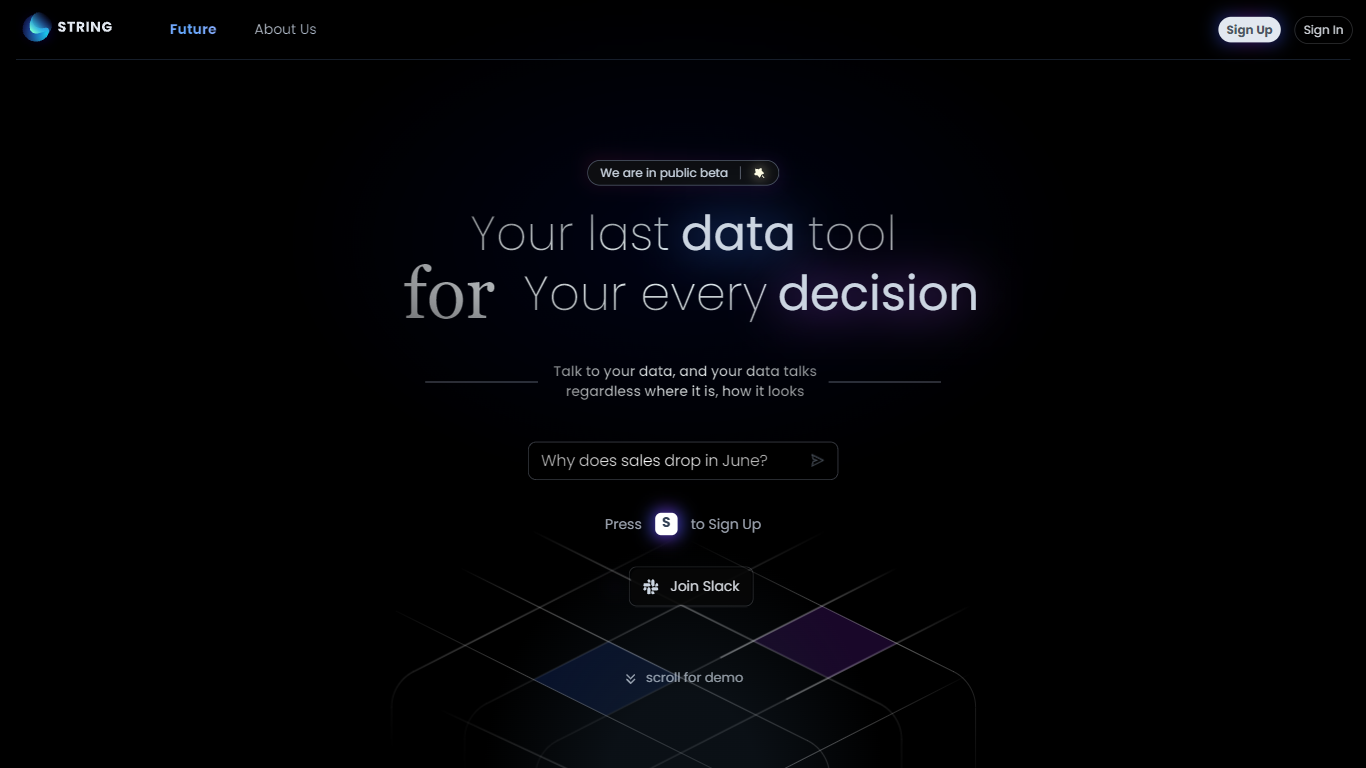
What is STRING?
STRING lets you talk to your data through a conversational analytics interface marketed as your last data tool. You sign up for the public beta, connect sources wherever they live, and ask questions in natural language instead of building dashboards first. The product pitch centers on decisions: your data answers back regardless of format or location.
Legacy BI stacks expect hours of SQL and chart assembly before you get a useful answer. STRING's team, with backgrounds at Google, Uber, CMU, and UW, frames the product around AGI-style analytics that listens, understands unstructured text, and takes initiative beyond rigid queries. The Future page contrasts this with older tools that crunch structured tables slowly.
Data analysts, product managers, and operators who want quick answers without standing up a full BI project fit STRING best. It is still in public beta with Slack community access, so teams should expect evolving features rather than a finished enterprise contract page.
Censius Upvotes
STRING Upvotes
Censius Top Features
Four monitor families cover performance, drift, data quality, and prediction volume
Python SDK installs via pip install censius with REST API and Java SDK options
SHAP explainability shows per-feature contribution to individual predictions
Auto-initialized monitors build from uploaded training data in 30 to 60 minutes
bulk_log() sends predictions, actuals, and explanations in one daily batch call
Unlimited models and model versions under configurable performance and drift monitors
Production logs aggregate every 60 minutes by default across deployed models
STRING Top Features
Natural language interface to query data without pre-built dashboard workflows
Public beta signup with Slack community invite for early users
Designed to handle structured databases and unstructured sources like docs and notes
Team includes alumni from Google, Uber, Carnegie Mellon, and University of Washington
Slack community invite linked on homepage for public beta testers
Future roadmap targets proactive analytics that initiates insights beyond user prompts
Censius Category
- Data Science
STRING Category
- Data Science
Censius Pricing Type
- Freemium
STRING Pricing Type
- Freemium