Claude 3 \ Anthropic vs Chain of Thought Prompting
In the contest of Claude 3 \ Anthropic vs Chain of Thought Prompting, which AI Large Language Model (LLM) tool is the champion? We evaluate pricing, alternatives, upvotes, features, reviews, and more.
If you had to choose between Claude 3 \ Anthropic and Chain of Thought Prompting, which one would you go for?
When we examine Claude 3 \ Anthropic and Chain of Thought Prompting, both of which are AI-enabled large language model (llm) tools, what unique characteristics do we discover? Claude 3 \ Anthropic is the clear winner in terms of upvotes. Claude 3 \ Anthropic has 8 upvotes, and Chain of Thought Prompting has 6 upvotes.
Not your cup of tea? Upvote your preferred tool and stir things up!
Claude 3 \ Anthropic

What is Claude 3 \ Anthropic?
Claude 3 is Anthropic's third-generation large language model family, released in March 2024. It includes three tiers: Haiku for speed and cost, Sonnet for balanced performance, and Opus for the highest reasoning depth. Each model targets a different tradeoff between intelligence, latency, and price.
The family handles text, code, analysis, and vision tasks. Claude 3 models process photos, charts, graphs, and technical diagrams. They support a 200K token context window at launch, with inputs exceeding 1 million tokens available to select customers. Opus and Sonnet launched on claude.ai and the Claude API in 159 countries, with Haiku following shortly after.
Anthropic built Claude 3 with Constitutional AI safety methods and Responsible Scaling Policy guardrails. The models are available through the Claude API, Amazon Bedrock, and Google Cloud Vertex AI. Sonnet powers the free tier on claude.ai, while Opus is available to Claude Pro subscribers.
Chain of Thought Prompting
What is Chain of Thought Prompting?
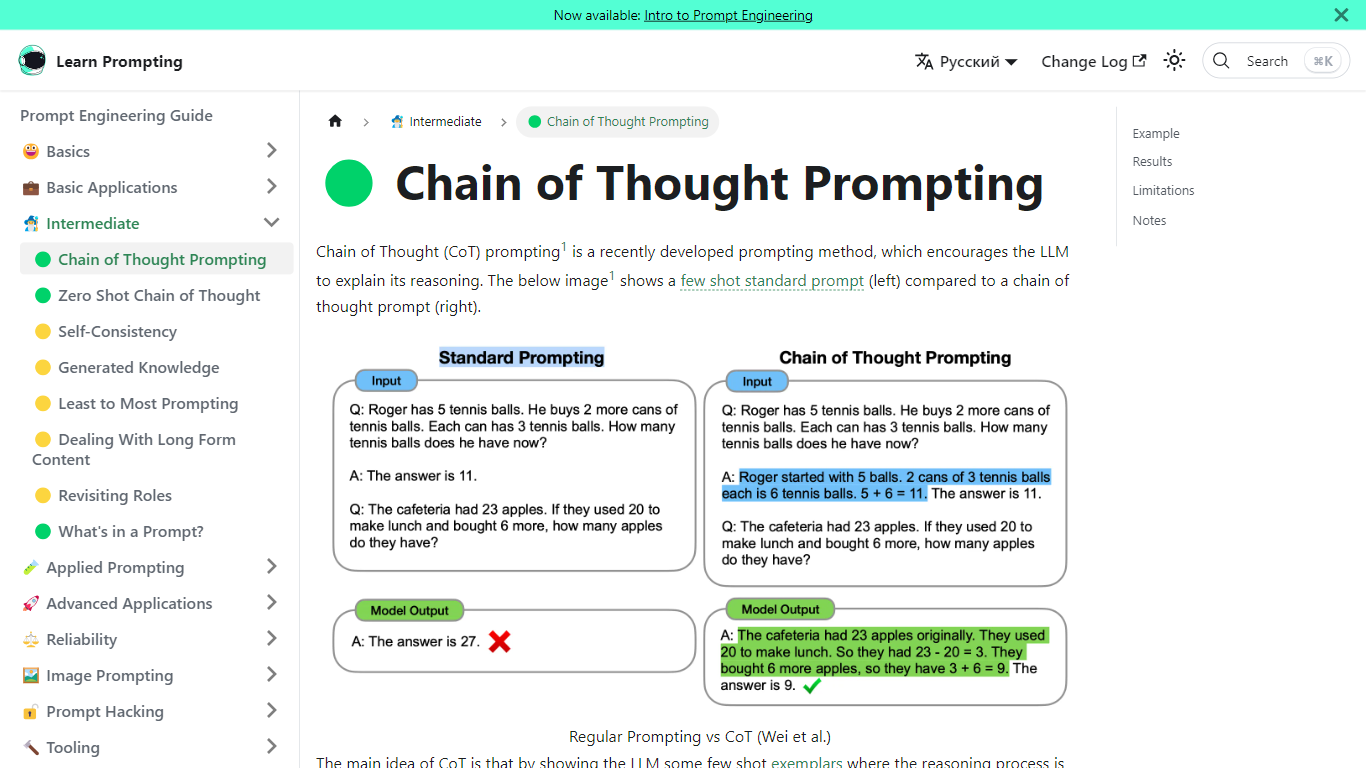
Chain of Thought Prompting is an innovative approach to enhance interaction with Large Language Models (LLMs), enabling them to provide detailed explanations of their reasoning processes. This method, highlighted in the work by Wei et al., shows considerable promise in improving the accuracy of AI responses in various tasks such as arithmetic, commonsense understanding, and symbolic reasoning. Through examples and comparative analysis, readers can understand the advantages of this approach, especially when applied to larger models with around 100 billion parameters or more. However, it's noted that smaller models do not benefit as much and may produce less logical outputs. The content offers insights into the technique's intricacies and its limitations, making it a valuable resource for anyone looking to delve into the world of AI and Prompt Engineering.
Claude 3 \ Anthropic Upvotes
Chain of Thought Prompting Upvotes
Claude 3 \ Anthropic Top Features
Three model tiers (Haiku, Sonnet, Opus) let you pick the right balance of speed, cost, and reasoning depth
200K token context window at launch, with 1M+ token inputs available to select enterprise customers
Vision support for photos, charts, graphs, PDFs, and technical diagrams
Near-instant responses from Haiku for live chat, auto-complete, and data extraction workloads
Available on claude.ai, the Claude API, Amazon Bedrock, and Google Cloud Vertex AI
Chain of Thought Prompting Top Features
Improved Accuracy: Chain of Thought Prompting leads to more accurate results in AI tasks.
Explanation of Reasoning: Encourages LLMs to detail their thought process.
Effective for Large Models: Best performance gains with models of approx. 100B parameters.
Comparative Analysis: Benchmarked results, including GSM8K benchmark performance.
Practical Examples: Demonstrations of CoT prompting with GPT-3.
Claude 3 \ Anthropic Category
- Large Language Model (LLM)
Chain of Thought Prompting Category
- Large Language Model (LLM)
Claude 3 \ Anthropic Pricing Type
- Freemium
Chain of Thought Prompting Pricing Type
- Freemium