Cognee vs LiteLLM
In the clash of Cognee vs LiteLLM, which AI Large Language Model (LLM) tool emerges victorious? We assess reviews, pricing, alternatives, features, upvotes, and more.
When we put Cognee and LiteLLM head to head, which one emerges as the victor?
Let's take a closer look at Cognee and LiteLLM, both of which are AI-driven large language model (llm) tools, and see what sets them apart. There's no clear winner in terms of upvotes, as both tools have received the same number. Every vote counts! Cast yours and contribute to the decision of the winner.
Not your cup of tea? Upvote your preferred tool and stir things up!
Cognee

What is Cognee?
Cognee turns documents, chats, tickets, and API data into graph memory language model agents can recall across sessions. It builds linked entity graphs from that context so agents stop restarting from scratch each run. You can connect Slack, GitHub, or Linear so coding agents and support bots share one permission-aware company brain.
Plain RAG returns similar text chunks. Cognee pairs vector search with knowledge graphs and auto-generated ontologies, so recall pulls connected entities and cited facts rather than isolated snippets. The SDK centers on four verbs, remember, recall, forget, and improve, and the same surface ships over HTTP and MCP for Claude Code, Codex, and OpenClaw.
Platform teams use it for coding agent memory, GraphRAG pipelines, deal intelligence, and customer-facing agents that need grounded answers. Run it with pip locally, self-host in Docker or on-prem, or move to Cognee Cloud when you want managed scale. The project reports 30.4k GitHub stars and 5M+ SDK runs per month, with production deployments at Bayer and Knowunity.
LiteLLM
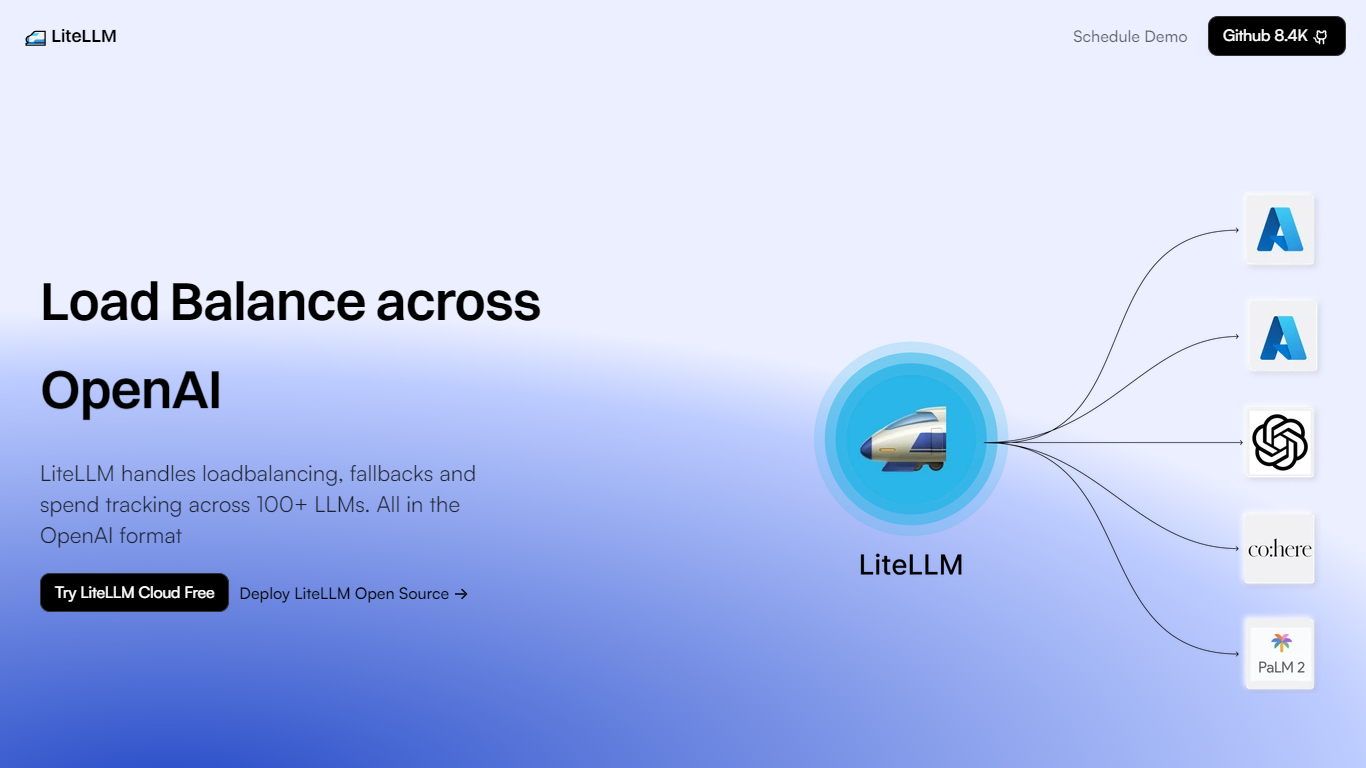
What is LiteLLM?
LiteLLM is a self-hosted AI gateway and LLM proxy that sits between your apps and model providers. You point clients at one OpenAI-compatible endpoint, and the gateway handles routing, logging, and spend controls across 140+ backends. Teams at Netflix, NVIDIA, and Okta use it to standardize model access without rebuilding every service when a provider changes.
Where hosted proxies bill per token and keep keys on their cloud, LiteLLM runs in your VPC or an air-gapped cluster under an MIT license. Budgets and RPM/TPM caps are hard stops, not alerts, so a leaked key or runaway job cannot keep spending after it hits the limit.
Platform and ML infrastructure teams reach for it when they need one front door for humans, agents, and batch jobs. The same gateway covers LLM calls, MCP servers, and agent workflows, with enterprise SSO, audit logs, and SLAs when rollout goes company-wide.
Cognee Upvotes
LiteLLM Upvotes
Cognee Top Features
pip install cognee connects Claude Code, Codex, or any MCP client in minutes
remember, recall, forget, and improve as the core API across SDK, HTTP, and MCP
30.4k GitHub stars and 5M+ SDK runs per month listed on the homepage
Hybrid graph and vector memory links entities across long conversations and sources
Free Cognee Cloud tier includes 1M tokens and one workspace at $0 per month
Ingest from Slack, Notion, Linear, Google Drive, S3, and code repos into one recall layer
BEAM 100K benchmark shows Cognee scoring 0.79 on the SDK results page
LiteLLM Top Features
One OpenAI-compatible API routes requests to 140+ providers and 1,892 models
Hard budgets plus RPM and TPM limits per key, team, and org stop traffic at the cap
MIT-licensed self-hosted gateway with 240M+ Docker pulls and air-gapped deployment support
Rust AI Gateway adds 0.66 ms p99 latency at 2,800+ requests per second in published benchmarks
Built-in guardrails cover PII masking and prompt-injection checks via Presidio and Lakera
Virtual keys, spend tracking, and Prometheus metrics ship in the free open-source tier
Cognee Category
- Large Language Model (LLM)
LiteLLM Category
- Large Language Model (LLM)
Cognee Pricing Type
- Freemium
LiteLLM Pricing Type
- Freemium