Cognee vs Pythia
When comparing Cognee vs Pythia, which AI Large Language Model (LLM) tool shines brighter? We look at pricing, alternatives, upvotes, features, reviews, and more.
Between Cognee and Pythia, which one is superior?
When we put Cognee and Pythia side by side, both being AI-powered large language model (llm) tools, Neither tool takes the lead, as they both have the same upvote count. Be a part of the decision-making process. Your vote could determine the winner.
Want to flip the script? Upvote your favorite tool and change the game!
Cognee

What is Cognee?
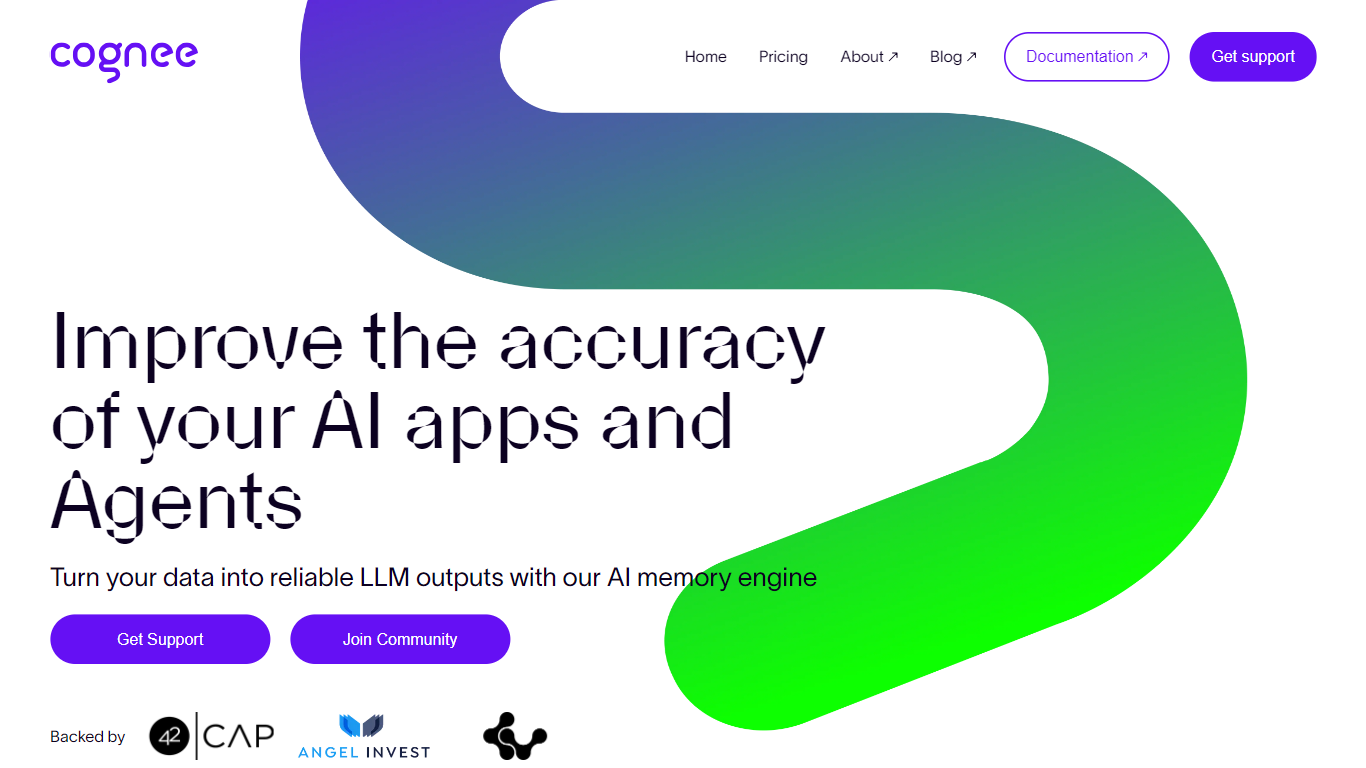
Cognee turns documents, chats, tickets, and API data into graph memory language model agents can recall across sessions. It builds linked entity graphs from that context so agents stop restarting from scratch each run. You can connect Slack, GitHub, or Linear so coding agents and support bots share one permission-aware company brain.
Plain RAG returns similar text chunks. Cognee pairs vector search with knowledge graphs and auto-generated ontologies, so recall pulls connected entities and cited facts rather than isolated snippets. The SDK centers on four verbs, remember, recall, forget, and improve, and the same surface ships over HTTP and MCP for Claude Code, Codex, and OpenClaw.
Platform teams use it for coding agent memory, GraphRAG pipelines, deal intelligence, and customer-facing agents that need grounded answers. Run it with pip locally, self-host in Docker or on-prem, or move to Cognee Cloud when you want managed scale. The project reports 30.4k GitHub stars and 5M+ SDK runs per month, with production deployments at Bayer and Knowunity.
Pythia
What is Pythia?
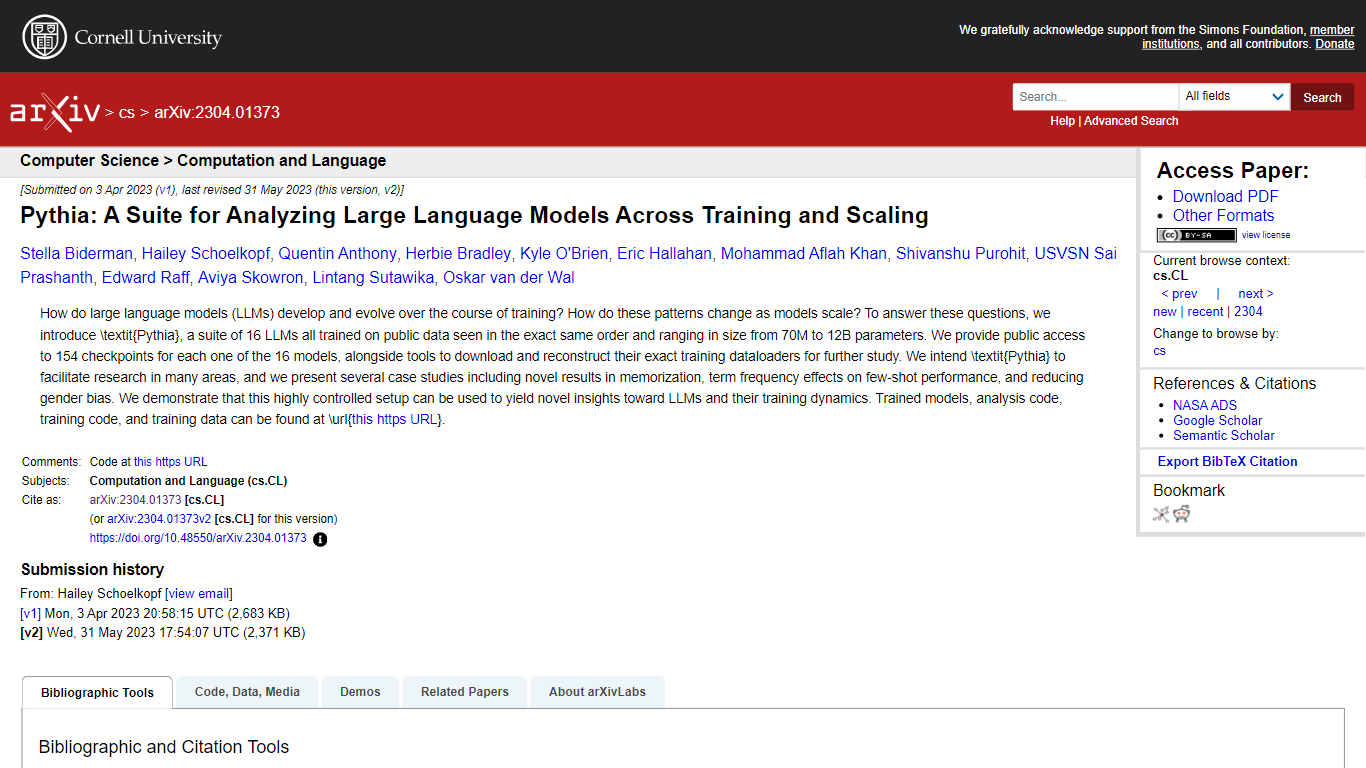
Researchers studying transformer training need checkpoints taken throughout pretraining, not just a finished weight file. Pythia delivers that by training matched LLM families on public data in a fixed order, then releasing weights, checkpoints, training code, and dataloader tools so you can inspect behavior at specific steps.
Where most LLM releases ship one finished checkpoint, Pythia publishes 154 snapshots per model and keeps data order constant across sizes. That control makes it useful for memorization studies, scaling comparisons, and causal training interventions, but it is not aimed at plug-and-play chat deployment the way instruction-tuned assistants are.
The suite targets machine learning researchers, interpretability labs, and alignment teams who need reproducible training trajectories. Typical work includes comparing checkpoints for memorization, testing how term frequency affects few-shot scores, and reproducing published case studies from the repository.
Cognee Upvotes
Pythia Upvotes
Cognee Top Features
pip install cognee connects Claude Code, Codex, or any MCP client in minutes
remember, recall, forget, and improve as the core API across SDK, HTTP, and MCP
30.4k GitHub stars and 5M+ SDK runs per month listed on the homepage
Hybrid graph and vector memory links entities across long conversations and sources
Free Cognee Cloud tier includes 1M tokens and one workspace at $0 per month
Ingest from Slack, Notion, Linear, Google Drive, S3, and code repos into one recall layer
BEAM 100K benchmark shows Cognee scoring 0.79 on the SDK results page
Pythia Top Features
154 checkpoints per model at steps 0, 1, 2, 4, 8, 16, 32, 64, 128, 256, 512, 1000, then every 1000 steps
16 model variants across 8 sizes from 70M to 12B, each with standard and deduped Pile training runs
Every model sees about 300 billion tokens in the same data order during training
Weights load from Hugging Face with revision tags such as step3000 via GPTNeoXForCausalLM
Apache 2.0 license covers the repository code and released model weights
Cognee Category
- Large Language Model (LLM)
Pythia Category
- Large Language Model (LLM)
Cognee Pricing Type
- Freemium
Pythia Pricing Type
- Free