CrawlQ AI Audience Research vs Semantic Scholar
In the battle of CrawlQ AI Audience Research vs Semantic Scholar, which AI Research tool comes out on top? We compare reviews, pricing, alternatives, upvotes, features, and more.
Between CrawlQ AI Audience Research and Semantic Scholar, which one is superior?
Upon comparing CrawlQ AI Audience Research with Semantic Scholar, which are both AI-powered research tools, In the race for upvotes, Semantic Scholar takes the trophy. Semantic Scholar has received 18 upvotes from aitools.fyi users, while CrawlQ AI Audience Research has received 6 upvotes.
Feeling rebellious? Cast your vote and shake things up!
CrawlQ AI Audience Research

What is CrawlQ AI Audience Research?
CrawlQ AI Audience Research is a powerful tool that provides actionable insights for understanding and engaging with your target audience. By utilizing computational market research and predictive analytics, CrawlQ's Athena platform enables in-depth psychographic profiling, bridging the gap between data and emotion. With CrawlQ, you can uncover hidden audience preferences, refine your audience personas, and elevate your brand storytelling. Say goodbye to wasting time on decoding your audience, missing out on opportunities, and struggling with ineffective marketing strategies. CrawlQ streamlines the research process, delivering precise insights to fuel your business growth.
Semantic Scholar
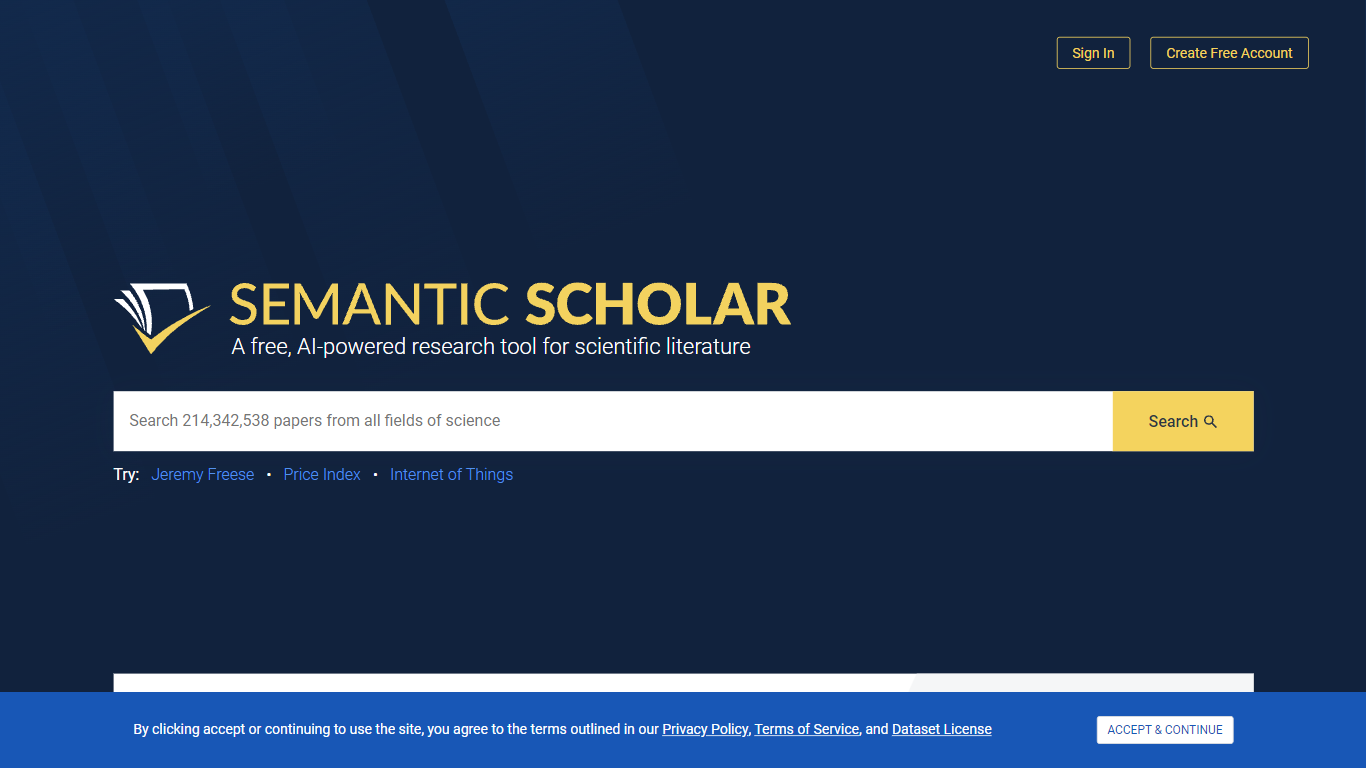
What is Semantic Scholar?
Semantic Scholar searches more than 236 million academic papers across every scientific field and surfaces citations, authors, and related work from one free interface. Built by the Allen Institute for AI (Ai2), it extracts meaning from papers so you can scan abstracts, follow citation chains, and open PDFs without jumping between databases.
Google Scholar indexes broadly but leaves connection-finding to you. Semantic Scholar adds AI-classified paper metadata, a Semantic Reader beta for in-browser annotation, and a public Academic Graph API with 214 million papers and 2.49 billion citations for developers. The S2AG and S2ORC datasets are also published as open JSON archives for NLP research.
Graduate students, faculty, librarians, and research engineers use it for literature reviews, citation tracking, and building scholarly apps. The API is free with optional keys for higher rate limits, and the platform partners with 50+ publishers to keep the index current.
CrawlQ AI Audience Research Upvotes
Semantic Scholar Upvotes
CrawlQ AI Audience Research Top Features
AI-Powered Audience Research: CrawlQ offers AI-powered audience research in a single click eliminating the need for manual data collection and analysis.
Insight Discovery: Uncover hidden insights about your audience's demographics preferences and behaviors enabling you to craft personalized marketing strategies.
Team Empowerment: Simplify your workflow and provide your sales and marketing teams with the data they need to excel.
Precision and Quality: Prioritize quality and deliver precise insights aiding in risk reduction and informed decision-making.
Efficiency and Savings: Save time and money by automating the research process allowing you to focus on crafting effective marketing strategies.
Semantic Scholar Top Features
Search 236,851,843 papers indexed across all fields of science from one homepage
Semantic Reader beta adds in-browser annotations and contextual overlays on select papers
Academic Graph API covers 214 million papers, 2.49 billion citations, and 79 million authors
S2AG and S2ORC datasets ship as free JSON archives for NLP and text mining projects
Paper recommendations surface related studies based on citation and content similarity
Partners with 50+ publishers and scholarly societies to ingest new academic content
CrawlQ AI Audience Research Category
- Research
Semantic Scholar Category
- Research
CrawlQ AI Audience Research Pricing Type
- Freemium
Semantic Scholar Pricing Type
- Free