Juno (formerly Validly) vs Semantic Scholar
When comparing Juno (formerly Validly) vs Semantic Scholar, which AI Research tool shines brighter? We look at pricing, alternatives, upvotes, features, reviews, and more.
In a comparison between Juno (formerly Validly) and Semantic Scholar, which one comes out on top?
When we put Juno (formerly Validly) and Semantic Scholar side by side, both being AI-powered research tools, The community has spoken, Semantic Scholar leads with more upvotes. The number of upvotes for Semantic Scholar stands at 18, and for Juno (formerly Validly) it's 6.
Disagree with the result? Upvote your favorite tool and help it win!
Juno (formerly Validly)
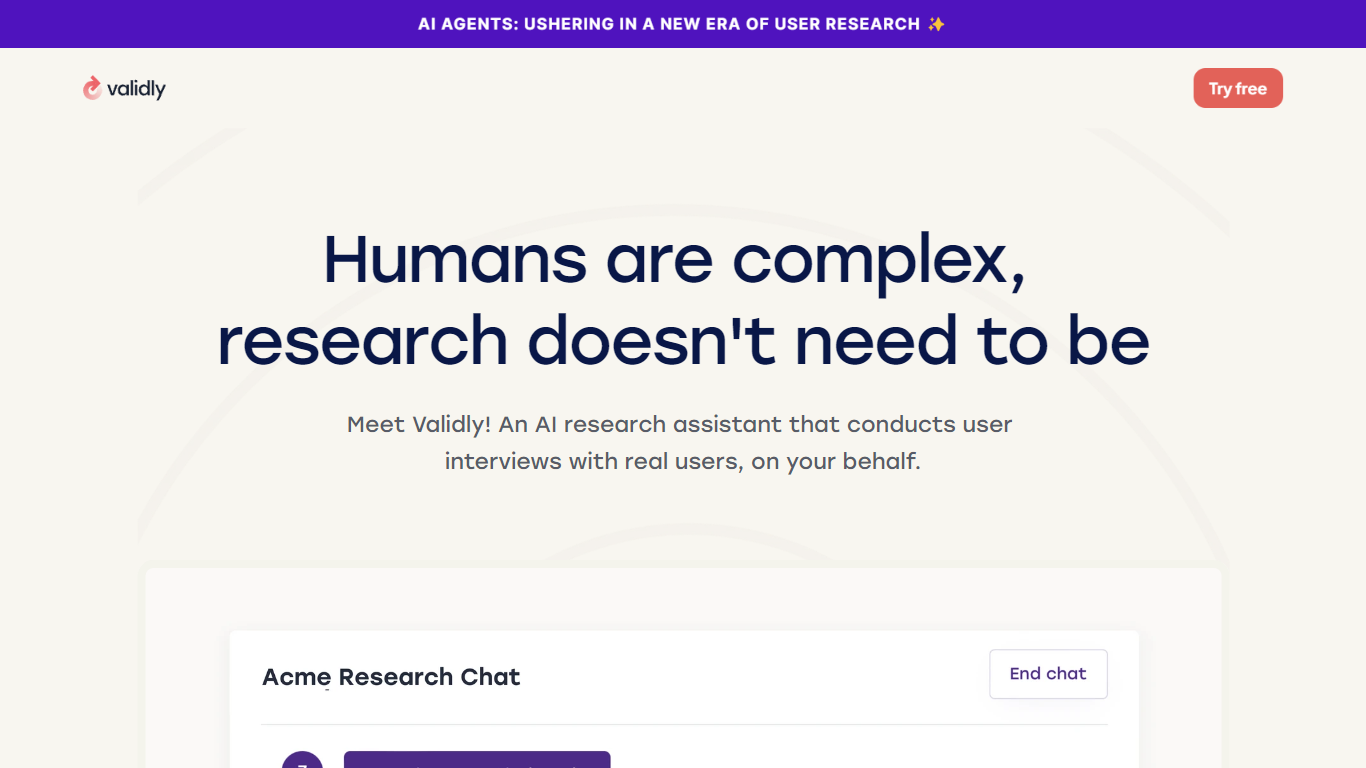

What is Juno (formerly Validly)?
Juno recruits real people and runs qualitative interviews on your behalf, then turns those conversations into research findings you can act on. Formerly Validly, it targets teams that need customer, market, or product insight without booking weeks of moderated sessions. You choose a research question from categories like market, product, growth, positioning, or audience, and Juno handles outreach, interviewing, and synthesis. The homepage positions it as clarity in hours rather than weeks.
Unlike survey tools or scripted chatbots, Juno is built to follow meaning during an interview rather than march through a fixed discussion guide. Its founders are veteran researchers who encoded that interview judgment into the model, so questions adapt as participants reveal motivations, friction, or unexpected discovery paths. That makes it closer to a skilled human moderator than a form with a chat layer, which is why case studies highlight simultaneous async interviews across time zones and languages.
Product teams, UX researchers, startup founders, and brand strategists use Juno when they need depth at scale. Named customers include DBS, Coles, Menulog, R/GA, and OFX. StoryTribe's founder used Juno to interview paying subscribers asynchronously and surface conversion barriers that manual research had missed. If your work depends on hearing how people actually think, not just what they click, Juno is built for that workflow.
Semantic Scholar
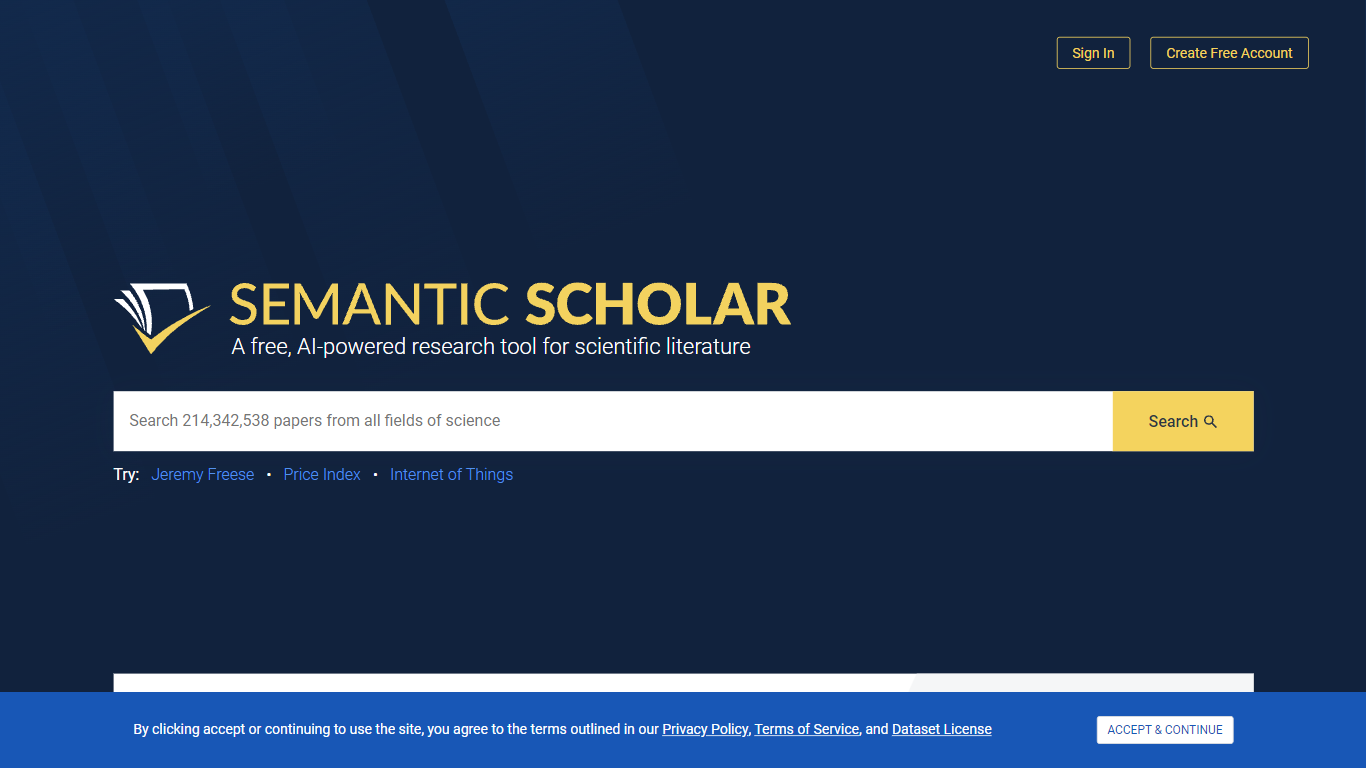
What is Semantic Scholar?
Semantic Scholar searches more than 236 million academic papers across every scientific field and surfaces citations, authors, and related work from one free interface. Built by the Allen Institute for AI (Ai2), it extracts meaning from papers so you can scan abstracts, follow citation chains, and open PDFs without jumping between databases.
Google Scholar indexes broadly but leaves connection-finding to you. Semantic Scholar adds AI-classified paper metadata, a Semantic Reader beta for in-browser annotation, and a public Academic Graph API with 214 million papers and 2.49 billion citations for developers. The S2AG and S2ORC datasets are also published as open JSON archives for NLP research.
Graduate students, faculty, librarians, and research engineers use it for literature reviews, citation tracking, and building scholarly apps. The API is free with optional keys for higher rate limits, and the platform partners with 50+ publishers to keep the index current.
Juno (formerly Validly) Upvotes
Semantic Scholar Upvotes
Juno (formerly Validly) Top Features
Tap a global panel of 3+ million people or recruit your own respondents with a unique study link
Homepage cites 8x faster turnaround and 16x cost savings versus traditional qualitative research
Runs interviews in 20+ languages with real-time translation on published customer stories
Study catalogue covers Market, Product, Growth, Positioning, and Audience research questions
Sign in with email or Google at heyjuno.co/login to create and launch studies
Adaptive AI moderation follows meaning during conversations instead of a fixed discussion guide
Semantic Scholar Top Features
Search 236,851,843 papers indexed across all fields of science from one homepage
Semantic Reader beta adds in-browser annotations and contextual overlays on select papers
Academic Graph API covers 214 million papers, 2.49 billion citations, and 79 million authors
S2AG and S2ORC datasets ship as free JSON archives for NLP and text mining projects
Paper recommendations surface related studies based on citation and content similarity
Partners with 50+ publishers and scholarly societies to ingest new academic content
Juno (formerly Validly) Category
- Research
Semantic Scholar Category
- Research
Juno (formerly Validly) Pricing Type
- Freemium
Semantic Scholar Pricing Type
- Free