
Last updated 07-27-2026
Category:
Reviews:
Join thousands of AI enthusiasts in the World of AI!
Juno (formerly Validly)
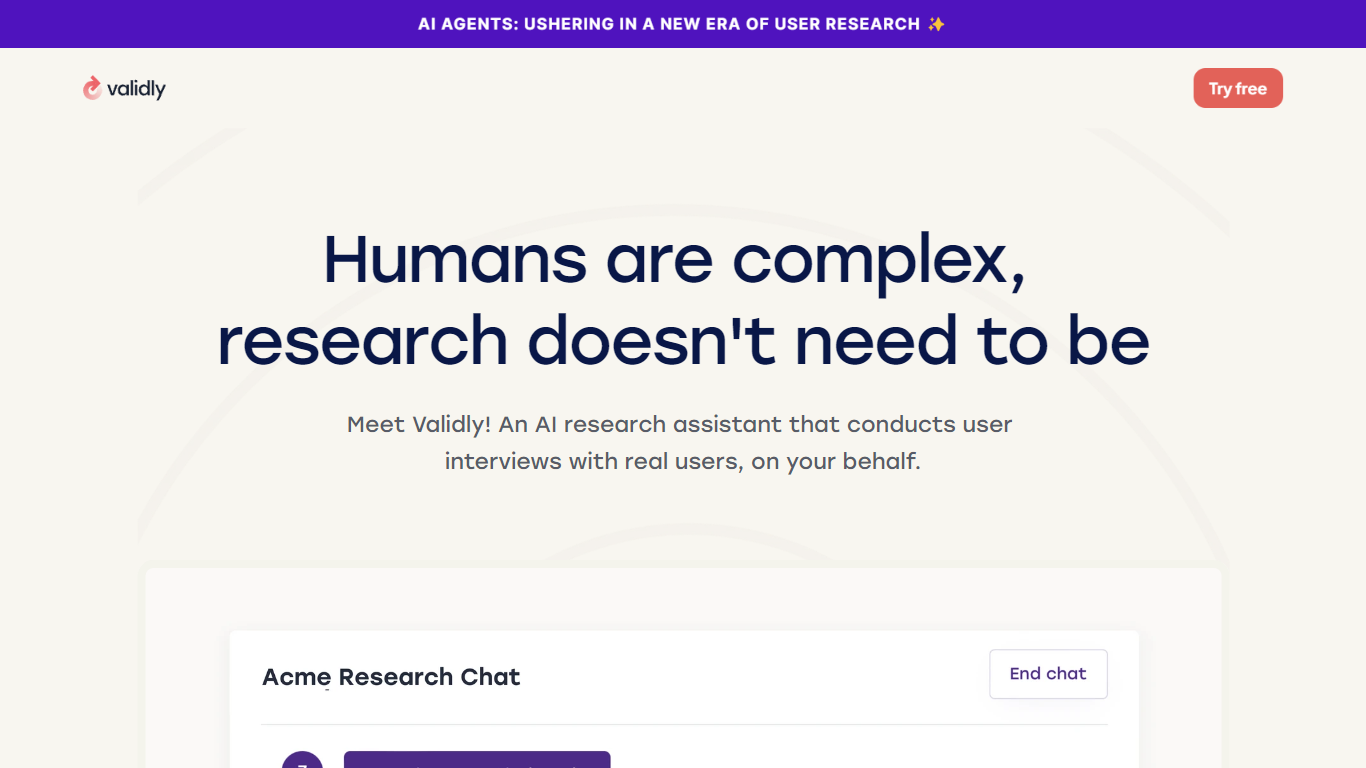
Juno recruits real people and runs qualitative interviews on your behalf, then turns those conversations into research findings you can act on. Formerly Validly, it targets teams that need customer, market, or product insight without booking weeks of moderated sessions. You choose a research question from categories like market, product, growth, positioning, or audience, and Juno handles outreach, interviewing, and synthesis. The homepage positions it as clarity in hours rather than weeks.
Unlike survey tools or scripted chatbots, Juno is built to follow meaning during an interview rather than march through a fixed discussion guide. Its founders are veteran researchers who encoded that interview judgment into the model, so questions adapt as participants reveal motivations, friction, or unexpected discovery paths. That makes it closer to a skilled human moderator than a form with a chat layer, which is why case studies highlight simultaneous async interviews across time zones and languages.
Product teams, UX researchers, startup founders, and brand strategists use Juno when they need depth at scale. Named customers include DBS, Coles, Menulog, R/GA, and OFX. StoryTribe's founder used Juno to interview paying subscribers asynchronously and surface conversion barriers that manual research had missed. If your work depends on hearing how people actually think, not just what they click, Juno is built for that workflow.
Tap a global panel of 3+ million people or recruit your own respondents with a unique study link
Homepage cites 8x faster turnaround and 16x cost savings versus traditional qualitative research
Runs interviews in 20+ languages with real-time translation on published customer stories
Study catalogue covers Market, Product, Growth, Positioning, and Audience research questions
Sign in with email or Google at heyjuno.co/login to create and launch studies
Adaptive AI moderation follows meaning during conversations instead of a fixed discussion guide
Adaptive interviews adjust questions in real time instead of reading a fixed script
Access a 3+ million person panel or recruit your own participants with a shareable study link
Homepage cites 8x faster studies and 16x savings compared with traditional qualitative research
Built by researchers who encoded 20+ years of interview craft into the model
No public pricing page; plan costs require contacting the Juno team
Creating studies requires signing in; the marketing site does not document a no-login workflow
Recruitment quality depends on how you configure incentives and audience targeting per study
What is Juno?
Juno is an AI research platform that recruits participants, conducts qualitative interviews, and delivers findings for product, market, or audience decisions. You pick a research question from Juno's catalogue across categories like market, product, growth, positioning, or audience. Juno handles outreach, interviewing, and synthesis so teams get depth without scheduling dozens of live sessions.
How is Juno different from other AI interview tools?
Juno adapts questions during each conversation instead of sticking to a rigid script. The model was trained by researchers who spent decades running real interviews, so Juno is designed to follow meaning when participants introduce new topics. That adaptive style is why customers like StoryTribe use Juno alongside traditional moderated research for faster scale.
Does Juno offer a free way to try it?
Yes. Juno's homepage invites users to try Juno free before committing to a paid workflow. You sign in at heyjuno.co/login with email or Google to create a study. Public plan pricing is not listed on the marketing site, so paid tiers require contacting the Juno team.
Who uses Juno for research?
Enterprise and growth teams across banking, retail, agencies, and startups use Juno. The homepage names customers including DBS, Coles, Menulog, R/GA, BBDO, HAVAS, Canstar, and OFX. Case studies cover fintech rollout research, climate opinion studies, and conversion interviews with paying subscribers.
How does Juno recruit interview participants?
Juno gives every study a unique link you can share anywhere, and you can tap its global panel of over 3 million people or bring your own respondents. Case studies show founders emailing paying users with gift card incentives. Interviews run asynchronously across time zones, including real-time translation when participants answer in another language.
How do you get started with Juno?
Create an account at heyjuno.co/login using your email or Google sign-in. Browse the catalogue to choose a research question by category, then launch a study from the dashboard. The homepage also links to [email protected] if you want to talk through enterprise needs before running interviews.
What languages does Juno support for interviews?
Juno supports qualitative interviews in more than 20 languages according to its customer story pages. The StoryTribe case study describes a participant completing an interview in another language while Juno translated responses in real time. That lets Juno run global research without manually scheduling moderators in each locale.