Elicit vs Semantic Scholar
Dive into the comparison of Elicit vs Semantic Scholar and discover which AI Research tool stands out. We examine alternatives, upvotes, features, reviews, pricing, and beyond.
When comparing Elicit and Semantic Scholar, which one rises above the other?
When we compare Elicit and Semantic Scholar, two exceptional research tools powered by artificial intelligence, and place them side by side, several key similarities and differences come to light. In the race for upvotes, Semantic Scholar takes the trophy. Semantic Scholar has been upvoted 18 times by aitools.fyi users, and Elicit has been upvoted 6 times.
Think we got it wrong? Cast your vote and show us who's boss!
Elicit
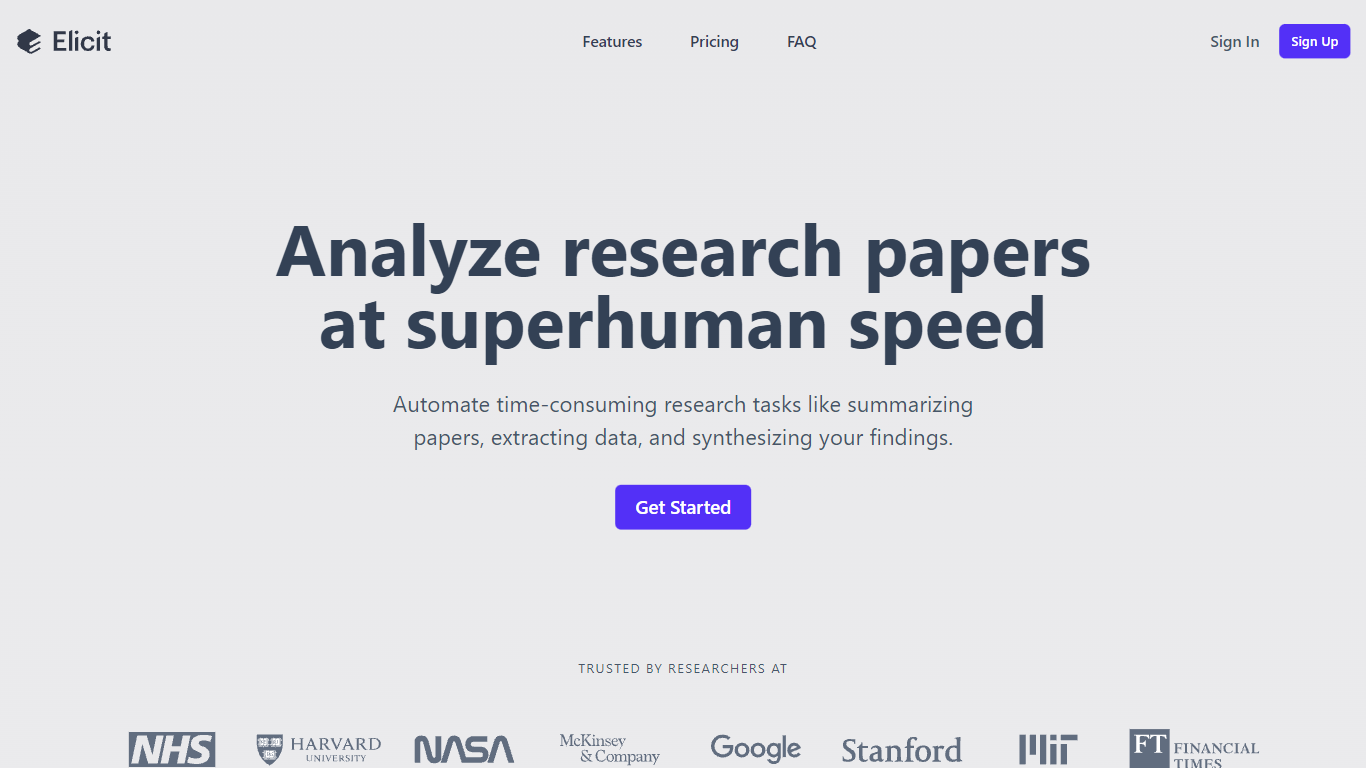

What is Elicit?
Elicit is a research assistant built for scientists, analysts, and policy teams who need cited answers from academic literature rather than generic chatbot summaries. It searches more than 138 million academic papers and 545,000 clinical trials, then returns evidence with sentence-level citations tied to the underlying sources. The platform covers paper search, research reports, systematic literature reviews, a research agent for multi-step workflows, a personal library, and alerts for new publications.
Where general AI chat tools guess at scientific claims, Elicit anchors every statement to a specific passage, table, or figure from the source material. Its semantic search finds relevant papers even when keyword overlap is thin, and it can screen and analyze up to 1,000 papers in a single workflow. That focus on traceable evidence over fluent prose is what separates it from tools like ChatGPT or Perplexity for high-stakes research decisions.
Elicit serves academic researchers, pharmaceutical teams, medical device companies, and government policy groups. Formation Bio, Oxford PharmaGenesis, and VDI/VDE have published case studies using Elicit for systematic reviews, data extraction, and literature screening at scale. The free Basic plan covers unlimited search and summaries, while paid tiers unlock systematic review workflows, API access, and team collaboration.
Semantic Scholar
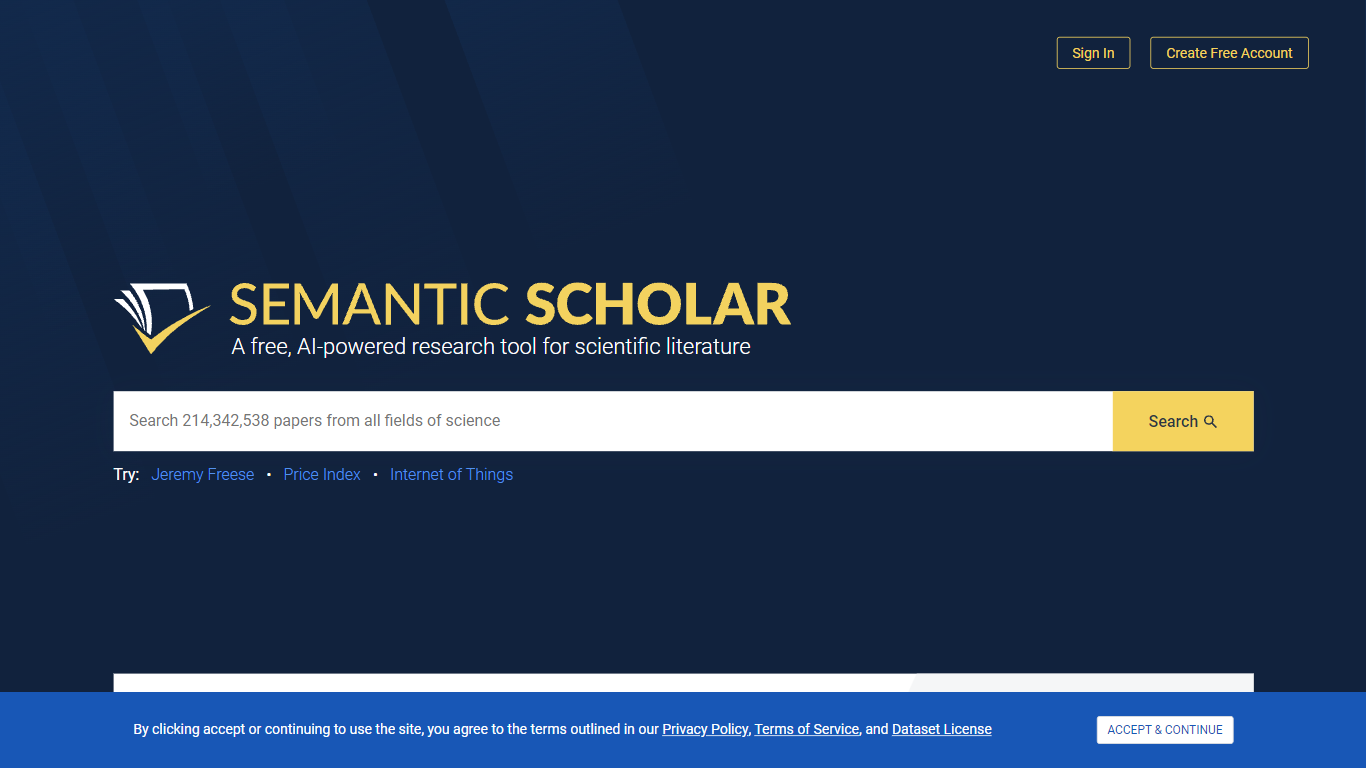
What is Semantic Scholar?
Semantic Scholar searches more than 236 million academic papers across every scientific field and surfaces citations, authors, and related work from one free interface. Built by the Allen Institute for AI (Ai2), it extracts meaning from papers so you can scan abstracts, follow citation chains, and open PDFs without jumping between databases.
Google Scholar indexes broadly but leaves connection-finding to you. Semantic Scholar adds AI-classified paper metadata, a Semantic Reader beta for in-browser annotation, and a public Academic Graph API with 214 million papers and 2.49 billion citations for developers. The S2AG and S2ORC datasets are also published as open JSON archives for NLP research.
Graduate students, faculty, librarians, and research engineers use it for literature reviews, citation tracking, and building scholarly apps. The API is free with optional keys for higher rate limits, and the platform partners with 50+ publishers to keep the index current.
Elicit Upvotes
Semantic Scholar Upvotes
Elicit Top Features
Semantic search across 138 million academic papers plus 545,000 clinical trials on ClinicalTrials.gov
Research Agent gathers evidence from papers, patents, regulatory databases, and uploaded documents
Analyzes up to 1,000 papers at once with transparent screening criteria you can audit
Systematic literature review workflow supports PRISMA 2020 with screening up to 5,000 papers on Pro
Research reports generate fully cited briefs inspired by systematic review methodology
API and MCP server let you search papers and generate reports inside your own agents
Free Basic plan includes unlimited search, summaries, and chat with full-text paper access
Semantic Scholar Top Features
Search 236,851,843 papers indexed across all fields of science from one homepage
Semantic Reader beta adds in-browser annotations and contextual overlays on select papers
Academic Graph API covers 214 million papers, 2.49 billion citations, and 79 million authors
S2AG and S2ORC datasets ship as free JSON archives for NLP and text mining projects
Paper recommendations surface related studies based on citation and content similarity
Partners with 50+ publishers and scholarly societies to ingest new academic content
Elicit Category
- Research
Semantic Scholar Category
- Research
Elicit Pricing Type
- Freemium
Semantic Scholar Pricing Type
- Free