FinetuneFast vs ggml.ai
In the battle of FinetuneFast vs ggml.ai, which AI Large Language Model (LLM) tool comes out on top? We compare reviews, pricing, alternatives, upvotes, features, and more.
Between FinetuneFast and ggml.ai, which one is superior?
Upon comparing FinetuneFast with ggml.ai, which are both AI-powered large language model (llm) tools, The users have made their preference clear, FinetuneFast leads in upvotes. The number of upvotes for FinetuneFast stands at 8, and for ggml.ai it's 7.
Think we got it wrong? Cast your vote and show us who's boss!
FinetuneFast
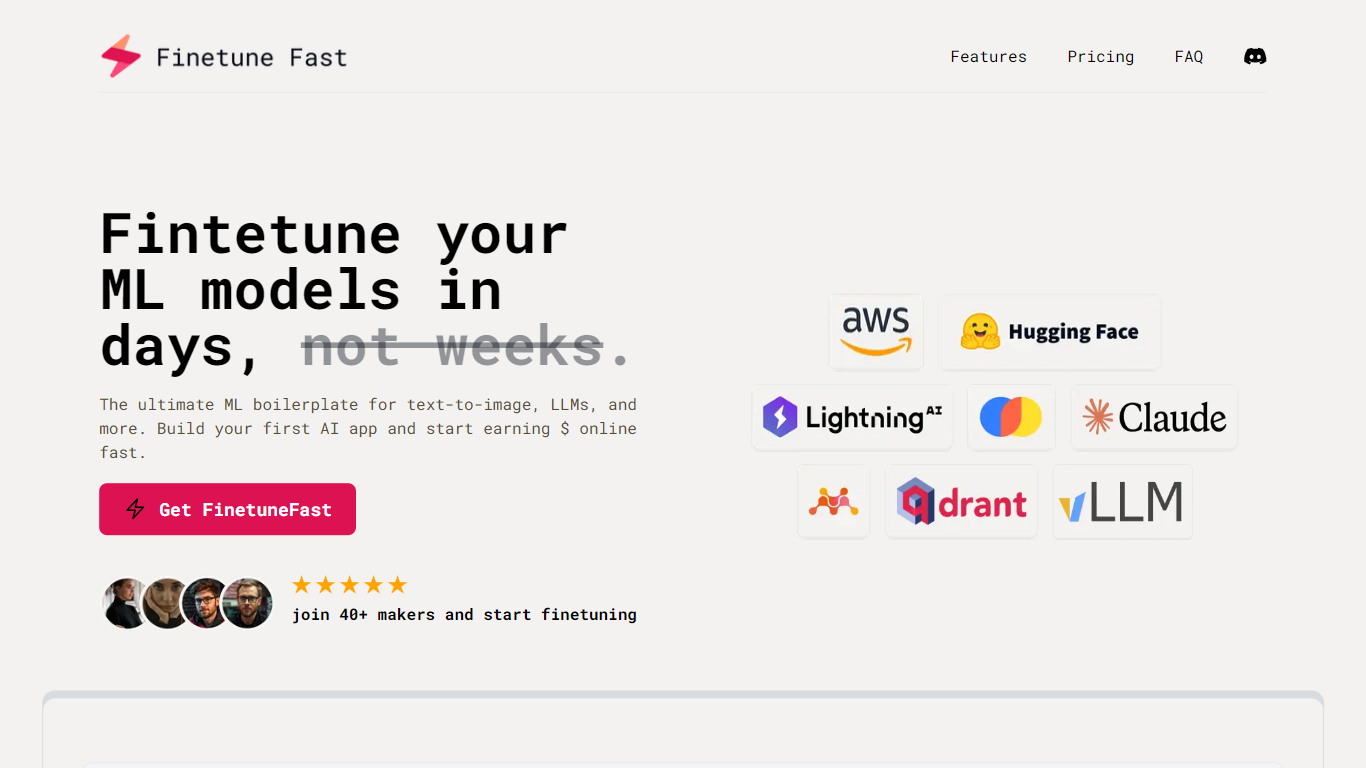

What is FinetuneFast?
FinetuneFast is a paid boilerplate kit for fine-tuning and deploying machine learning models. It bundles pre-configured training scripts, data loading pipelines, hyperparameter optimization, and deployment templates so developers can move from setup to production faster than building everything from scratch.
The package covers text-to-image, large language models, RAG applications, and related workflows. Included examples reference providers such as AWS Bedrock, Mistral AI, and OpenAI, along with templates for Flux-Schnell text-to-image, Fish-Speech text-to-speech, and retrieval-augmented generation.
After purchase, buyers receive access to GitHub repository materials with documentation. The All In plan adds Discord community access and lifetime updates. Founder Patrick built the product from hands-on ML engineering experience, including work on model training, inference APIs, and scalable infrastructure.
ggml.ai
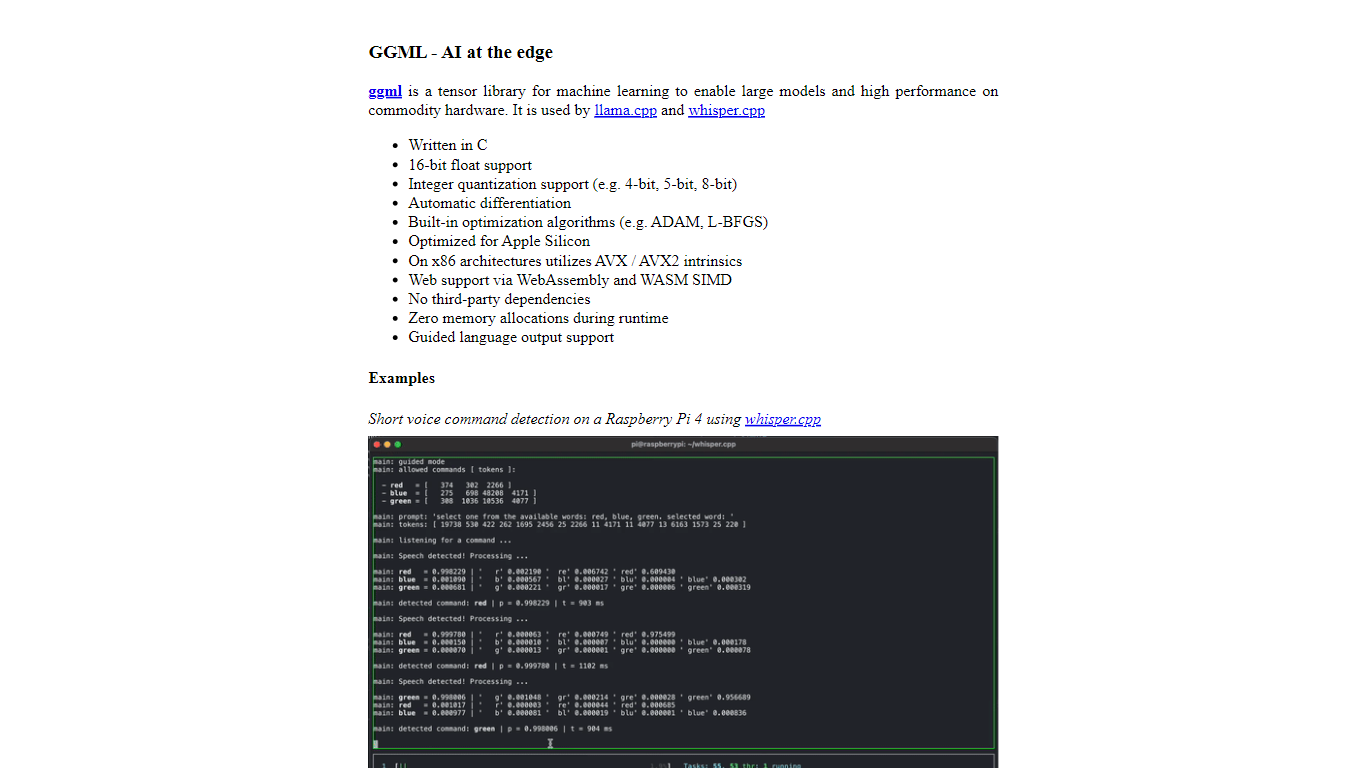
What is ggml.ai?
ggml runs large language and speech models on everyday CPUs and GPUs through a compact C tensor library built for on-device inference. ML engineers and app developers adopt it via llama.cpp and whisper.cpp when they want LLaMA or Whisper workloads without cloud-only dependencies.
Frameworks like PyTorch optimize for training clusters and heavy runtimes. ggml keeps the core library minimal with zero runtime memory allocations, no third-party dependencies, and integer quantization so llama.cpp can serve Meta LLaMA weights on laptops and Apple Silicon.
The ggml.ai company was founded in 2023 by Georgi Gerganov to support the library and was acquired by Hugging Face in 2026. The core ggml project stays MIT licensed with open development on GitHub.
FinetuneFast Upvotes
ggml.ai Upvotes
FinetuneFast Top Features
Pre-configured training scripts with multi-GPU support and no-code fine-tuning options
Efficient data loading pipelines for preparing and organizing training datasets
Hyperparameter optimization tools to tune model performance
One-click deployment with auto-scaling infrastructure and generated API endpoints
Production-ready inference boilerplates, RAG examples, and AI SaaS starter templates
Model coverage includes Flux-Schnell, Mistral, OpenAI integrations, Fish-Speech TTS, and RAG workflows
ggml.ai Top Features
Powers llama.cpp for Meta LLaMA inference and whisper.cpp for OpenAI Whisper speech models
Written in C with zero runtime memory allocations during inference
Integer quantization support for smaller models on commodity hardware
No third-party dependencies in the core tensor library
Cross-platform low-level implementation with broad hardware support
MIT licensed open-core library with public development on GitHub
FinetuneFast Category
- Large Language Model (LLM)
ggml.ai Category
- Large Language Model (LLM)
FinetuneFast Pricing Type
- Paid
ggml.ai Pricing Type
- Free